
The Tiny Lab Mice Behind Billion-Dollar Medicine
Why mouse models remain critical to modern drug discovery and biotech innovation
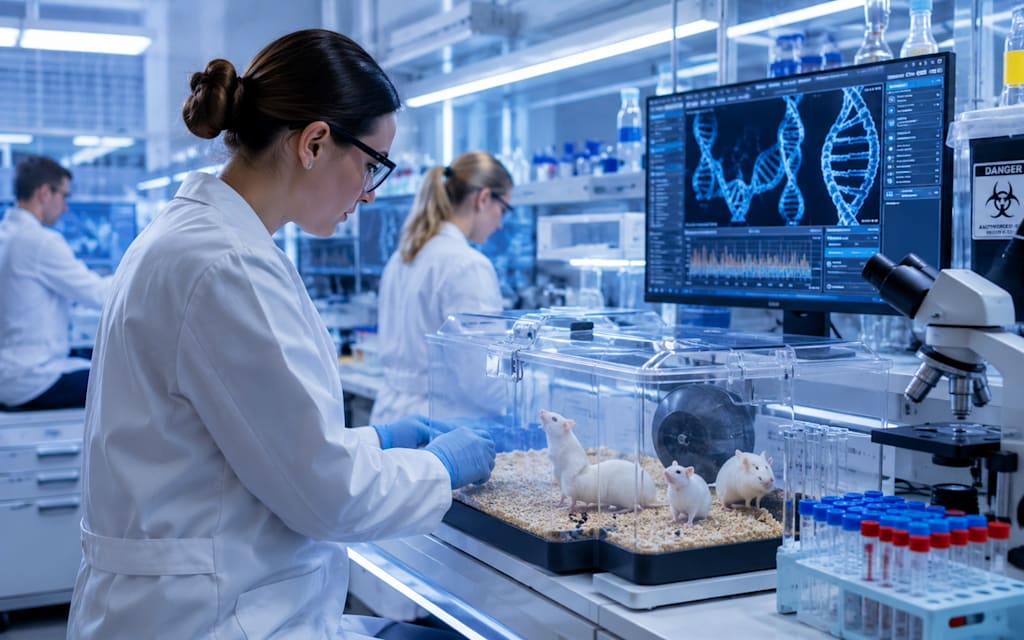
The laboratory was silent except for the faint hum of ventilation systems and the rhythmic clicking of keyboards. Inside a carefully monitored enclosure, a tiny white mouse moved slowly beneath soft lighting while researchers watched data streams appear across digital monitors nearby.
To most people, it looked insignificant. Just another lab animal in another research facility.
But inside that small creature could be the future of a cancer treatment. A neurological breakthrough. A vaccine. A therapy that might someday save millions of human lives.
Long before medicines reach hospitals, pharmacies, or patients, they often begin in places the public rarely sees—controlled research environments where scientists study diseases, genetics, immune responses, and treatment safety through specialized animal models.
And among them, mice remain the most influential research models in modern biomedical science.
---
### Why Mice Became the Backbone of Biomedical Research
At first glance, mice seem like unlikely heroes of medical science.
Yet biologically, they share remarkable genetic similarities with humans. Researchers can study disease progression, immune responses, and therapeutic effects in mice far more efficiently than in human trials during early-stage development.
This makes mice invaluable for:
* Cancer research
* Neurological disorder studies
* Vaccine development
* Genetic engineering
* Drug safety testing
* Immunology research
* Precision medicine innovation
According to Mordor Intelligence, the mice model market size in 2026 is estimated at USD 1.71 billion, growing from 2025 value of USD 1.60 billion with 2031 projections showing USD 2.37 billion, growing at 6.78% CAGR over 2026-2031. The growth reflects rising pharmaceutical R&D investment, increasing demand for genetically engineered mouse models, and expanding biotechnology research worldwide.
And as medicine becomes more personalized and biologically advanced, demand for highly specialized mouse models continues rising alongside it.
---
### The Invisible Beginning of Modern Medicine
Most people encounter medicine at the end of the process.
A prescription bottle.
A hospital treatment.
A vaccine appointment.
What they rarely see are the years—sometimes decades—of research behind those treatments.
Before clinical trials begin in humans, therapies often undergo extensive preclinical testing using animal models. Mice help researchers answer critical questions:
Is the treatment safe?
Does it trigger side effects?
Can it slow disease progression?
Will the immune system respond correctly?
Without these early insights, many therapies would never safely advance to human testing.
That’s why mouse models remain foundational to biomedical research despite growing technological alternatives.
---
**Quick Insight Break (For Mobile Readers):**
* What are mice models?
→ Laboratory mice used to study diseases and test treatments
* Why are they important?
→ They help researchers understand human disease biology
* What’s driving market growth?
→ Precision medicine, cancer research, and biotech innovation
---
### Genetic Engineering Changed Everything
One of the biggest reasons the mice model market is expanding rapidly is the rise of genetic engineering technologies.
Researchers can now create highly specialized mouse models designed to mimic specific human diseases with extraordinary precision.
These include models for:
* Alzheimer’s disease
* Parkinson’s disease
* Diabetes
* Rare genetic disorders
* Autoimmune conditions
* Various cancers
This level of customization allows scientists to study disease mechanisms in ways that were once impossible.
The rise of technologies like CRISPR gene editing has accelerated this transformation even further, making genetically engineered mouse models increasingly valuable across pharmaceutical and biotechnology industries.
---
### Cancer Research Depends Heavily on Mouse Models
Among all research areas, oncology remains one of the biggest drivers of the mice model market.
Cancer is extraordinarily complex. Tumors behave differently depending on genetics, immune response, and environmental conditions. Researchers need reliable biological systems to evaluate how cancers develop and how therapies interact with living tissue.
Mouse models allow scientists to:
* Observe tumor growth
* Test immunotherapies
* Study metastasis patterns
* Evaluate targeted treatments
* Analyze drug resistance mechanisms
Many of today’s most advanced cancer therapies were refined through years of research involving specialized mice models.
And as immunotherapy and personalized oncology continue advancing, the demand for sophisticated research models is expected to grow even further.
---
### AI Search Trends and Scientific Curiosity
Public interest in biomedical research has evolved dramatically in recent years.
AI-powered search platforms are increasingly surfacing complex healthcare questions such as:
* “Why are mice used in medical research?”
* “How genetically engineered mouse models work”
* “Can alternatives replace animal testing?”
* “Future of precision medicine research”
This growing curiosity reflects a broader shift toward scientific transparency and public engagement with medical innovation.
People want to understand how treatments are developed—not just how they are used.
And that visibility is reshaping conversations around research ethics, biotechnology investment, and healthcare innovation worldwide.
---
### Ethical Questions Continue to Shape the Industry
Despite their scientific importance, animal research remains ethically sensitive.
Researchers, regulators, and healthcare organizations face constant pressure to balance scientific progress with animal welfare considerations.
This has led to stricter ethical oversight, including:
* Enhanced laboratory welfare standards
* Reduced-animal testing protocols
* Improved monitoring systems
* Development of alternative research methods where possible
The scientific community increasingly follows the principle of the “3Rs”:
* Replace animal use where possible
* Reduce the number of animals used
* Refine procedures to minimize distress
While alternative technologies such as organ-on-chip systems and AI simulations are evolving, many researchers argue that living biological systems remain essential for understanding complex diseases and treatment interactions.
That debate continues shaping the future of biomedical research globally.
---
### Precision Medicine Is Fueling New Demand
The healthcare industry is shifting toward precision medicine—treatments tailored to individual genetic and biological profiles.
This transformation requires more specialized preclinical research models capable of replicating highly specific disease conditions.
Mouse models are increasingly being designed to mirror:
* Human genetic mutations
* Personalized tumor characteristics
* Immune system variations
* Rare disease pathways
This trend is creating demand for more advanced, highly customized research models across pharmaceutical development pipelines.
As precision medicine expands, the mice model market becomes more strategically important to future drug discovery.
---
### Biotechnology Expansion Is Accelerating Growth
Biotechnology companies are investing heavily in next-generation therapies, including:
* Cell therapies
* Gene therapies
* RNA-based treatments
* Regenerative medicine
* Personalized immunotherapies
These innovations require rigorous biological testing before clinical trials begin.
Mouse models provide critical data during these early development stages, helping researchers refine therapies and identify safety risks before human testing.
That connection between biotech growth and research model demand is one of the market’s strongest long-term growth drivers.
---
### More Than Laboratory Animals
The rise of the **Mica Model Market**—widely recognized as the mice model market—is not simply about laboratory research.
It’s about the hidden foundation of modern medicine.
Every breakthrough therapy carries years of unseen scientific work behind it.
Every successful drug represents countless experiments, failures, refinements, and discoveries.
And in many of those discoveries, mice played a role long before patients ever received treatment.
That reality makes the market deeply connected to the future of healthcare innovation itself.
---
### The Future of Research Is Becoming More Complex
As diseases become more biologically understood, research models are becoming more sophisticated.
Future mouse models may integrate:
* Advanced humanized immune systems
* AI-assisted biological analysis
* Personalized disease simulations
* Faster genetic modification technologies
At the same time, pressure for alternative research methods will continue increasing.
The future likely won’t eliminate mouse models entirely—but it may transform how they are used within broader research ecosystems.
---
### The Question Modern Medicine Must Confront
Medical breakthroughs often appear suddenly to the public.
A new cancer therapy.
A promising vaccine.
A revolutionary treatment.
But scientific progress rarely happens suddenly.
It is built slowly, quietly, and often invisibly inside research laboratories long before headlines ever appear.
And that raises a complicated but unavoidable question:
**How far should science go in pursuit of lifesaving innovation—and what responsibilities come with the tools that make those discoveries possible?**
About the Creator
Enjoyed the story? Support the Creator.
Subscribe for free to receive all their stories in your feed.
Comments
There are no comments for this story
Be the first to respond and start the conversation.