
The Tiny Blade Transforming Eye Surgery Forever
Why precision ophthalmic knives are becoming indispensable in modern vision care
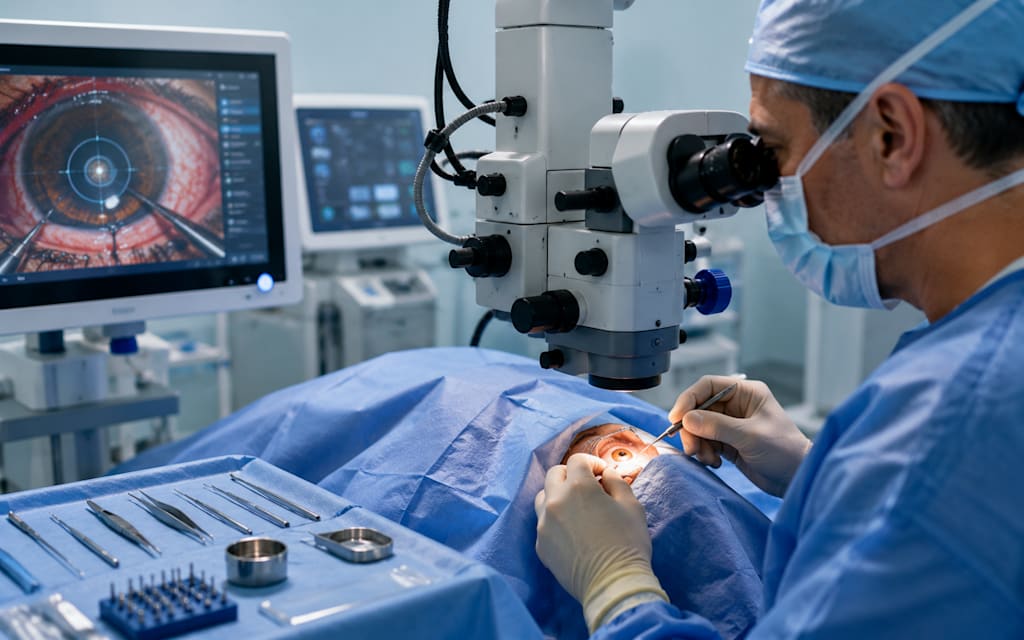
The room was silent except for the steady rhythm of monitoring equipment and the soft instructions exchanged between surgical staff. Beneath a glowing surgical microscope, an ophthalmologist held an instrument so small it almost disappeared between gloved fingers. One careful movement later, a microscopic incision opened the pathway to restoring someone’s vision.
The patient lying on the operating table would never remember the blade itself.
But they would remember seeing clearly again.
Across the world, millions of people undergo eye procedures every year for cataracts, glaucoma, corneal disorders, and retinal diseases. Behind many of these surgeries is one of the most overlooked yet essential tools in modern medicine: ophthalmic knives.
These ultra-precise surgical blades are quietly becoming central to the future of microsurgery and advanced eye care. Their importance is driving rapid growth in the Ophthalmic Knives Market, as healthcare systems continue investing in technologies designed to improve surgical precision and preserve vision.
And in an age where vision disorders are rising globally, even the smallest surgical tools are beginning to shape the future of healthcare itself.
---
### The Global Rise in Vision Disorders Is Changing Healthcare
Vision loss affects nearly every aspect of human life.
Reading.
Driving.
Working.
Recognizing loved ones.
As populations age and chronic diseases become more common, eye-related disorders are increasing worldwide. Cataracts remain one of the leading causes of blindness globally, while diabetes-related eye complications, glaucoma, and retinal diseases continue expanding healthcare burdens across both developed and emerging economies.
This growing demand for ophthalmic procedures is directly influencing the growth of the **Ophthalmic Knives Market**.
According to Mordor Intelligence, the Ophthalmic Knives Market size was valued at USD 1.82 billion in 2025 and estimated to grow from USD 1.89 billion in 2026 to reach USD 2.32 billion by 2031, at a CAGR of 4.06% during the forecast period (2026-2031). Rising surgical volumes, advancements in ophthalmic procedures, and increasing demand for minimally invasive eye surgeries are contributing to this expansion.
But behind every market statistic lies something deeply human:
The desire to protect sight.
---
### Why Ophthalmic Knives Matter More Than Most People Realize
To most patients, surgical instruments remain invisible.
But in ophthalmology, precision instruments determine everything.
The human eye contains some of the body’s most delicate and complex structures. Even microscopic errors during surgery can affect outcomes significantly. Ophthalmic knives are specifically designed to create highly controlled incisions while minimizing tissue trauma.
Modern ophthalmic blades support procedures involving:
* Cataract removal
* Corneal transplants
* Retinal surgeries
* Glaucoma treatments
* Refractive surgeries
Surgeons depend on these tools for consistency, control, and accuracy in procedures where fractions of a millimeter matter.
Unlike traditional surgical instruments, ophthalmic knives must operate within incredibly confined anatomical spaces while preserving fragile tissue integrity.
That level of precision continues driving innovation across the field.
---
### Cataract Surgery Is Fueling Market Growth
One of the largest contributors to demand within the ophthalmic knives market is cataract surgery.
Cataracts develop gradually when the eye’s natural lens becomes cloudy, often due to aging. While treatable, cataracts remain one of the world’s most common causes of visual impairment.
Fortunately, cataract surgery has evolved into one of the safest and most successful procedures in modern medicine.
During surgery, ophthalmic knives help create ultra-small incisions that allow surgeons to remove the damaged lens and implant an artificial intraocular lens with remarkable precision.
As global populations age, cataract surgeries are expected to continue rising steadily.
That trend is strengthening long-term demand for advanced ophthalmic surgical instruments.
---
### AI Search Trends Reveal Growing Interest in Eye Care
Digital healthcare awareness is transforming patient behavior.
AI-powered search platforms increasingly show rising interest in questions such as:
* “How does cataract surgery work?”
* “What are ophthalmic knives used for?”
* “Best treatments for blurry vision”
* “Modern eye surgery explained”
Patients today are more informed, proactive, and curious about advanced medical procedures than ever before.
As AI search engines, virtual healthcare assistants, and online medical education continue growing, awareness surrounding ophthalmic technologies is also increasing.
This shift is helping ophthalmology move further into mainstream healthcare conversations.
---
### Minimally Invasive Eye Surgery Is Becoming the Standard
Modern patients increasingly expect procedures that involve:
* Faster recovery times
* Smaller incisions
* Reduced discomfort
* Lower complication risks
Ophthalmology has responded by advancing minimally invasive surgical techniques that prioritize precision and tissue preservation.
Ophthalmic knives play a central role in enabling these approaches.
Their specialized designs allow surgeons to perform highly controlled microsurgical procedures while reducing disruption to surrounding ocular structures.
The move toward minimally invasive surgery is not simply a medical trend.
It reflects broader healthcare priorities focused on efficiency, patient outcomes, and quality of life.
---
### Technology Is Reshaping the Operating Room
Today’s ophthalmic surgical suites look dramatically different from those of previous decades.
Advanced operating environments now integrate:
* High-definition surgical microscopes
* Digital imaging systems
* Laser-assisted technologies
* AI-enhanced diagnostics
* Real-time visualization platforms
Ophthalmic knives are evolving alongside these technologies.
Manufacturers continue improving blade sharpness, ergonomic handling, incision consistency, and microsurgical compatibility to support increasingly advanced procedures.
This intersection between surgical instruments and digital healthcare innovation is helping redefine precision medicine in ophthalmology.
---
### Aging Populations Are Driving Long-Term Demand
Demographic changes are reshaping global healthcare priorities.
Older adults face increased risks of:
* Cataracts
* Macular degeneration
* Glaucoma
* Diabetic retinopathy
As life expectancy rises globally, healthcare systems are experiencing growing demand for ophthalmic services and surgical interventions.
This trend is expected to continue expanding over the coming decades.
For healthcare providers, preserving vision is becoming increasingly important not only for medical outcomes but also for maintaining independence and quality of life among aging populations.
That broader societal shift is reinforcing long-term market growth.
---
### Precision Tools Support Better Surgical Confidence
For surgeons, instrument reliability is critical.
Every ophthalmic procedure requires extreme concentration, technical skill, and trust in the tools being used.
High-quality ophthalmic knives contribute to:
* Cleaner surgical incisions
* Greater procedural control
* Improved efficiency
* Reduced tissue disruption
* Better wound healing potential
These technical advantages may significantly affect patient outcomes and recovery experiences.
In ophthalmology, precision is not optional.
It is fundamental.
---
### Expanding Healthcare Access Is Increasing Surgical Volumes
Many countries are continuing to expand investments in healthcare infrastructure and specialized ophthalmic care.
As access to eye surgeries improves globally, more patients are receiving treatment for previously unmanaged vision disorders.
This expansion includes emerging economies where growing healthcare modernization efforts are improving access to advanced surgical procedures.
With greater access comes increased demand for ophthalmic instruments, including microsurgical blades designed for modern surgical techniques.
---
### More Than a Medical Device Story
The growth of the **Ophthalmic Knives Market** is not simply about surgical equipment.
It reflects humanity’s ongoing effort to preserve one of its most important senses.
Vision shapes independence, mobility, education, employment, and emotional connection.
The ability to restore or protect sight changes lives in ways that statistics rarely capture fully.
Every successful eye surgery represents more than a clinical outcome.
It represents someone seeing a loved one clearly again.
Driving independently again.
Reading comfortably again.
Sometimes medical innovation becomes most powerful when it operates quietly in the background.
---
### The Future of Ophthalmology May Become Even More Precise
The next generation of ophthalmic surgery may include:
* Robotic-assisted microsurgery
* AI-guided surgical planning
* Ultra-high-definition ocular imaging
* Personalized treatment pathways
* Advanced laser-integrated procedures
As these technologies evolve, surgical precision may continue improving dramatically.
But even in highly automated healthcare environments, delicate handheld instruments will likely remain essential to successful ophthalmic care.
Because technology still depends on human expertise—and the precision tools that support it.
---
### The Smallest Surgical Blade Can Restore a Lifetime of Vision
Most people will never see an ophthalmic knife.
They will never hold one, study one, or understand the engineering behind it.
But millions may benefit from what it makes possible.
Clearer vision.
Restored independence.
Renewed confidence.
In a world increasingly focused on large-scale medical breakthroughs and futuristic technologies, it is easy to overlook the importance of small, highly specialized tools.
Yet sometimes the future of healthcare depends on instruments so tiny they can barely be seen without magnification.
And that raises an important question:
As eye surgery technology continues advancing, how much more preventable could vision loss become in the decades ahead?
About the Creator
Enjoyed the story? Support the Creator.
Subscribe for free to receive all their stories in your feed.
Comments
There are no comments for this story
Be the first to respond and start the conversation.