
The Temple in the Mall: Why I Can’t Walk Past MUJI
A quiet ten minutes between the food court and the movie, and the small objects that make me want to eat breakfast properly.
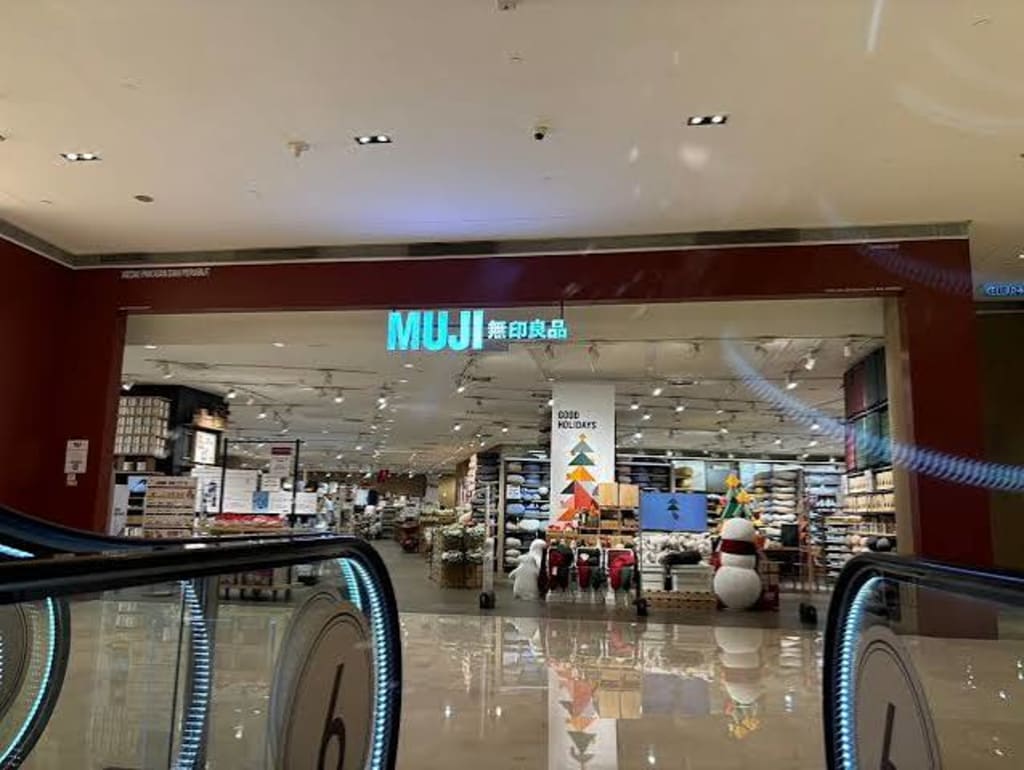
A few days ago I saw a line: MUJI is like a temple in a mall. Even if you’re just passing by, you have to go in and bow.
I was on the subway when I saw it. The light from my phone screen was a little harsh, but I read that line twice. It was too on point.
Every time I go to a mall, if I pass a MUJI, my feet turn in on their own. Sometimes I don’t need anything, but I still make a round and come back out. Most of the time I leave empty-handed. Sometimes I pick up a small thing on the way out: a pen or a pouch. Once a bar of soap. I don’t buy much, but that “went in and walked around” motion feels like a small ritual.
Before writing this, I looked up and scanned the room. The fan is in the corner. The fragrance diffuser is on the bathroom counter. The cushion is on the sofa, and the phone case is on my phone. Pajamas, a down jacket, a lunch box, a water bottle, travel pouches: they sit in their own places. They aren’t things that wow you at first glance, but they’re often the ones I use most and the least likely to get replaced.
Take the circulator fan. Matte warm white, pale gray buttons, no extra lines, no logo. In the corner of the living room or by the bed, it doesn’t look out of place. Anyone who has renovated knows white comes in a whole spectrum: cool white, milk white, rice white, gray white. A shade off and it’s wrong. The white of this fan doesn’t fight with the wall paint or the floor. In summer when it’s on, the wind is wind, and the house is still the house.
The refill bottle for the bathroom fragrance diffuser is good-looking too. Frosted glass, short, the label stuck on neatly. It can sit on the counter. No need to hide it in a cabinet. This detail is very MUJI: it doesn’t ask you to hide your life.
The cushion is stuffed firmly. It doesn’t flatten into a pancake when you lean on it. The phone case is also MUJI, 28 yuan. It feels like sandpaper but finer. When it gets dirty, rinse it with water and wipe it dry. After more than a year, the edges haven’t yellowed and the back hasn’t gotten shiny.
Mall packaging is high-saturation. Red has to shout; yellow has to jump. The BGM presses down from the ceiling. A salesperson asks from three meters away, “Can I help you find something?” After twenty minutes in a place like that, my temples start to tighten.
Kenya Hara once said he pursues sensory quiet through design. I haven’t read his books, but the moment I walk into a MUJI store I can feel it. The store doesn’t become silent. The spacing between shelves and the warm lights do most of the work; the background music stays low. No one follows behind you saying, “This one sells really well.” You touch a shirt and flip the price tag. Then you put it back. No one interrupts the whole process.
People who think MUJI isn’t worth it are mostly thinking about price. A lunch box is seventy or eighty yuan. A storage box is forty or fifty. Online you can find the same thing for 9.9 yuan with free shipping. Before I bought that 28-yuan phone case, I hesitated too, but I turned it over in my hand twice and still put it in the basket. I don’t have money to burn. I just couldn’t be bothered to open a shopping app again and gamble on hundreds of real and fake reviews for something that feels about the same.
It’s a bit different from IKEA. IKEA takes time and a special trip, like a small outing. You plan the route and eat, then walk the whole floor. But in first- and second-tier cities, MUJI stores are spread widely, almost within reach. The gap after a meal while digesting, or while waiting for a movie to start: no need to set aside special time. It’s just there, like a buffer zone in the mall. You go in, the world is quiet for ten minutes, then you come out and keep living.
I used that phone case for three years and only took it off when I changed phones. When I serve rice in the rice-porcelain bowl, the grains don’t stick to the sides. When washing it, a rinse and it’s clean, so every time I do dishes I rinse it one extra time and put it back on the rack. The storage box moved with me from a rental to this apartment. Two moves. A small chip of paint got knocked off one corner, but it still works. These things aren’t cheap, but they aren’t delicate either. The longer you use them, the more you feel they deserve to be treated well.
Fewer colors and smaller logos make it easier to notice the thing itself: whether the fabric is woven tightly or the glaze is applied evenly. You notice how heavy the stainless steel feels in your hand. These things won’t suddenly look ugly because of what’s popular next year. A box for five years. A shirt for three. A phone case until you change phones. Over time you realize the way you treat objects seeps into other places. You rinse one extra time when doing dishes and smooth the sleeves when folding clothes. You clear the table before going out. Objects get treated well. That habit carries over.
A friend saw me in a MUJI linen shirt and joked, “In that nun robe, you could shave your head and join a monastery any second.” I laughed and didn’t answer. But that night when I got home, I took off the shirt and hung it up, folded the next day’s clothes on the back of the chair, and wiped the kitchen counter again. Using MUJI doesn’t make me want to leave home. It makes me want to eat tomorrow’s breakfast properly.
MUJI is like a temple in a mall, with no god inside. You go in. The lights are warm, the shelves are neat, and no one comes over to ask what you’re looking for. You touch a towel or flip through a notebook. You smell the fragrance diffuser. Then you come out empty-handed or with a small bag. The mall’s noise rushes back. Music and voices again. The cash register beeps. You go back into the crowd, keep eating or watch a movie, then catch the subway. In your pocket there’s a 28-yuan phone case, or a pack of fragrance diffuser refill. You know you’ll use it for a long time.
Tomorrow morning, get up. Fill the rice-porcelain bowl with congee. Wipe the table clean. Go out.
About the Creator
Jin
Writer of reamstories
https://reamstories.com/jin
Enjoyed the story? Support the Creator.
Subscribe for free to receive all their stories in your feed. You could also become a paid subscriber, letting them know you appreciate their work.
Comments
There are no comments for this story
Be the first to respond and start the conversation.