
The Sound of Being Human: A History of Music
From Ice Age bone flutes to AI-generated beats — the 40,000-year story of why we make music
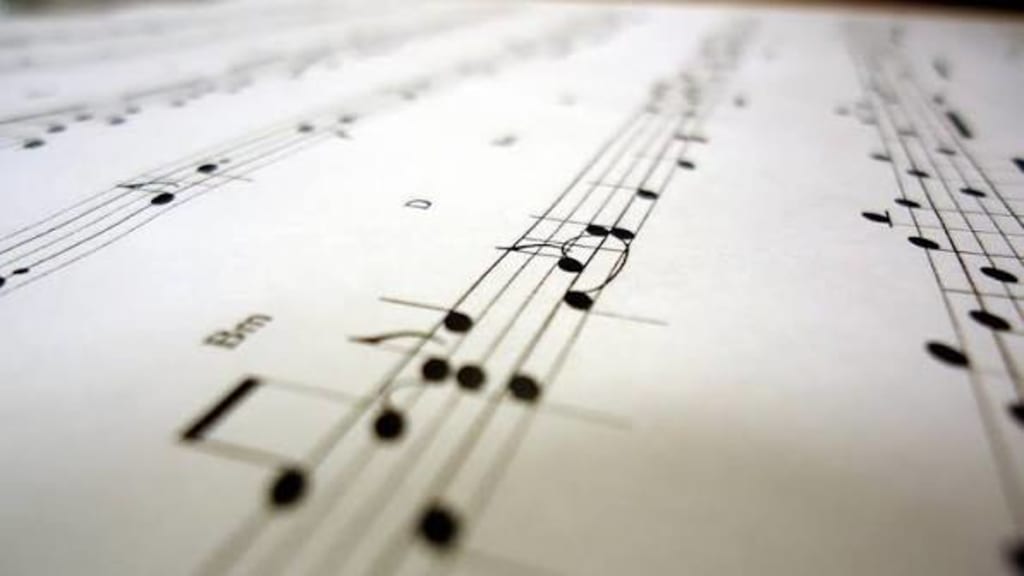
Long before anyone wrote a word, people were making music. It rose out of breath and heartbeat, out of the rhythm of work and the need to mark a death, a birth, a victory, or a god. Across every continent and every era, humans have reached for sound to express what speech alone could not carry. The story of music is, in many ways, the story of us.
Before History: The First Instruments
Music is older than writing, older than cities, older even than agriculture. The earliest evidence we have is startling in its age. In a cave in southern Germany, archaeologists uncovered flutes carved from bird bone and mammoth ivory dated to roughly 40,000 years ago. Someone, deep in the Ice Age, drilled finger holes into a hollow bone and played a melody we will never hear.
But these flutes were almost certainly not the beginning. The human body is itself an instrument. The first music was likely voice and percussion — clapped hands, stamped feet, sticks struck against stone or wood. These leave no trace in the archaeological record, which means the deepest roots of music are invisible to us. What survives are the durable objects: bone whistles, rattles, and the resonant chambers of caves where ancient people may have chosen to sing or paint precisely because the acoustics were strange and powerful. Tubidy Mp3
What was this early music for? We can only infer. Ritual, almost certainly. Communication across distance. The bonding of groups around a fire. Some researchers argue that music and language share a common ancestor — a kind of expressive proto-speech that only later split into the precise grammar of words and the emotional sweep of song.
The Ancient World: Music Gets Written Down
With the rise of the first great civilizations, music began to leave clearer fingerprints. In ancient Mesopotamia, clay tablets from around 1400 BCE preserve what may be the oldest known written melody, the "Hurrian Hymn." The Sumerians and Babylonians had harps and lyres so prized they were buried with kings.
In Egypt, music was woven into temple life and labor alike, played on harps, flutes, and percussion in scenes painted across tomb walls. But it was in ancient Greece that music first became an object of deep intellectual study. The philosopher Pythagoras, around the sixth century BCE, is credited with discovering the mathematical ratios behind musical harmony — that a string halved in length sounds an octave higher, that simple whole-number ratios produce consonant intervals. For the Greeks, music was not mere entertainment; it was a window onto the order of the cosmos itself, governed by the same numbers that ruled the stars.
Meanwhile, equally rich traditions were developing far from the Mediterranean. In India, the foundations of a sophisticated melodic and rhythmic system were being laid that would eventually become the raga and tala traditions. In China, music was bound up with Confucian ideas of social harmony, and elaborate bronze bell sets were tuned with remarkable precision. These were not lesser traditions waiting to be discovered by the West — they were parallel summits, each scaling the mountain of musical expression by a different route.
The Medieval World: Notation and the Birth of Harmony
For most of human history, music was passed from person to person by ear and memory. A melody existed only as long as someone alive could sing it. The great revolution of the medieval European period was the invention of a system to capture music on the page.
Within the Christian Church, monks sang plainchant — single, unaccompanied melodic lines, austere and floating, that we now call Gregorian chant. As the repertoire grew, so did the need to remember and standardize it. Around the ninth century, scribes began marking texts with small symbols to indicate the rise and fall of the melody. Over the following centuries this developed into staff notation, the system of lines and notes that, in refined form, musicians still read today. A monk named Guido of Arezzo, in the eleventh century, gave us the four-line staff and the singing syllables that became do, re, mi.
Notation changed everything. Music could now travel across distance and time without a living carrier. And crucially, it allowed composers to coordinate multiple voices at once. The medieval period saw the birth of polyphony — two, three, and eventually more independent melodic lines woven together. This was the seed of harmony, and it would grow into the towering architecture of Western classical music.
The Renaissance and Baroque: Splendor and Structure
By the Renaissance, roughly the fifteenth and sixteenth centuries, polyphony had flowered into music of astonishing richness. Composers like Josquin des Prez and Palestrina wrote interlocking vocal lines of great beauty and balance. Music spilled beyond the church into courts and homes; the printing press made sheet music available, and amateurs across Europe began making music together.
The Baroque era that followed, from around 1600 to 1750, was an age of grandeur, ornament, and emotional intensity. This was the period of Johann Sebastian Bach, whose intricate fugues represent one of the highest achievements of musical craftsmanship, and of Antonio Vivaldi, George Frideric Handel, and the invention of opera — a fusion of music, drama, and spectacle. The Baroque established many of the structures that would define Western music for centuries: the major and minor key system, the orchestra, and forms like the concerto and the sonata.
The Classical and Romantic Eras: Clarity, Then Storm
The Classical period of the later eighteenth century, dominated by Haydn, Mozart, and the young Beethoven, prized balance, elegance, and clarity of form. The symphony and the string quartet reached refined maturity. Music aimed for proportion and grace, the audible equivalent of the clean lines of a neoclassical building.
Then came the Romantics, and the temperature rose. Through the nineteenth century, composers like Beethoven in his later years, Chopin, Wagner, Brahms, and Tchaikovsky pushed music toward overwhelming emotion, individual expression, and sheer scale. Orchestras swelled. Operas grew into vast mythic dramas. The composer was no longer a craftsman serving a court but a heroic artist baring a soul. Music was meant to make you weep, tremble, and dream.
A Crucial Truth: Many Histories, Not One
It is tempting, especially in a short telling, to present music history as a single road running from cave flutes to the concert hall. But that road is mostly a Western one, and it leaves out vast continents of sound.
Across Africa, complex polyrhythmic traditions developed in which several rhythmic patterns interlock — a sophistication of rhythm that Western notation struggled even to write down. In the Arab world, intricate systems of melodic modes called maqam evolved alongside Persian and Turkish classical traditions. India refined its raga system into one of the most subtle melodic frameworks on earth. Indonesian gamelan ensembles built shimmering tuned-percussion soundscapes. Indigenous peoples of the Americas, the Pacific, and the Arctic each carried musical traditions of deep ritual meaning.
These traditions were not waiting in the wings of the "real" story. They are the story, in its true plurality. And when these streams finally met and mingled — often through the brutal forced movement of people, including the transatlantic slave trade — they would produce some of the most influential music the modern world has known.
The Twentieth Century: Recording Changes Everything
If notation was the first great technological revolution in music, sound recording was the second, and arguably the greater. For all of prior history, to hear music you had to be in the room while it was made. With the phonograph at the end of the nineteenth century and the records, radio, and electronics that followed, music became a thing that could be captured, mass-produced, and carried anywhere.
The consequences were enormous. Music was no longer bound to place. A performance in one city could be heard, decades later, on the far side of the planet. And the African American musical traditions of the United States — themselves born from the collision of African rhythmic genius and European harmonic structure under the weight of slavery and its aftermath — exploded outward to reshape global culture.
The blues gave voice to hardship and resilience. From it and its cousins grew jazz, with its improvisation and swing, the first art form widely recognized as a distinctly American contribution to the world. Jazz in turn fed into rhythm and blues, and out of that current came rock and roll in the 1950s, a sound that defined youth culture for generations. Soul, funk, reggae, and eventually hip-hop each emerged from this fertile lineage, while country, folk, and countless other strands braided through the century as well.
Meanwhile, the classical tradition fractured and experimented — Stravinsky's rhythmic violence, Schoenberg's abandonment of traditional keys, and later the electronic and minimalist explorations that questioned what music even was.
The Digital Age: Music Without Limits
The latest revolution is the one we are living inside. The shift from analog to digital — and then to the internet — has transformed not just how music sounds but how it is made, shared, and heard. A teenager with a laptop can now produce, in a bedroom, music that would once have required a full studio and a label's fortune. Streaming has placed nearly the entire recorded history of human music a tap away, an abundance no previous generation could have imagined.
Genres now collide and recombine at dizzying speed. A track may fuse a West African rhythm, a Korean pop sensibility, an American trap beat, and a sample of a 1960s soul record, all stitched together on a screen. The old boundaries — between high and low, between cultures, between the professional and the amateur — have grown porous in ways both exhilarating and disorienting. And newest of all, artificial intelligence has begun composing and generating music, raising fresh questions about creativity, authorship, and what we want music to be.
Why We Keep Singing
For all these transformations of technology and style, something at the heart of music has never changed. The Ice Age flute player and the bedroom producer are reaching for the same thing: a way to make the inner life audible, to bind a community, to mark the great passages of existence, to feel less alone.
Every known human society, without exception, makes music. No culture has ever been found without it. That universality tells us something profound — that music is not a luxury layered on top of human nature but something woven into its core. We do not fully understand why a particular arrangement of vibrating air can move us to tears or lift us to joy. But we have never stopped trying to summon that power.
The history of music is not really a march toward some final perfected sound. It is a 40,000-year conversation, still going, in which every generation adds its voice. And as long as there are humans, the conversation will continue — because to be human, it seems, is to make a joyful, sorrowful, irrepressible noise.
About the Creator
Enjoyed the story? Support the Creator.
Subscribe for free to receive all their stories in your feed.
Comments
There are no comments for this story
Be the first to respond and start the conversation.