
The small box that decides what people believe about you
How Google's knowledge panel builds a first impression you never wrote, and why it quietly shapes the way people judge a name online.

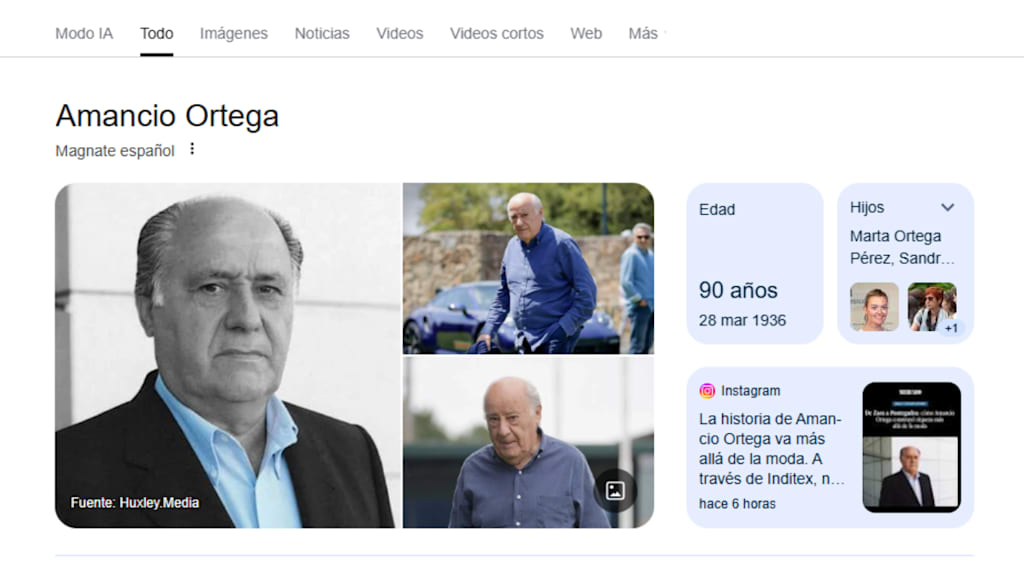
Someone is about to form an opinion about you. It might be a potential client, a recruiter, a journalist, or simply a stranger who heard your name in passing. Before they read a single article or open your website, they type that name into Google and wait less than a second for an answer. On the right side of the screen (or at the very top, if they are on a phone), a neat box appears with an image, a short description, and a handful of links. That box is the knowledge panel, and most people have no idea how much it shapes the moment that follows.
What the knowledge panel actually is
The knowledge panel is the information block Google shows alongside search results to summarize what it considers the key facts about an entity. An entity can be a person, a company, a brand, or an organization. The panel might include a name, a category, a brief biography, official social profiles, and contact details, all packaged so the searcher can absorb it at a glance.
What makes it powerful is the timing. It appears at the exact moment of judgment, when the searcher is deciding whether you are credible, relevant, and worth their attention. A clean, accurate panel answers that question before the person even scrolls.
Where the information really comes from
A common misconception is that the panel is built from a single website, usually the one belonging to the entity. It is not. Google assembles it from the knowledge graph, a large database that connects entities and the facts associated with them.
The knowledge graph does not trust one source on its own. It looks for the same information confirmed across many places: your website, your social profiles, industry directories, news coverage, and reference sites. When those sources agree, Google grows confident. When they contradict each other, it hesitates. That single idea (agreement breeds confidence) explains almost everything about how panels are won and lost.
Why that small box carries so much weight
In reputation terms, the panel is valuable because it surfaces verified information before the user clicks on anything else. It can push less flattering or unofficial links further down the page, reinforce the authority of a name, and steer attention toward official assets like verified social accounts and an accurate description.
It also sends a quieter signal. An active, well formed panel suggests legitimacy, a real track record, and genuine relevance. People rarely articulate this consciously, but a name that Google chooses to summarize feels more established than one that returns only scattered blue links.
Who actually gets one (hint: not only the giants)
The knowledge panel is not reserved for multinational corporations or celebrities. Google can generate one for many kinds of entities, as long as they show a clear digital identity and enough signals of relevance. That includes local businesses with a solid online presence, personal brands and executives, professionals and public figures, foundations and institutions, and even focused digital projects with a clear theme.
The deciding factor is not size. It is demonstrable relevance combined with a clear, consistent identity. A small, well defined organization with coherent information often has a better shot than a larger one that presents itself differently in every place it appears.
The signals Google is quietly reading
There is no official checklist, but the patterns are consistent. Google tends to reward a unique and recognizable identity (a clear name, activity, and purpose), public information that can be verified, and coherence across your website, your social profiles, and the way others mention you. Presence in sources Google considers trustworthy, such as established reference sites, also helps the algorithm validate that an entity is real and worth representing on its own.
Recurring mentions in independent sources matter a great deal here. Coverage that exists outside your own properties tells Google that other people recognize you, which is exactly the kind of external confirmation the knowledge graph is built to detect.
How to make your identity easier to trust
The goal is to remove doubt. You want Google to understand who you are, what you do, and why your identity is reliable, with as little ambiguity as possible. A few legitimate steps move you in that direction.
Start with the basics on your own site: a clear about page and an accurate biography. Add structured data that describes you as an organization, a person, or a brand, so machines can read your identity as easily as humans do. Keep your name, logo, and descriptions absolutely consistent everywhere they appear, and use the same handle and imagery across official social profiles. Finally, aim to appear in reputable databases and outlets within your field.
For anyone managing reputation, there is one more principle worth holding onto. Official and accurate sources should carry more weight than uncontrolled or outdated content. The more consistent and trustworthy your verified footprint, the easier it becomes for Google to favor it.
The mistakes that keep the box empty
The most common error is believing the panel can be forced. It cannot. The others tend to follow from that same impatience: contradictory information across platforms, the misuse or outright spamming of structured data, a lack of real external mentions, and attempts to manipulate reference sources without genuine relevance behind them.
Each of these produces the same result. They create what amounts to algorithmic distrust. Instead of nudging Google toward a panel, they give it reasons to hold back. The fix is rarely a clever shortcut. It is patient, honest consistency over time.
What it really comes down to
The knowledge panel is not a trophy you claim or a setting you toggle. It is what happens when your digital identity becomes so clear and so consistent that Google stops doubting who you are. You do not win it by gaming the system. You earn it by being unmistakably, verifiably yourself across every place the internet looks.
That is good news, in a way. It means the path is open to far more people than most assume, and it rewards the slow, unglamorous work of getting your story straight everywhere at once. Long before anyone meets you, that small box is already speaking on your behalf. The only real question is whether you have given Google enough reason to let it say something good.
About the Creator
Enjoyed the story? Support the Creator.
Subscribe for free to receive all their stories in your feed.
Comments
There are no comments for this story
Be the first to respond and start the conversation.