
The Silent Technology Powering Everything: Why the Crystal Oscillator Market Is Growing Steadily
From high-speed internet to advanced automotive systems, modern technology depends heavily on precise timing and synchronization. Crystal oscillators quietly power this ecosystem, ensuring devices function accurately and efficiently. As demand for connected devices grows, these components are becoming more critical than ever. This piece takes a closer look at how evolving technologies are reshaping the market and why this often-overlooked component is gaining global importance.

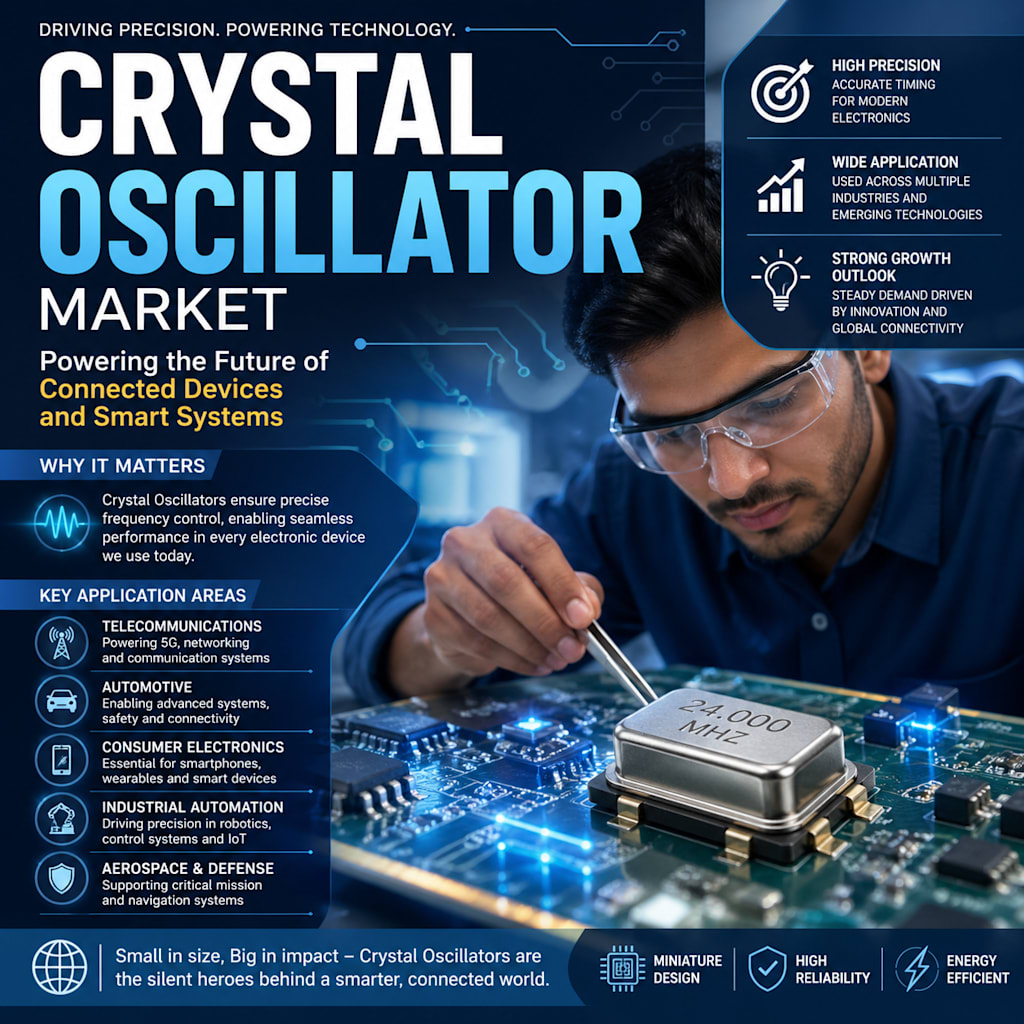
And something the common person has never really thought about‚ because in every smartphone‚ in every car GPS‚ in every satellite‚ there's a clock somewhere that keeps all of those devices in sync‚ to the second․
This component is a crystal oscillator․
Although tiny‚ the crystal oscillator is the heart of virtually all electronic equipment․ Crystal oscillators control circuits in radio communications‚ precision instrumentation‚ and digital control systems‚ and form the basis for the clock and frequency control․
With the development of technology‚ and the subsequent increase in use of crystal oscillators‚ the global market for these components is gradually increasing every year․
A Market Growing with Modern Technology
The crystal oscillator market size was valued at USD 3․22 billion in 2024 and is expected to reach USD 4․86 billion by 2033‚ growing at a CAGR of 4․36% during the forecast period․ The need for precision is expected to contribute to market growth․
The market may move slowly in comparison to fast-growing technology markets but is important because every improvement in electronics capacity‚ faster networks‚ and smarter devices creates a need for more precise timing․
These properties have made crystal oscillators vital across many industries․
Why these tiny components are so important
Simply put‚ a crystal oscillator makes sure that electronic systems are synced with the right timing in terms of frequency signals so that devices can communicate‚ process‚ and run as they should․
This reliance on real-time information and high-speed communication continues to increase in many industries‚ which means that even the slightest timing offset in the signals can have major consequences and demand remains strong for high-performance oscillators․
When it comes to telecommunications or aerospace systems‚ precision is no longer optional․
5G‚ the Internet of Things and smart technologies impact on areas
One of the driving forces behind the crystal oscillator industry is the rapid growth of modern technologies․
Furthermore‚ with the strict timing required for the transmission of high-speed data on 5G networks‚ and with billions of devices expected to be interconnected with the anticipated Internet of Things (IoT)‚ frequency control has become even more critical․
Smart homes‚ wearables‚ sensor networks used in industrial applications‚ and connected cars‚ all use crystal oscillators to function with efficient precision timing requirements․
As connectivity increases‚ the demand for accurate components rises․
Smaller Devices‚ Bigger Demands
Technology is getting smaller while expectations are growing․
As devices are increasingly expected to be smaller‚ faster and more energy efficient‚ manufacturers have developed a collection of miniaturized crystal oscillators which deliver high-performance in small packages․
However‚ through advances in material and manufacturing technology‚ smaller‚ more stable and reliable oscillators have become practical to manufacture․
This trend has also pushed oscillators into new application areas such as medical and wearable health technology․
The Expanding Role in Automotive and Industrial Systems
The automotive industry is another major driver of the market․
Modern automobiles are no longer purely mechanical devices but also include electronic systems such as driver-assistance systems‚ infotainment systems‚ and vehicle-to-everything communication systems․
All of these systems require accurate timing to function properly․
At the same time‚ industrial automation is increasing in many types of manufacturing․ Crystal oscillators are part of the robotics‚ control systems‚ and smart factories that require precision timing and synchronization․
Consumer electronics will continue to drive demand․
One of the most consistent roles of consumer electronics has been its contribution to market growth․
Crystal oscillators are used in the electronic circuitry inside consumer electronics such as smartphones‚ tablets‚ computers (laptops)‚ smartwatches and game consoles‚ which are driven by consumer demands for faster‚ more powerful and more capable devices․
The world has seen an increase in demand for online shopping‚ e-commerce‚ and related services․
This cycle of innovation and procurement keeps the market moving forward․
Regional growth is led by Asia-Pacific
In terms of production and demand‚ the Asia-Pacific region is probably the most important․
Electronics manufacturing in China‚ Japan‚ and South Korea is accompanied by meaningful demand in the home markets of those countries with major consumer electronics industries․ These three countries account for a large part of the market for crystal oscillators․
The increasing disposable income and high smartphone penetration along with rapid technological advancements in the region are driving growth․
North America is still a strong market for us‚ built on innovations in defense‚ aerospace and telecommunications․ Europe is also continuing to win steadily‚ particularly with respect to auto and industrial automation systems․
Innovation in the Competitive Environment
The crystal oscillator market is competitive‚ with global manufacturers and regional players alike seeking to deliver better performance and efficiency․
There is particular emphasis on shrinking devices with low power requirements and improving their stability as applications become more specialized and require performance levels that were previously thought impractical to achieve․
Calculated partnerships‚ research‚ and diversification of products and services are some of the main tactics that companies are using in this new environment․
Challenges and Opportunities Ahead
The market is experiencing growth‚ but there are challenges․
Manufacturers must keep pace with technology as it changes at a fast rate‚ within economic constraints․ In the automotive and telecommunications industries‚ very high quality standards are imposed by the end users․
However‚ these challenges also create opportunities․
The rise of energy efficient devices‚ and the growing diversity of smart technologies and connected devices‚ presents new opportunities for innovation․ Those companies that can be the fastest to respond and deliver high performance solutions are likely to be the most successful․
Looking Ahead
Thus‚ the future of crystal oscillators is tied to the future of technology in general․
As devices become smarter‚ networks become faster‚ and systems become more interconnected‚ the precision of timing systems is only going to get more important․
Crystal oscillators are unlikely to be seen by most users‚ but they are a key technology that keeps the digital world ticking like clockwork․
With the entire market projected to be worth almost USD 5 billion by 2033‚ it's clear that these tiny devices will play a huge role in the future of electronics in general․
About the Creator
Robert
Senior Market Researcher at IMARC Group, specializing in global market analysis, industry trends, and data-driven insights across diverse sectors.
Enjoyed the story? Support the Creator.
Subscribe for free to receive all their stories in your feed.
Comments
There are no comments for this story
Be the first to respond and start the conversation.