
The Silent Revolution in Back Pain Treatment
Why spine biologics may quietly transform recovery, healing, and the future of spinal care
A sharp pain shoots through your back.
You pause.
Maybe it’s from sitting too long. Maybe lifting something heavy. Maybe stress. You stretch, hoping it disappears.
But for millions of people worldwide, back pain doesn’t simply disappear.
It lingers.
It changes how they walk, sit, sleep, work, and sometimes even who they become.
For some, surgery becomes unavoidable. Yet traditional spine surgeries often raise difficult questions: *How long will recovery take? Will the body heal properly? What if the procedure fails?*
Quietly, scientists and healthcare innovators have been searching for better answers.
And one of the most overlooked breakthroughs might already be changing spinal care behind the scenes.
According to Mordor Intelligence, the spine biologics market size is projected to grow from USD 3.54 billion in 2026 to USD 4.71 billion by 2031 expanding at a 5.88% CAGR during the forecast period.
That growth isn’t simply about numbers.
It reflects a larger shift in how doctors think about healing itself.
### Why Spine Healing Is Becoming More Biological Than Mechanical
For decades, spinal treatment often focused on mechanics.
Fix the alignment.
Fuse damaged areas.
Reduce pain.
Stabilize movement.
But the body is more complicated than machinery.
Healing depends on biology.
Bones must regenerate. Tissue must recover. Cells must respond properly. And when healing slows—or fails—patients may continue experiencing discomfort long after surgery.
That’s where spine biologics enter the conversation.
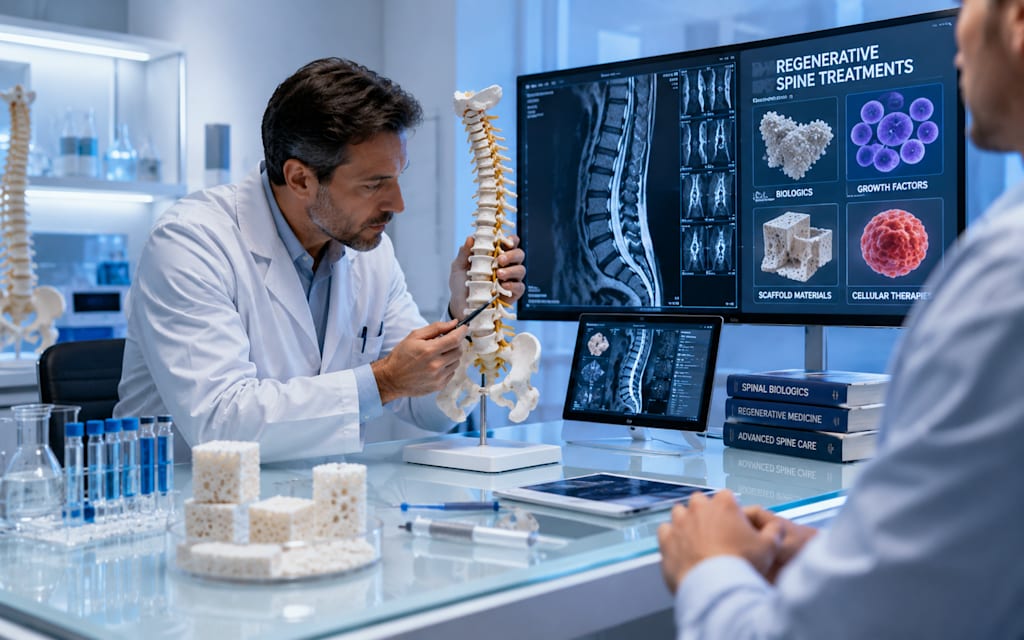
Spine biologics are materials used to help encourage bone growth, tissue repair, and spinal healing. They are increasingly being integrated into spinal procedures to support recovery and improve outcomes.
Instead of relying entirely on hardware or structural support, biologics work alongside the body’s natural healing process.
And that matters more than ever.
Aging populations are increasing globally. Sedentary lifestyles contribute to posture-related issues. Sports injuries, degenerative disc conditions, and spinal disorders continue affecting millions.
At the same time, patients increasingly want solutions that feel less invasive and more regenerative.
Search interest around questions such as:
* “How to heal faster after spine surgery”
* “What are biologics in spinal surgery?”
* “Future of spinal treatment”
* “Can regenerative medicine help spinal problems?”
* “Best innovations in spine recovery”
continues to grow as healthcare consumers become more informed.
People no longer only ask:
*Can surgery fix me?*
They ask:
*Can my body heal better?*
According to Mordor Intelligence, growth in spinal treatment innovations is being influenced by increasing spinal disorders, rising surgical procedures, and stronger demand for advanced biologic-assisted recovery methods.
That shift signals something larger than a temporary healthcare trend.
It points toward a future where healing may become increasingly personalized.
### The Human Side of Recovery Nobody Talks About
Spinal problems are rarely only physical.
Pain changes routines.
It changes moods.
It changes relationships.
Someone who once loved morning walks may struggle to climb stairs. A parent may hesitate to lift their child. Workers may find themselves quietly battling discomfort through long office hours.
And after surgery, uncertainty can feel overwhelming.
Will this finally work?
Will life feel normal again?
That emotional weight matters.
Which is why recovery innovations attract attention far beyond hospitals.
Biologic-assisted treatments aim to support the body during one of its most vulnerable periods: healing.
Imagine a future where spinal recovery focuses less on “repairing damage” and more on encouraging the body to regenerate more effectively.
That possibility helps explain why this space continues gaining momentum.
The market figures themselves reveal confidence in long-term demand.
According to Mordor Intelligence, the **bone graft substitutes segment is expected to remain a major category within the market**, reflecting growing interest in alternatives designed to support spinal fusion and bone healing.
Meanwhile, North America continues leading market adoption due to advanced healthcare systems and rising spinal procedures, while emerging healthcare regions increasingly invest in improved spinal technologies.
But what makes this story compelling isn’t simply medical progress.
It’s what progress means for everyday people.
A shorter recovery.
Better healing support.
More confidence after surgery.
Less fear around long-term complications.
For patients facing painful spinal conditions, those outcomes matter deeply.
### A Future Where Healing Becomes Smarter
Healthcare is changing.
For years, medicine focused primarily on intervention.
Fix the problem.
Treat the symptom.
Move on.
Today, a different philosophy is emerging:
Support the body’s ability to heal.
That idea sits at the center of growing interest in biologics—not only for spinal care but across regenerative medicine.
Researchers continue exploring how biologically driven treatments may improve outcomes across orthopedic and musculoskeletal conditions.
And while no treatment guarantees perfect recovery, innovation continues pushing the field forward.
The irony?
One of healthcare’s most exciting transformations may not involve futuristic robots or dramatic technology headlines.
Instead, it may involve helping the body do something it has always tried to do:
Heal itself.
The future of spinal care may become more personalized, more regenerative, and more biologically informed than ever before.
And as the numbers suggest, this quiet shift is already underway.
Because behind every market forecast lies something more human:
Someone hoping to move without pain again.
Someone hoping to sleep comfortably.
Someone hoping to return to ordinary life.
Sometimes, the biggest healthcare breakthroughs aren’t loud.
Sometimes, they begin quietly—in the hope that healing can happen better than before.
**What do you think matters more in healthcare innovation—faster treatment or better long-term healing?**
About the Creator
Enjoyed the story? Support the Creator.
Subscribe for free to receive all their stories in your feed.
Comments
There are no comments for this story
Be the first to respond and start the conversation.