
The Silent Industry Powering Offshore Wind and Oil Platforms
Why helicopter services remain essential as the North Sea expands its energy ambitions
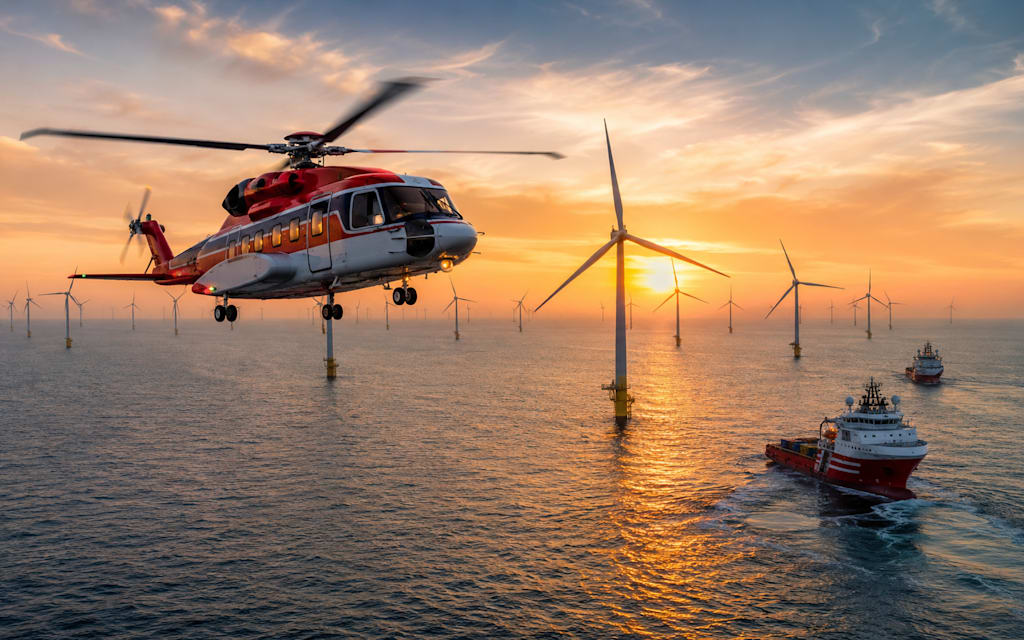
The North Sea is often imagined as a vast stretch of cold water dotted with distant oil platforms and towering offshore wind turbines. Yet few people stop to consider how thousands of workers reach these remote installations every day. There are no highways across the sea and no convenient train routes to offshore energy hubs. Instead, an aviation network operating largely out of public sight has become one of the most critical links in Europe's energy supply chain.
Long before sunrise, helicopters lift off from coastal bases in the United Kingdom and neighboring countries, carrying engineers, technicians, inspectors, and support crews toward platforms that may be located hundreds of kilometers offshore. For many workers, these flights are not merely a convenience-they are the only practical way to access some of the world's most important energy assets.
Browse Complete North Sea Offshore Helicopter Services Market
Porter's Five Forces Analysis
1. Threat of New Entrants – Low
High capital requirements, strict aviation regulations, and the need for proven safety records create significant barriers for new companies entering the market.
2. Bargaining Power of Suppliers – Moderate to High
Limited helicopter manufacturers and specialized maintenance providers give suppliers considerable influence over pricing and operational costs.
3. Bargaining Power of Buyers – Moderate
Large offshore oil & gas and wind energy companies can negotiate contracts, but their options are limited to a few qualified service providers.
4. Threat of Substitutes – Low to Moderate
Crew transfer vessels can replace helicopters for some offshore wind operations, but helicopters remain essential for rapid transportation, emergencies, and long-distance offshore access.
5. Competitive Rivalry – Moderate to High
Established operators compete intensely based on safety performance, fleet capabilities, service reliability, and long-term contracts with offshore energy companies.
As investments in both offshore oil production and renewable energy continue across the region, the North Sea Offshore Helicopter Services market is quietly evolving alongside them. According to Mordor Intelligence, the market is projected to grow at a CAGR of 1.98% during the forecast period from 2026 to 2031, reflecting the continued need for specialized aviation services that support offshore operations.
The Invisible Transportation Network at Sea
Most transportation systems are visible to the public. Roads, railways, airports, and ports are part of everyday life. Offshore helicopter operations, however, function largely beyond public attention despite serving a crucial role in the energy sector.
A typical offshore worker may spend weeks on a platform or wind farm installation before returning home. Helicopters make these rotations possible by providing reliable transportation to locations that would otherwise require long and often weather-dependent sea journeys.
The importance of these services extends beyond moving personnel. Helicopters are frequently used for emergency response, medical evacuations, equipment inspections, and time-sensitive maintenance operations. In environments where operational downtime can be extremely costly, rapid access to offshore facilities becomes essential.
This operational necessity explains why the North Sea Offshore Helicopter Services market size continues to be supported by long-term energy infrastructure investments. While technology has transformed many aspects of offshore operations, the need to safely transport people to remote installations remains unchanged.
North Sea Offshore Helicopter Services Companies
Offshore Wind Is Creating New Flight Paths
For decades, offshore helicopter services were closely associated with oil and gas platforms. Today, another sector is becoming increasingly important: offshore wind energy.
The North Sea has emerged as one of the world's leading regions for offshore wind development. According to Mordor Intelligence, offshore wind installations in the region expanded from approximately 4.5 GW in 2012 to 27.8 GW in 2021. This remarkable growth reflects Europe's broader push toward cleaner energy generation.
Every new wind farm introduces additional transportation and maintenance requirements. Turbines must be inspected, repaired, upgraded, and monitored throughout their operational lifespan. As projects move farther offshore to access stronger and more consistent wind resources, helicopter transportation becomes an increasingly attractive solution.
Engineers responsible for turbine maintenance often face tight schedules and weather-related constraints. Helicopters can significantly reduce travel times compared to traditional vessel transport, helping operators maintain efficiency and minimize operational disruptions.
This trend is expected to remain a key factor influencing the future of the North Sea Offshore Helicopter Services market share, particularly as renewable energy projects continue expanding throughout the region.
Why the United Kingdom Remains at the Center
Among all countries participating in North Sea energy activities, the United Kingdom continues to occupy a dominant position.
The country hosts a large concentration of offshore oil and gas assets while simultaneously leading many offshore wind initiatives. Mordor Intelligence notes that the United Kingdom is expected to maintain the largest share of the North Sea offshore helicopter services market during the forecast period.
Several factors contribute to this leadership position. The UK's extensive coastline, mature offshore infrastructure, established aviation bases, and significant investment in offshore energy projects all create sustained demand for helicopter transportation services.
The country's role in offshore wind is particularly notable. Mordor Intelligence reports that the United Kingdom accounted for approximately 23% of global offshore wind installations in 2021. Such large-scale development naturally increases the need for specialized logistics and transportation support.
As offshore projects become more sophisticated and geographically dispersed, aviation providers are likely to remain indispensable partners in ensuring smooth operations.
A Market Built on Reliability
Unlike many industries driven primarily by consumer demand, offshore helicopter services are built on reliability, safety, and operational continuity. Energy companies depend on these services to maintain production schedules, support maintenance programs, and protect worker welfare.
The projected 1.98% CAGR may appear modest compared to high-growth technology sectors, but it reflects something equally valuable: resilience. Demand is supported by critical infrastructure rather than short-term market trends.
Whether transporting technicians to offshore wind turbines, supporting exploration activities, or providing emergency response capabilities, helicopter operators occupy a unique position within the offshore energy ecosystem.
Their work may rarely make headlines, but without them, many offshore projects would face significant logistical challenges.
As the North Sea continues balancing traditional energy production with renewable expansion, helicopter services will remain one of the industry's most dependable enablers. The aircraft crossing the horizon each morning may seem routine, yet they represent a transportation network that keeps Europe's offshore energy ambitions connected, productive, and moving forward.
What do you think will have the greater impact on offshore aviation in the coming decade-continued oil and gas activity or the rapid expansion of offshore wind farms?
About the Creator
efingutthomas
My expertise is custom research across industries such as aerospace & defense, agriculture, animal wellness, automation, automotive, chemicals, consumer goods, electronics, energy, finance, food & beverages, healthcare, hospitality and ICT
Enjoyed the story? Support the Creator.
Subscribe for free to receive all their stories in your feed.
Comments
There are no comments for this story
Be the first to respond and start the conversation.