
The Royal Family’s Most Poisonous Fairy Tale: A Commoner Girl Bore Four Princes, Then They Took Everything
Yuvadhida spent years in the dark, gave birth five times, and learned the hardest rule of all: in a royal succession, children belong to the crown, not the mother.
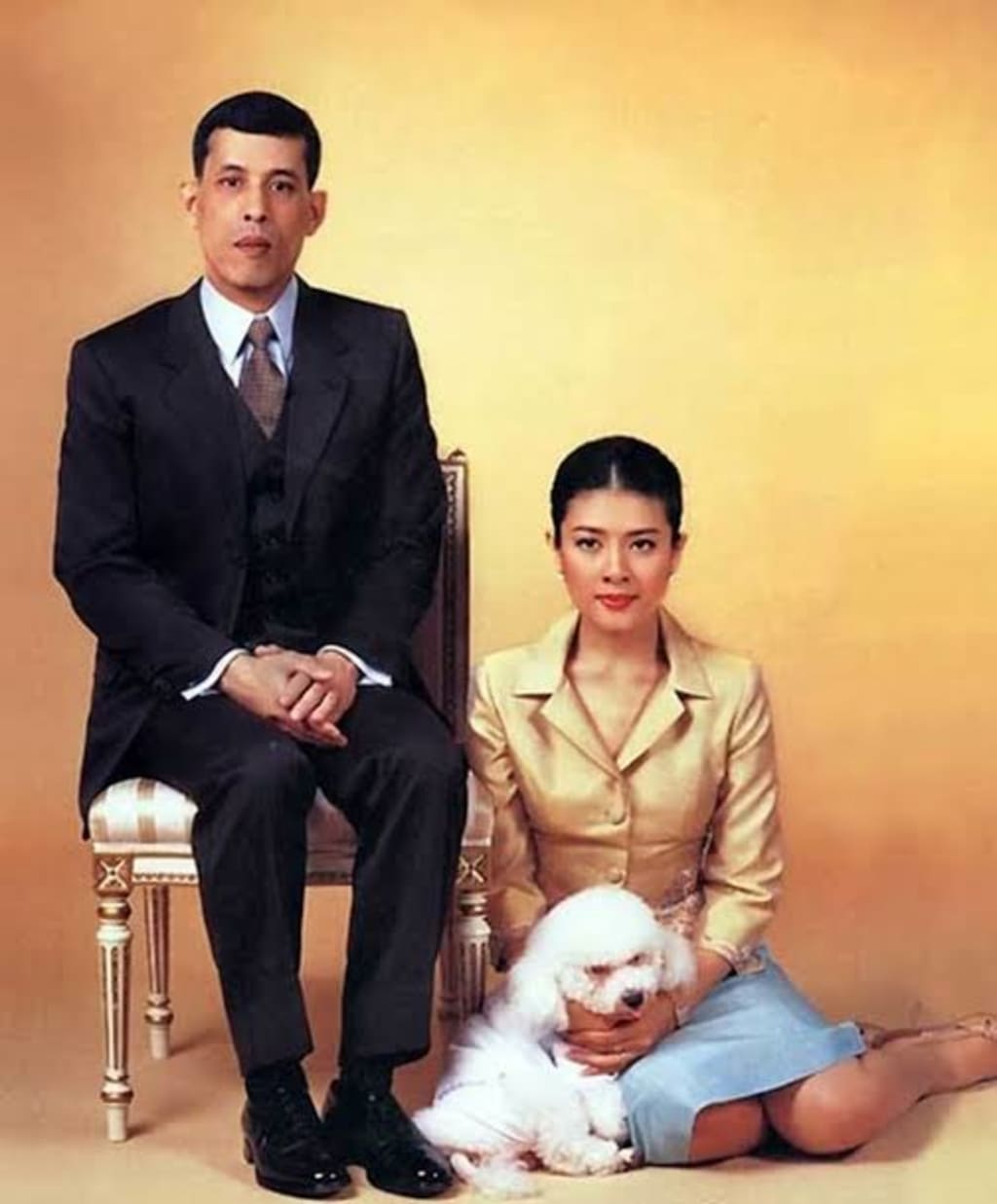
The photograph
She was beautiful when young. Not the kind of beauty that belongs in a palace. Hers was the kind the camera leans toward: bright, a little wild, unplaced. A girl with a faint smile and eyes that had not yet been touched by fate.
She had been an actress. Small fame. Magazine photos. In them she looks like someone who still believes the future is open.
She probably never imagined her life would be covered by a larger, colder net: royal power, patriarchal power, aristocratic inheritance, male heirs, class barriers. She could not have known she would bear four sons and one daughter, endure years of a hidden relationship, obtain the title of Crown Princess, and then, two years later, be driven overseas under a fabricated charge. She would be separated from her children and exiled for half her life.
She thought she was leaping across class. The royal family was harvesting her.
The marriage that was not about love
At the other end of the story was Maha Vajiralongkorn, then Crown Prince, later Rama X.
He had already obeyed the royal family’s arrangement and married Soamsawali. She came from the Yukhon noble family. She was Queen Sirikit’s own niece. The marriage was not love. It was architecture, built to stabilize the network between the palace and the noble clans.
Maha had no feeling for it. He and Soamsawali had one daughter, Princess Bajrakitiyabha. No male heir.
For an old royal house, a male child is not a private family matter. It is the succession line. It is continuity. It is stability. No male heir meant the line was unstable. An unstable line meant nobles, palace officials, the military, and every faction would stir.
The royal family needed male blood to secure the bottom line.
Soamsawali could no longer bear a boy.
And Maha loathed the aristocratic marriage that bound him.
The gap
Yuvadhida was young. Beautiful. A commoner. No family power to rely on.
She was not the first, nor would she be the last. But she appeared at that exact gap: the royal family lacked a male heir, and Maha lacked a woman he could control, use for childbearing, and cut away at any time.
Maha moved out of the palace. He lived with her outside, secretly. The relationship was hidden from the light. She could not appear publicly. Could not attend formal royal events. No title. No security.
For an ordinary actress, this should have been a danger signal.
But Maha gave her a promise that seemed redeemable: keep bearing children, and when the time was ripe, he would divorce his first wife, give her the formal title of Crown Princess, let her escape her commoner status, and give their children legitimate royal inheritance rights.
This was the classic script: a mother gains status through her son.
Under Thailand’s severe class barriers, an ordinary actress had almost no other channel to touch the top of power. She believed the logic. She made childbearing the only chip with which to rewrite her fate and her descendants’. She gambled her reputation, her acting career, her youth, and her body. She accepted an underground situation with no title and no public appearance.
What was she after?
The title. The escape from commoner origins. Legitimate royal inheritance rights for her children. Wealth, status, social honor that ordinary people could not touch in a lifetime.
In those years, she bore four sons and one daughter in succession.
Four sons. The royal family’s scarcest male descendants.
The arithmetic of wombs
Her desperate childbearing had a survival calculation behind it.
In the old royal system, offspring, especially sons, were the only chip a low-born outsider woman could hold. She hoped that by endless childbearing merit she could outlast the first wife, obtain the title of princess, and change her fate and her children’s.
Maha’s willingness to induce and tacitly allow her to keep bearing children was not entirely out of love.
For the royal family, extra male heirs were reserve candidates for the throne. Once the children were born, the royal family possessed that bloodline. As for the mother’s status, it could be negotiated later.
He enjoyed her company and her childbearing sacrifice. He always kept her outside the palace system.
For all those years, she could only be a lover who could not be publicly acknowledged.
No title. No security. Living in the dark.
The first wife knew
Soamsawali knew all about it.
Born into the top aristocracy, she was filled with humiliation. But she was bound by the royal marriage contract and family ties. She needed to protect her daughter Princess Pa’s future. She chose to endure. She did not violently tear the mask off. She watched her husband father five children with another woman outside.
Maha was determined to divorce Soamsawali and marry Yuvadhida.
But divorce resistance was enormous: Soamsawali herself had done no wrong. Behind her stood the powerful Yukhon family.
Only after confirming that Yuvadhida had borne four sons, only after the royal family had enough male blood as a backstop, did the old king, Bhumibol, relent and agree to dissolve the marriage.
After long years underground, Yuvadhida was finally legitimized. She became the second wife of the Thai Crown Prince. The Crown Princess.
The crown princess was another cage
Rising to that position was only the beginning of suffering.
Because of her origin as the “other woman,” she struggled from the first day she stepped into the palace.
Queen Sirikit could never forgive her. She had taken away her own niece’s position. Deep down she did not accept this commoner daughter-in-law. She nitpicked daily. Criticized her background and etiquette. Magnified every flaw in her words and behavior. Never gave her the consideration and help a mother-in-law should give.
The old royal and aristocratic circle rejected her. On the surface they maintained the ceremonial treatment due a princess. Inwardly they were guarded. They watched her with cold eyes.
The royal family was conducting a systematic extraction.
It squeezed her youth. The physical toll of five births. The core royal merit of bearing four princes. The public-opinion value of her unnamed, unacknowledged endurance and notoriety.
After using all value, it gave no wealth, equity, trust, or security in return.
Zero compensation. Zero backstop. A pure-profit harvest.
Before marriage, Maha would still be tender and make promises. After marriage, once the goal was achieved, his attitude changed dramatically. He no longer cared about her feelings or situation. He was distant and deliberately cold. He openly showed his disgust for her in public. He quickly developed a new lover, Srirasmi. He made no secret of his philandering. He allowed the entire royal circle to belittle and exclude her. He turned a blind eye to her grievances and helplessness.
All the sweet words before marriage vanished. Only cold royal rules remained.
She was nominally Crown Princess. In reality she was still a tool kept by the royal family. She had no power of her own. No trustworthy ally. Every move exposed to royal surveillance. Isolated and helpless in the vast palace.
Why he did not care
The core reason Maha did not care at all about her “other woman” origin, and was not afraid of damaging the royal reputation, was extremely realistic.
Royal reputation and aristocratic dignity served only the legitimate wife from a powerful marriage.
A commoner extramarital partner, a risen princess, was originally a tool the royal family used to solve the heir problem. The moral stain and public abuse of a tool never damaged the core majesty of the royal family.
What Maha needed was her childbearing results. Not respect for her identity.
He used her to break the shackles of the original aristocratic marriage and fill the royal male-heir gap. The controversy of her rise and public criticism were all borne by her personally. The royal family and Maha could stand perfectly outside it.
This was also the fundamental reason Maha was completely unbridled and unscrupulous throughout.
The obedience
After marriage, Maha continued to cheat and frequently changed lovers.
Facing her husband’s blatant betrayal and humiliation, Yuvadhida was long numb and powerless.
She herself had risen through being the third party. She had no voice in the royal hierarchy of superiority and inferiority. She knew her foundation was weak. No maternal family to rely on.
Once she resisted, quarreled, or caused a scene, not only would her position be lost, her newly legitimized status would instantly be stripped away, and her five young children would be implicated.
So she gritted her teeth and endured. Silently compromised. Did not dare utter half a complaint. Was completely submissive.
Here lies a huge cognitive mistake.
Yuvadhida had seen with her own eyes that Soamsawali, because she could not bear a son, ultimately headed toward divorce. So she naively thought: as long as she bore multiple boys and was sufficiently obedient, she could firmly sit in the position of queen.
Reality was exactly the opposite.
In the rules of the Thai royal family, sons belong to the royal family, not to the mother.
Even bearing three or four sons could not become her protective talisman. Childbearing could only help her obtain an entry ticket, not a guarantee of status.
Of commoner origin. Without a strong maternal family as backing. Relying merely on high fertility and blind obedience. This was absolutely insufficient to contend with the entire royal system.
All her devotion could only complete the step of “being used.” It could not buy “being accepted.”
This was the core of her tragedy.
The charge
After only two years of marriage, in 1996, the storm suddenly broke.
The royal family publicly accused Yuvadhida of an affair with a sixty-year-old Air Chief Marshal.
The adultery charge was absurd to the extreme. No substantive evidence. No photographs. No witnesses. No proof. No timeline. No specific facts.
A completely fabricated charge woven by the royal family. A tailor-made excuse to legally discard her.
But before the supreme absolute authority of the Thai royal family, she had no qualification or power whatsoever to refute, explain, or confront.
She did not dare resist. She let the royal family dominate her fate.
Her core vulnerability was entirely bound to her five children.
Once she publicly refuted the royal family or opposed Maha, it would only thoroughly enrage the royal power-holders. Not only would she be severely punished, the status and future of the four young princes and the young princess would be completely destroyed.
To preserve a glimmer of life for her children, she swallowed all the stigma. She silently accepted the charge of infidelity. She passively accepted all judgment and expulsion.
Why he discarded her
Many people wonder why Maha, in just two years, came to detest her extremely, insisted on abandoning her, and would not hesitate to expel her whole family overseas. What exactly had she done to “offend” him?
The truth was never that she made a mistake. She had completely lost use value and become a potential danger to the royal family.
First, she had perfectly completed her mission. Four sons and one daughter. The royal family’s decades-long shortage of male heirs was solved. Maha no longer needed to use promises, tenderness, and endurance to deal with her.
Second, the four grown princes she bore had legitimate blood, high succession order, and excellent qualities. As they grew up, they began to possess potential for throne competition. This posed a huge threat to Maha’s future heir plans.
Third, she had a commoner background, no aristocratic restraint, yet held legitimate prince chips in her hand. The royal family was extremely wary that in the future she might seize power through her sons, that “the mother would become noble through her sons” and backfire on the royal family.
The best solution was to stigmatize her. Thoroughly expel her. Cut off all connection.
The so-called adultery charge was merely an excuse for a decent killing of the donkey after it had done the work.
The ledger
Looking back at this marriage, Yuvadhida paid an extremely heavy sacrifice.
She sacrificed her acting career and social reputation. She spent long years of youth in a hidden underground relationship. She staked all her life’s hope on royal marriage and childbearing. She ended up ruined in reputation and forced into exile overseas.
For the Thai king and the entire Thai royal family, the benefits were obvious.
Through her, Maha produced four boys. He filled the royal male-heir reserve. He freed himself from the pressure of having no male heir. Using the childbearing results as a reason, he smoothly escaped an unsatisfactory aristocratic arranged marriage. Once the childbearing value was completely squeezed out, a single charge could discard this outsider commoner woman at will.
The royal bloodline was preserved. Royal power and wealth would not flow outward in the slightest.
She devoted long years of youth. Bore four sons and one daughter. Paid the full value of childbearing.
What she received in the end was expulsion.
The daughter
Her only daughter, Sirivannavari, was taken.
Because of a royal monk’s claim that she was a “national guardian beast,” the child was separately brought back to Thailand and kept in the royal family. Separated from her mother and brothers ever since.
Mother and children were permanently separated in two places.
Meeting was very difficult.
This separation of flesh and blood was the most piercing torture of her life. Her young daughter was unilaterally taken away by the royal family by force. The mother-child bond torn apart. No negotiation. No appeal. No visitation rights.
The reason she watched her daughter be taken away, and absolutely did not dare fight for custody, was not weakness.
It was that the royal family had precisely grasped her death spot. If she dared oppose the royal family or fight for her daughter, the four exiled sons would immediately be deprived of schooling, their overseas residence qualifications revoked, their futures completely ruined. They might even be held accountable and repatriated.
In a desperate situation of absolute royal power, stigmatizing charges, no assets, no backing, and the lifelines of her whole family in the other side’s grip, she had not a single bargaining chip.
She swallowed tears. Endured the pain. Compromised.
She let the royal family dispose of her own daughter as it pleased.
The body
Years of five high-frequency births. Four sons and one daughter in succession.
Her female body suffered destructive, irreversible lifelong damage.
Pelvic floor trauma. Depletion of vital energy and blood. Premature organ aging. Chronic weakness and deficiency.
She used her physical body to overdraw and half her life’s health to hard exchange for the royal family’s flourishing descendants.
The daughter who understood
The world does not know that the grown-up Sirivannavari is extremely clear-headed and perceptive.
She fully understands her mother’s endurance and helplessness back then. She knows deeply that her mother was forced to bear stigma and separation in order to preserve her five children.
She never resents her mother.
Instead, she secretly remembers her birth mother’s grace of bearing and raising her. After adulthood, she has repeatedly publicly linked with her mother, invisibly vindicated her, and silently made up for the mother-child regret that can never be repaired in this life.
She is the only one among the five children who understands her mother’s desperate predicament and feels guilt and understanding.
Exile
After the expulsion, Maha was cruel and heartless.
He refused to pay a single cent of child support. A single cent of resettlement allowance. A single cent of compensation.
Absolutely zero economic backstop.
He deliberately used a starvation-style punishment to make her bear stigma and go into exile overseas with nothing.
From an objective historical standpoint, Yuvadhida did not receive a royal divorce settlement or asset compensation. She was nearly expelled with nothing.
She did not obtain any royal divorce compensation, resettlement fee, royal trust, palace property, or royal equity. The core royal wealth system was completely closed and thoroughly isolated from her.
In the early exile period she was extremely poor financially.
When she took her four sons to live in the UK, their elite school tuition was once in arrears. The school could only pass the bill to the Thai Ministry of Foreign Affairs to pressure them. Only then did the royal family reimburse a small amount of the children’s education expenses.
This meager sum was directed only at the grandchildren’s schooling, not at Yuvadhida’s personal alimony, resettlement, or compensation. She herself had no royal economic backstop throughout. She could only rely on her meager savings from her early acting days to struggle for survival.
Maha and the royal family’s logic was extremely cold-blooded: when a tool is scrapped, there is no need for aftercare.
Not only must her identity, reputation, and status be stripped away, but all economic lifelines must be cut, so that she could never turn the situation around or counterattack.
Only the old king, Bhumibol, out of pity for his grandchildren, provided part of the children’s education funds. All other living expenses and the burden of survival fell entirely on Yuvadhida alone.
The ordinary woman
The former princess became overnight an ordinary woman exiled overseas.
With four underage sons, she moved around in the UK.
Life in exile was extremely bleak and difficult.
She completely lost nationality protection. Lost identity and title. Lost social resources. Lost all networks. In a foreign land: language barriers, awkward status, restrictions everywhere.
With four young children, she struggled alone. No husband to back her. No maternal family support. No royal relief. No fixed assets. Constantly unsettled. Moving from place to place. Bearing huge economic pressure, public stigma pressure, single-parent child-rearing pressure, and survival pressure in a foreign country.
Suffering cold stares and embarrassment. Extreme desperate survival.
This was also the ultimate reason for her life’s desolation and miserable end.
After the royal family systematically squeezed out all her value, she was precisely stigmatized, completely zeroed out, and ruthlessly abandoned, with no tolerance or backstop whatsoever.
Why the children were also discarded
Why was the entire royal family so ruthless toward her children?
These boys were Maha’s own flesh and blood. But to Maha, the children were born of Yuvadhida.
Once they had inheritance rights, they would threaten the heir he favored in the future. At the same time, the royal family was unwilling to let the bloodline of an outsider maternal line use the children to divide royal authority.
Once, Maha used the birth of these boys to force the first wife into divorce and complete the royal heir reserve. But when these grown sons had the possibility of becoming competitors for the throne, they immediately became threats in the eyes of the royal family.
The royal family needed only the childbearing result. Not kind treatment of the mother who bore the children.
They squeezed dry Yuvadhida’s childbearing value. After the goal was achieved, they discarded both mother and children.
Even in the long years that followed, they would intermittently use the four exiled sons as tools to send signals in royal succession games, yet always refused to return the status they should have had.
This is also why, even though she bore four sons, she still could not rise through her children, and instead ended miserably.
The rule
In the logic of an old monarchical royal family, children belong to the royal family, not to the mother.
The mother is merely a vessel completing the childbearing function. The children’s bloodline belongs to the royal family. The mother’s merit can be easily erased.
Sons can be used as tools to force the dissolution of an old marriage. But once the tool is no longer useful, or even threatens the power-holder, it will be completely abandoned.
“A mother gains status through her son” is merely the wishful fantasy of an outsider woman.
Even if you devote all your youth and childbearing, as long as you do not have equivalent family power as a card, your merit can be taken away wholesale. The credit goes to the royal family. All risks, humiliation, and suffering are left for the woman herself to bear.
This is the root of why, even after bearing and raising five children, she still received not the slightest gratitude from the royal family.
The obsession
Many people do not understand: after being ruthlessly expelled and suffering royal torment, why, after painstakingly raising all four children to success, does she still persistently want to bring them back to the royal family?
Because this is the only obsession and hope of turning the tables in her life.
She gambled everything for half her life to exchange for a royal entry ticket. All her endurance, humiliation, suffering, and exile were for the sake of letting her children regain legitimate royal identity, inheritance rights, and honor.
She is unwilling for her years of giving, five births, half a life of exile, and ruined reputation to all return to zero.
She wants to rely on her successful children to wash away stigma, take back everything that should have belonged to the mother and five children, and make up for the tragedy and regret of her life.
This is the only spiritual support in her desperate situation.
The tiger mother
Life in overseas exile was extremely difficult.
A single woman in a foreign country. Four underage boys. No husband to back her. No strong maternal family support. Far from her homeland.
Yuvadhida never remarried.
She transformed into a strict tiger mother. Exhausted herself to raise four children alone. Forced them to study desperately. Would not let them give up on themselves just because they were in exile.
One person dragging up four growing boys. Economic and mental pressure doubled. No one to rely on. Everything had to be endured alone with gritted teeth.
Under her strict cultivation, all four sons obtained doctoral degrees, becoming lawyers, doctors, and other high-level professionals. They established themselves overseas and lived decent lives.
The illusion
Looking back at Yuvadhida’s complete life:
In her girlhood she pinned her hopes on marriage and childbearing. Long years of youth. Five births. A gamble for a royal entry ticket.
She thought that bearing a male heir could rewrite her fate.
She overlooked: in this system, an outsider woman’s childbearing merit can be taken away wholesale. The credit goes to the royal family. The risks and suffering are all left to the woman herself.
The royal family enjoyed the bloodline she bore, yet refused to give her identity, respect, wealth, and security.
After using up her value, a single expulsion order erased all her giving.
Many women develop an illusion: as long as I am fertile enough, enduring enough, and family-oriented enough, I can exchange it for kind treatment from the family.
Yuvadhida’s experience shatters precisely this fantasy.
When the system itself defines an outsider woman as a tool, even if you devote everything, you cannot exchange it for equal understanding and a backstop.
Childbearing is only an entry ticket, not a property deed.
Being needed does not equal being accepted.
Devotion does not equal rights.
In a relationship of extremely unequal power, unilateral sacrifice cannot buy equal consideration. What can protect you is never “merit,” but rights. Law. Assets. Family. Public identity. Social support.
These are the real cards.
Without them, your childbearing results can be taken away with one click, while your stigma must be carried for a lifetime.
Beyond the photograph
In the old photograph, she is still smiling.
She does not know that behind that smile are long years underground, five births, half a life of exile, and separation of flesh and blood.
She gambled everything to exchange for a royal entry ticket.
She finally discovered that the ticket had always borne only one line:
The childbearing result belongs to the royal family; the risk and suffering belong to you.
This is not one woman’s stupidity.
This is the coldest pricing a closed power structure places on a commoner woman.
She once thought: a mother gains status through her son.
Later she understood: when the son becomes noble, the mother is still an outsider.
About the Creator
Jin
Writer of reamstories
https://reamstories.com/jin
Enjoyed the story? Support the Creator.
Subscribe for free to receive all their stories in your feed. You could also become a paid subscriber, letting them know you appreciate their work.
Comments
There are no comments for this story
Be the first to respond and start the conversation.