
The Roots of Race: Why Identity Politics Is Here to Stay in Malaysia
Analysts trace the country's political divisions to a constitutional framework that makes racial sentiment a permanent feature, unlike the more recent rise of right-wing politics in the West.

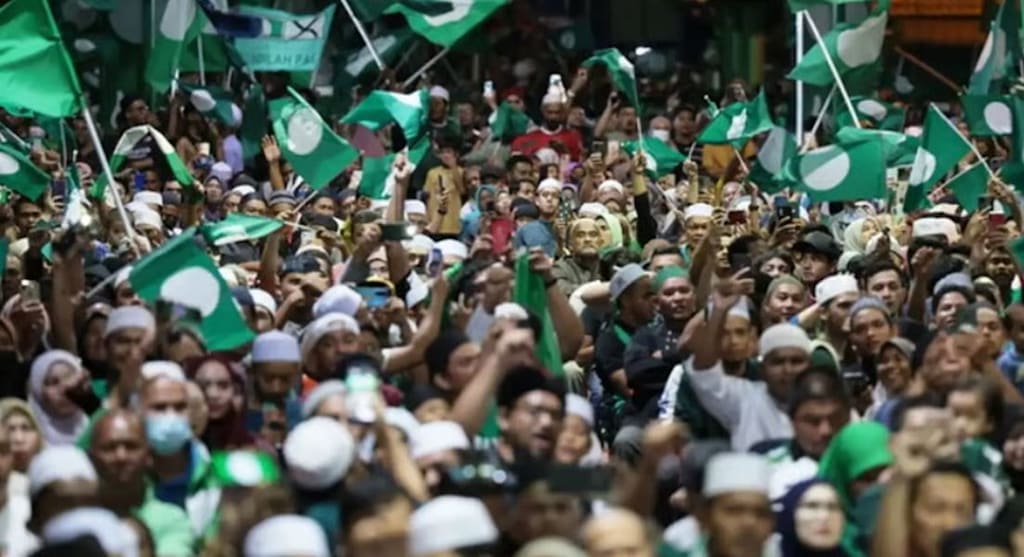
Identity politics has always been a feature of Malaysia's political landscape, unlike other countries where the rise of right-wing politics is a more recent phenomenon, according to political analysts. Universiti Sains Malaysia's Ahmad Fauzi Abdul Hamid and Oh Ei Sun of the Singapore Institute of International Affairs said developed nations like the United States and the to promoteUnited Kingdom only began to see the rise of right-wing politics in recent decades. Oh pointed out that both countries had attempted to "deracialise" their society in the modern era, with the goal of promoting a sense of national identity among citizens across all ethnic groups.
He said this occurred in the UK after the end of the Second World War and in the US after the passage of the Civil Rights Act of 1964, which outlawed discriminatory laws and practices in the segregated South. For Malaysia, identity politics has always been among the key elements at play in every election, Fauzi said.
The Constitutional Foundation
The two analysts said this is partly due to how the topic of race is addressed in the Federal Constitution, specifically how Article 153 virtually makes it a "built-in" component in the local political environment. Article 153 of the Constitution covers the special position of the Malays and natives of Sabah and Sarawak.
"So it's not as if we have never had this sort of racial identity; it's always been there. To me, it's just a re-eruption of racial sentiments. It's a resurgence, and not something new as in the US or UK," Oh told FMT.
"From time to time, it rears its head, and at this time it's rearing its head again. At some point it may submerge, and at some future point, it will rise again. Because, structurally, this country is divided along racial lines," he added.
Fauzi described identity politics as a baseline built through Article 153 and, read together with Article 160, defines a Malay person as one who professes Islam, among others. He said this communal identity dominates political narratives once part of the electorate feels that its constitutional position is under threat, not just when faced with poverty.
This is unlike the rise of the right in the West, where pundits have often linked poverty to the rise in far-right sentiment and support. That is why solutions purely based on loans, handouts or better salaries do not work in Malaysia, Fauzi told FMT. "In reality, governance records have never been sufficient on its own as an election rallying cry."
The Limits of Economic Messaging
He said the Negeri Sembilan polls proved this, as the Barisan Nasional-Perikatan Nasional alliance swept all Malay-majority seats despite the previous state government's satisfactory performance and former menteri besar Aminuddin Harun being held in high regard. Pakatan Harapan (PH) had blamed its defeat on the exploitation of identity politics by its rivals.
"We can't blame exogenous factors entirely for the upsurge of right-wing politics; nationalism is part and parcel of Malaysia's statecraft from the outset," Fauzi said. "As (former Bangi MP) Ong Kian Ming recently noted, even PH parties benefited from identity politics. Malaysia's political system wasn't designed as a liberal democratic order that some political idealists pretend it to be."
The failure of economic messaging to counter racial appeals is a recurring theme in Malaysian politics. Despite PH's track record of competent governance in Negeri Sembilan, the election results demonstrated that identity-based narratives often trump performance-based arguments. This is a sobering reminder that in Malaysia, the political calculus is shaped by factors that transcend economic performance.
The Demographic Factor
While cracks have already started to show in the BN-PN pact, Fauzi said if the alliance remains intact, it could potentially sweep enough seats in West Malaysia to form the government in the next general election. He said demographic changes including the faster growth of the Malay population compared with the non-Malays will boost BN-PN's odds, too.
The demographic shift is a significant factor in Malaysia's political evolution. As the Malay population grows, political parties that champion Malay rights are likely to gain electoral advantage, further entrenching identity politics in the country's political system. This trend presents a formidable challenge to parties like PKR and DAP, which have sought to build multi-racial coalitions based on shared values and economic interests rather than ethnic identity.
The Role of Islamism
In this context, Fauzi said, the question of Malaysia's future lies in the type of Islamic political ideology that is espoused by the "Malay-dominated powers that be". "Islamic politics is not monolithic. Our hope for a multi-racial Malaysia lies in the embrace of pluralist Islamism within the context of a democratic Malaysia, rather than the extremist or overly conservative forms of Islamism that dominate the world's headlines."
Fauzi emphasized the distinction between Islam as a faith and Islamism as a political ideology. "Islamism as a political ideology here needs to be differentiated from Islam as the faith and Malaysia's religion of the federation. Islam is a constitutional fait accompli (accomplished fact), whereas Islamism is a question of choice. Whether it's good or bad will depend on which Islamic model is embraced by the Malay-dominated powers that be," he added.
This distinction is crucial for understanding Malaysia's political trajectory. The embrace of a more pluralist and inclusive form of Islamism could pave the way for a multi-racial Malaysia, while the adoption of an extremist or conservative model would likely deepen divisions and further entrench identity politics. The choice is not merely ideological; it is existential.
A Structural Reality
Oh's observation that identity politics is "structural" to Malaysia's political system underscores the challenge facing those who seek to move beyond it. The constitutional provisions that enshrine racial identity are not easily undone, and political parties have long leveraged these provisions to mobilize support. The result is a political landscape where race remains a potent force, shaping everything from electoral outcomes to policy debates.
For political parties like PKR, the challenge is to navigate this reality without compromising their commitment to a more inclusive and equitable Malaysia. Saifuddin Nasution's call for a shift toward performance-based politics and need-based assistance reflects an awareness of this challenge, but the path forward remains uncertain.
The analysis by Fauzi and Oh paints a sobering picture of Malaysia's political landscape. Identity politics is not a passing phase but a structural feature of the country's constitutional framework, one that is likely to persist for the foreseeable future. While parties like PKR seek to shift the focus to economic performance and good governance, the underlying racial and religious divisions remain a potent force in Malaysian politics.
The question of Malaysia's future lies not in whether identity politics will persist, but in what form it will take. The embrace of pluralist Islamism, coupled with a commitment to inclusive governance, could offer a path toward a more cohesive and prosperous Malaysia. However, the forces of division are strong, and the outcome is far from certain. The circus of Malaysian politics is always evolving, but the stakes have never been higher.
About the Creator
Mark Lim
Hi I am mark an automotive student and a car, tech and food enthusiast ! Im gonna try and post daily & hope you enjoy what I write and do share my page with people you know. I would gladly appreciate it! Cheers
Enjoyed the story? Support the Creator.
Subscribe for free to receive all their stories in your feed.
Comments
There are no comments for this story
Be the first to respond and start the conversation.