
The Rise of Modular Data Centers: Powering the Future of Digital Infrastructure
How AI, 5G, and edge computing are driving a $100+ billion transformation in global data architecture

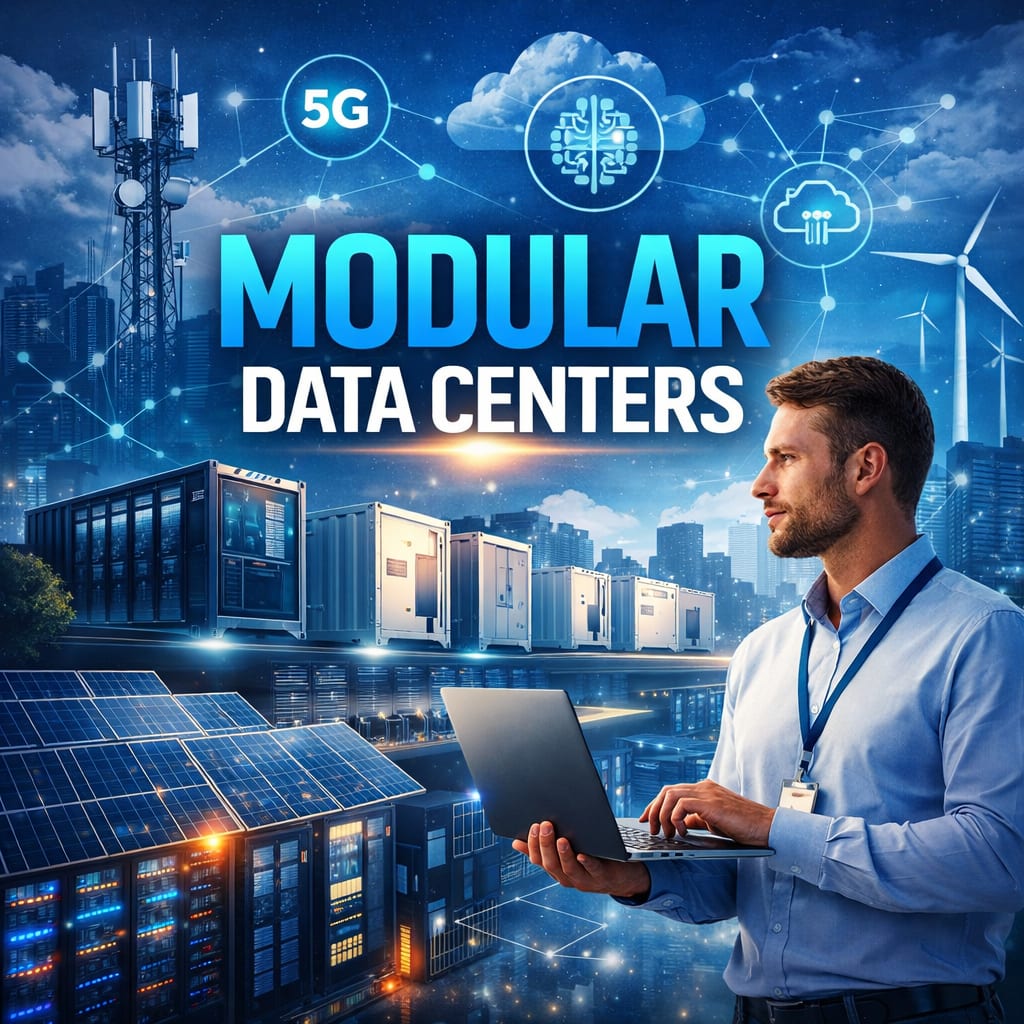
Why Modular Data Centers Are Becoming the Backbone of the Digital Economy
Every time you watch a video online‚ use an AI tool‚ join a Zoom meeting or process an online payment‚ there's an infrastructure behind the scenes: data centers․
But customary data centers would not be enough․
In a world where data keeps increasing exponentially‚ businesses now require faster‚ scalable‚ and most importantly‚ energy-efficient solutions․ What is often called modular data centers are changing the digital infrastructure in a quiet revolution․
A Market Growing at an Unstoppable Pace
The global market for modular data centers grew from a value of approximately USD 32․6 billion in 2024 to USD 102․5 billion in 2033․
That's a 12․89% compound annual growth rate (CAGR) and it indicates a deep shift in how data infrastructure is being built and deployed․
In contrast to conventional data centers that take years to construct‚ modular data centers are prefabricated‚ scalable modules that can be deployed in weeks or months․
In a world where speed is everything‚ this is an advantage not to ignore․
What‚ exactly‚ is driving this growth?
The explosion of modular data centers is a reflection of the forces that are at play to reshape the global information economy and standardize data centers․
However‚ one of the biggest drivers is artificial intelligence (AI) and high-performance computing‚ which require large amounts of processing power‚ forcing organizations to upgradetransition their IT infrastructure․
At the same time‚ 5G networks are causing data consumption to skyrocket‚ and low-latency processing needs are increasing‚ playing to the strengths of modular data centers․
Another factor driving the shift towards small‚ distributed and modular data centers is the growth of edge computing‚ where data is processed closer to the location of the user rather than in a centralized location․
The Hybrid Work Era Is Changing Infrastructure Needs
With this change in how we work‚ the demand for data has changed too․
The rise of remote and hybrid work has strengthened the use of cloud apps‚ video conferencing and real time collaboration tools․ Businesses have to adjust their IT systems to become more flexible and scalable․
Instead of large data centers‚ companies are increasingly looking to modular data centers which can be expanded as needed․
This is not a fleeting trend‚ but a long-term evolution in the way organizations conduct their business․
The platform is designed for speed and scalability․
One of the biggest advantages to modular data centers is their ability to scale quickly․
Customary data centers can take time to build and have complicated planning and approval processes‚ as well as high initial costs․ Modular solutions can avoid these issues:
- Pre-engineered and shipped pre-assembled for immediate use
- Can be expanded easily if needed
- Cost-effective in the long term․
- Adaptable to both urban and rural areas
This allows businesses to respond to changing demand‚ such as an increased demand for AI workloads‚ or increased cloud capacity․
Sustainability Is Becoming a Major Priority
Data centers consume a meaningful amount of global energy‚ and their sustainability has been questioned․
Modern modular data centers are usually designed to be energy efficient․
Cooling is more efficient‚ the power distributed to IT equipment is optimized‚ and they also use solar and wind energy․ Many companies are implementing AI systems for Energy Management Systems‚ to further reduce wasted energy․
Governments and regulators are pushing for carbon-neutral operations‚ and the modular data center has a role to play in achieving this․
The Rise of Edge Computing and Decentralized Infrastructure
A major trend is the use of decentralized data processing in massively distributed systems like the Internet․
However‚ companies are starting to deploy smaller data centers closer to the end user․ This reduces latency and improves the performance of applications such as:
- Autonomous vehicles
- Smart cities
- IoT devices
- Real-time analytics
In particular‚ modular data centers are a perfect fit for this model‚ since they could be quickly deployed․
Regional Growth: Where the Market Is Expanding Fastest
Modular data centers are becoming more popular in different parts of the world․
North America has the largest market share of more than 41%․ Factors behind this growth include common cloud adoption‚ strong digital infrastructure‚ and large investments in AI and 5G․
The United States is the fastest growing region‚ with government-led digitalization‚ sustainability‚ and demand for disaster recovery solutions driving its expansion․
At the same time‚ the Asia-Pacific region is characterized by rapid digitalization‚ many emerging fintechs‚ and high telecom investment in many markets․
Europe has also had rapid growth‚ focusing heavily on sustainability and energy efficiency․
Industry Adoption Across Sectors
Non-tech companies have also begun adopting modular data centers․
They are being adopted across multiple industries‚ including:
- IT and Telecom (largest segment)
- Banking and financial services (BFSI)
- Healthcare
- Retail and manufacturing
- Government and defense
All of these industries need stable‚ scalable and secure data infrastructure that could be provided by modular solutions․
Innovation Is Driving Competition
The market is competitive‚ and the large companies focus on innovating to maintain their positions․
Organizations are investing in:
- Liquid cooling technologies for high density workloads
- Automation in data center management via AI․
- Renewable energy integration
- Faster deployment models
The industry is currently evolving through alliances‚ acquisitions and investment in research and development to provide faster‚ smarter and more efficient offerings․
Challenges To Further Adoption Include
Despite the strong growth‚ the modular data center market has some challenges․
The high costs of implementation can be prohibitive for small organizations and integrating such modular systems into existing infrastructure can be complex․
This is also a cybersecurity concern as data centers are increasingly becoming distributed․
Another issue is the necessity for skilled personnel to design and implement these systems‚ which has obstructed other fields․
However‚ these challenges are also creating opportunities for innovation and improvement․
What the Future Looks Like
The future of modular data centers will be intertwined with the future of digital transformation․
The trend towards ever more artificial intelligence (AI)‚ cloud computing and IoT systems will see a growing demand for flexible and scalable infrastructure․
We are likely to see:
- More AI-integrated data centers
- Increased consumption of renewable energy
- Faster deployment models
- Adoption also increased across emerging markets
By 2033‚ when the modular data center market is expected to exceed USD 100 billion‚ they are expected to be the market standard․
Final Thoughts
As the digital world grows faster and faster‚ the infrastructure that underlies it must also grow and change․
Modular data centers can help solve one of the biggest problems of our time‚ which is how to collect and digest massive amounts of data sustainably․
They can be seen everywhere throughout the world‚ even if invisible․
Modular data centers are becoming an indispensable‚ if underappreciated‚ aspect of the digital economy‚ powering machine learning‚ remote work‚ and global communications․
About the Creator
Robert
Senior Market Researcher at IMARC Group, specializing in global market analysis, industry trends, and data-driven insights across diverse sectors.
Enjoyed the story? Support the Creator.
Subscribe for free to receive all their stories in your feed.
Comments
There are no comments for this story
Be the first to respond and start the conversation.