
The Rise of AI Motion Transfer: How Browser-Based Tools Are Redefining Character Animation in 2026
AI Motion Transfer

Introduction: A Creator's Bottleneck That No One Talks About
Imagine this: you run a TikTok account with 50,000 followers. Your audience loves the animated mascot you created, a quirky fox character that reacts to trending sounds and participates in viral challenges. The problem is that every short animation takes hours to produce. By the time you finish adjusting poses, refining movements, and rendering the final clip, the trend that inspired it may already be fading.
This challenge extends far beyond social media creators. Marketing teams, educators, indie game developers, and content producers all face similar obstacles. Traditional animation is highly effective, but it can also be time-consuming, expensive, and difficult to scale when content needs to be published quickly.
This is where AI motion transfer enters the conversation. Rather than replacing professional animators, it offers a faster way for creators to generate animated content using tools that require less technical expertise and fewer resources.
What Can AI Motion Transfer Actually Do?
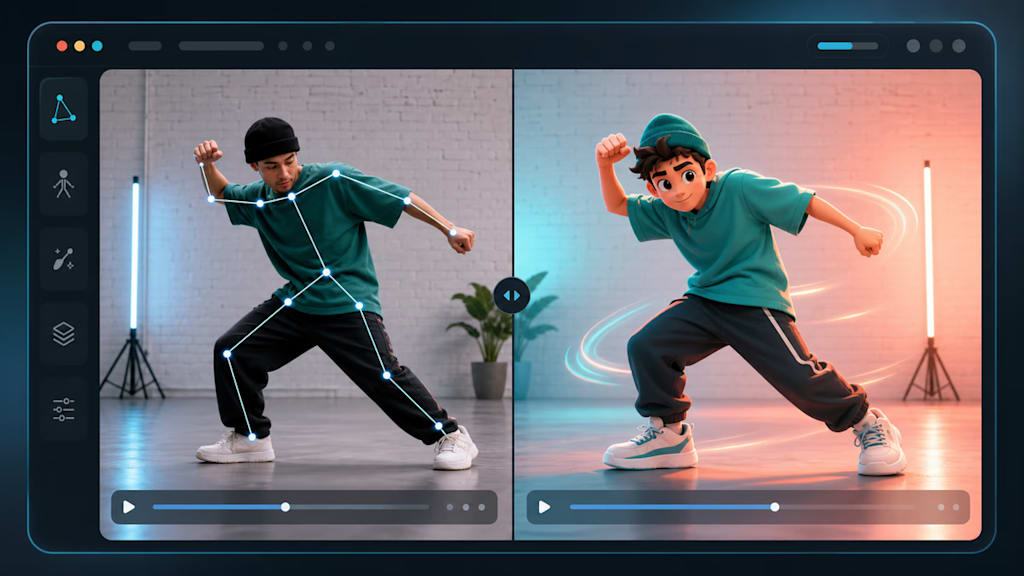
AI motion transfer, sometimes called motion retargeting or AI-driven character animation, combines two simple elements:
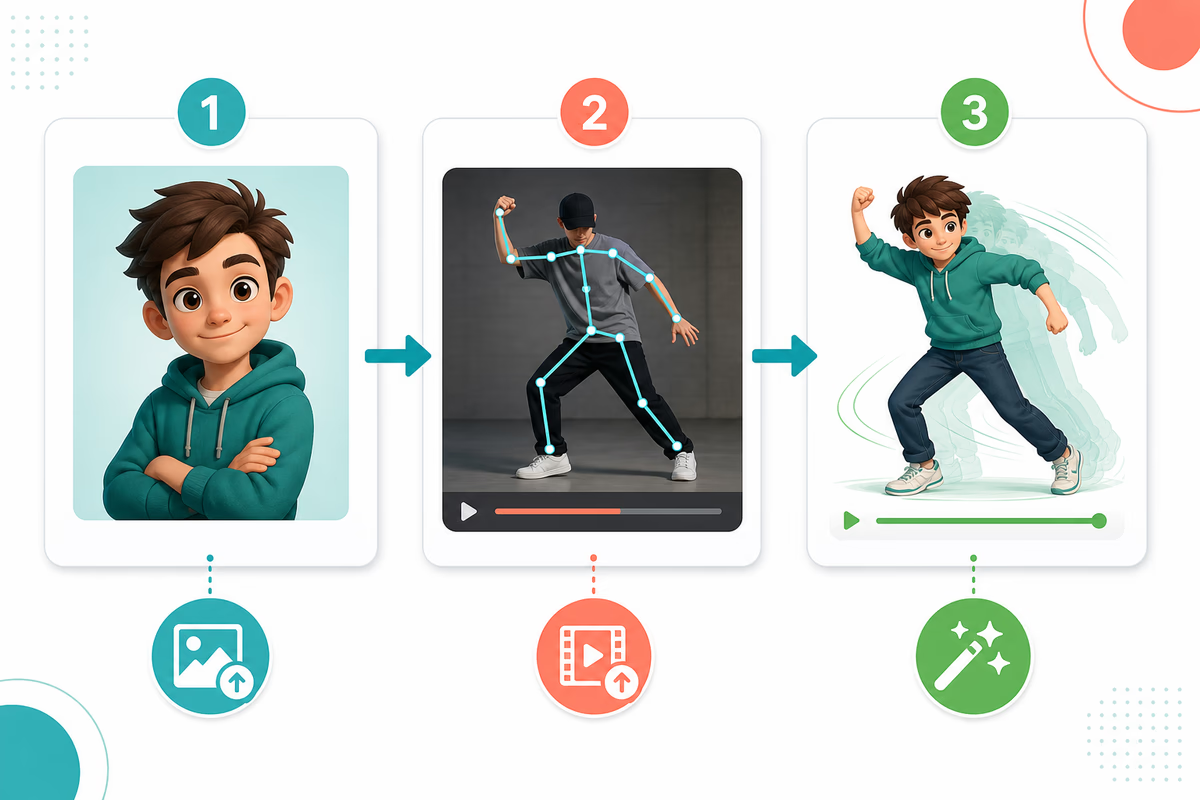
1. A character image, which could be a photo, illustration, digital avatar, anime character, or 3D render.
2. A reference video showing a person performing a movement.
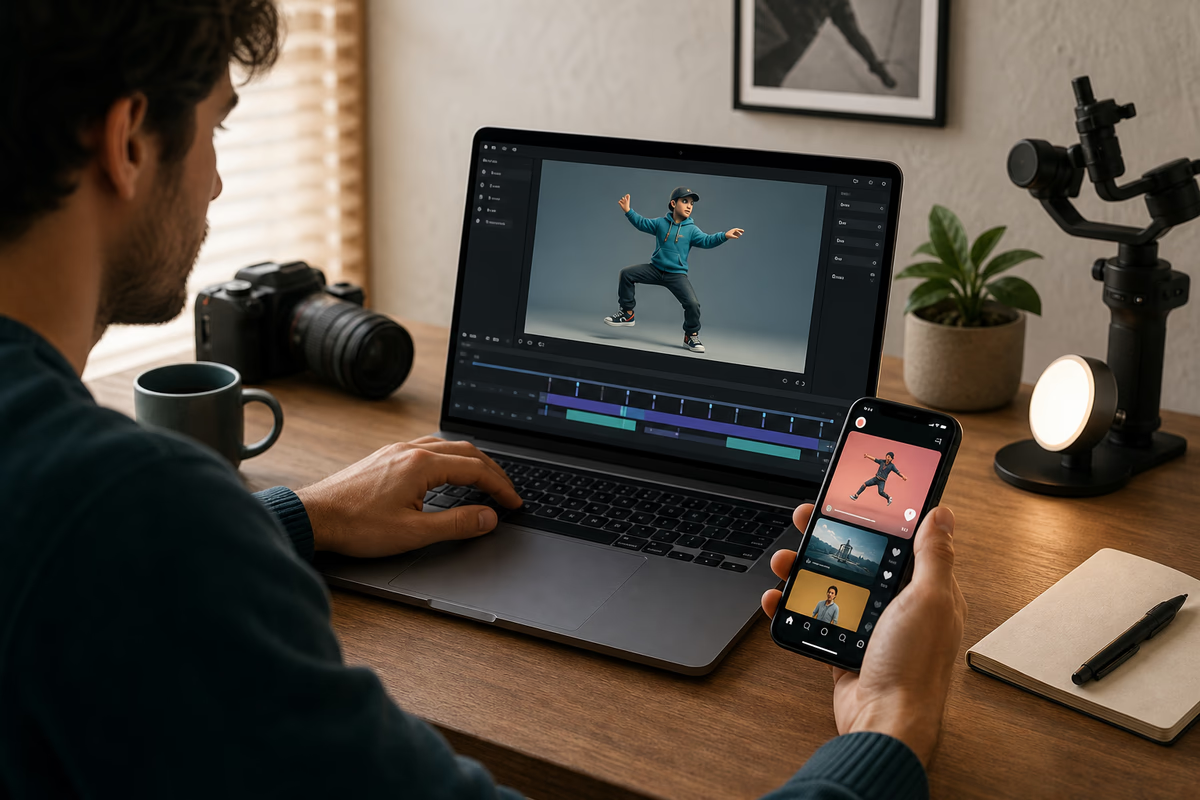
The technology analyzes the motion in the reference video and maps it onto the chosen character. The result is an animated version of that character performing the same actions, gestures, and expressions.
Instead of manually animating every movement frame by frame, creators can use existing footage to generate character motion much more efficiently. Facial expressions, hand movements, body posture, and walking patterns can all be transferred to the animated character with minimal manual work.
Concrete Examples of What This Unlocks
The practical applications are easy to understand when viewed through real-world scenarios.
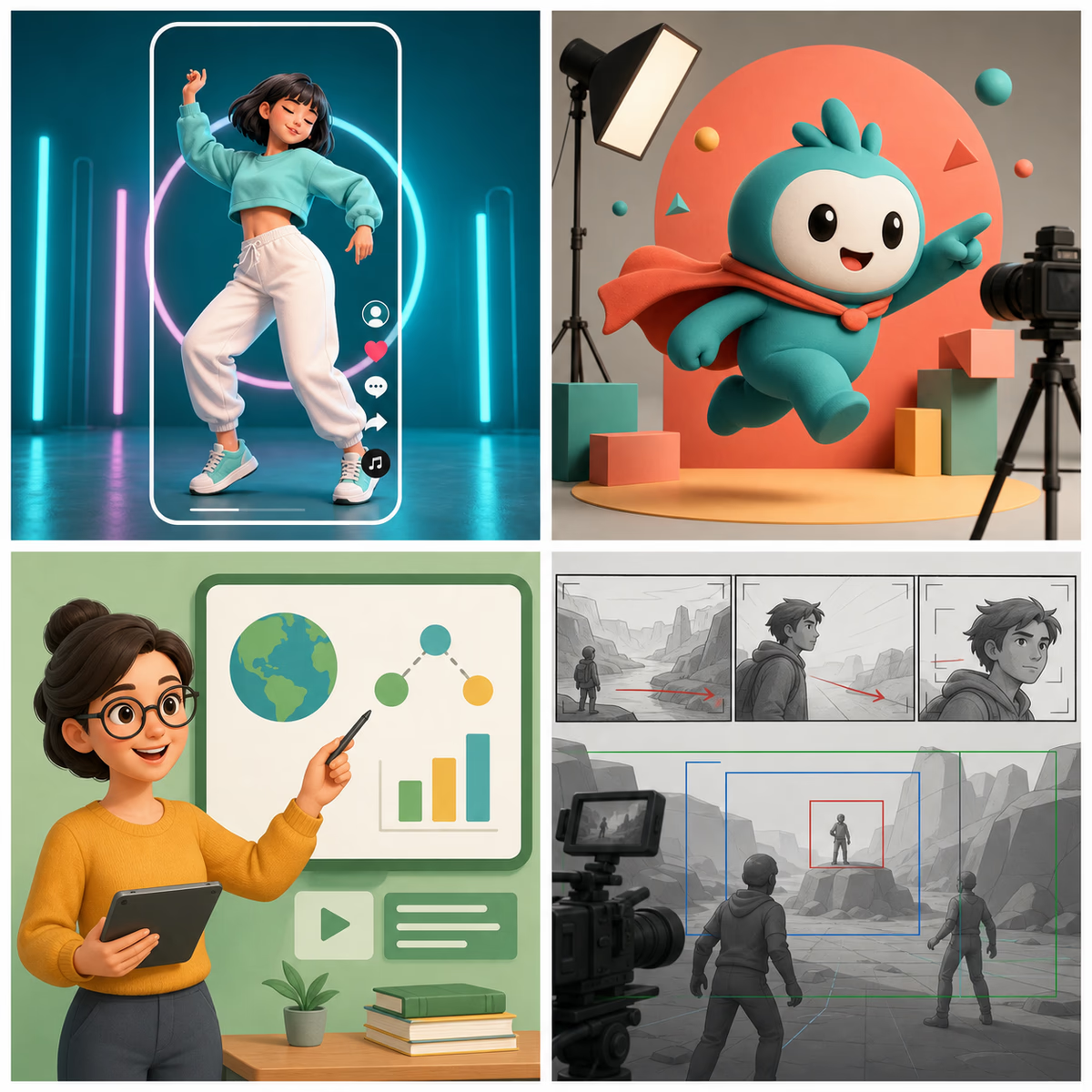
A marketing manager might upload a company mascot and a short video of an employee waving. Within a short period, the mascot appears animated and ready for use in a product announcement or social media post.
An online instructor could record a lesson and transfer those movements to an illustrated teaching avatar. This allows the educator to create engaging content without constantly appearing on camera.
Game developers can use concept art and simple movement references to visualize character behavior during early development stages. This makes it easier to test ideas before investing heavily in full animation production.
Social media creators may also benefit by allowing their digital characters to participate in trending challenges quickly enough to remain relevant.
Who Is This For? The Four Groups That Benefit Most
1. Social Media Content Creators
Content creators often work under tight deadlines. Trends emerge and disappear rapidly. AI motion transfer can reduce production time, making it easier to create animated content while trends are still active.
2. Marketing Teams and Brand Managers
Many brands use mascots or digital characters as part of their identity. Creating new animations for every campaign can be costly and time-intensive. Motion transfer technology provides a way to generate fresh visual content using existing character assets.
3. Educators and Online Course Creators
Educational content increasingly competes for viewer attention. Animated avatars can add personality and visual engagement to lessons while helping instructors deliver information in a more interactive format.
4. Indie Game Developers and Animators
Independent developers often work with limited budgets and resources. Motion transfer can serve as a rapid prototyping tool, allowing teams to evaluate character movement before committing to more detailed animation work.
What Separates a Useful Motion Transfer Tool From a Gimmick?
Not all motion transfer platforms deliver the same level of quality. Several factors determine whether a tool is genuinely useful.
Full-body motion capture: Tracking only the upper body may be sufficient for simple presentations, but activities such as dancing, sports, and action sequences require complete body movement.
Facial and hand accuracy: Small details often have a significant impact on realism. Accurate facial expressions and hand movements help characters appear more natural.
Identity consistency: One common challenge in AI-generated content is maintaining a consistent character appearance throughout a video. Reliable tools minimize visual drift between frames.
Flexible output formats: Different platforms require different aspect ratios. Support for vertical, square, and widescreen formats helps creators publish content across multiple channels.
Ease of use: Many users prefer browser-based tools that do not require advanced hardware or complex installation processes.
A Closer Look: Motion Control AI
Among the growing number of motion transfer platforms, Motion Control AI is one example designed to simplify the animation process. The platform focuses on transferring movement from reference videos to character images while supporting full-body motion, facial expressions, and hand gestures.
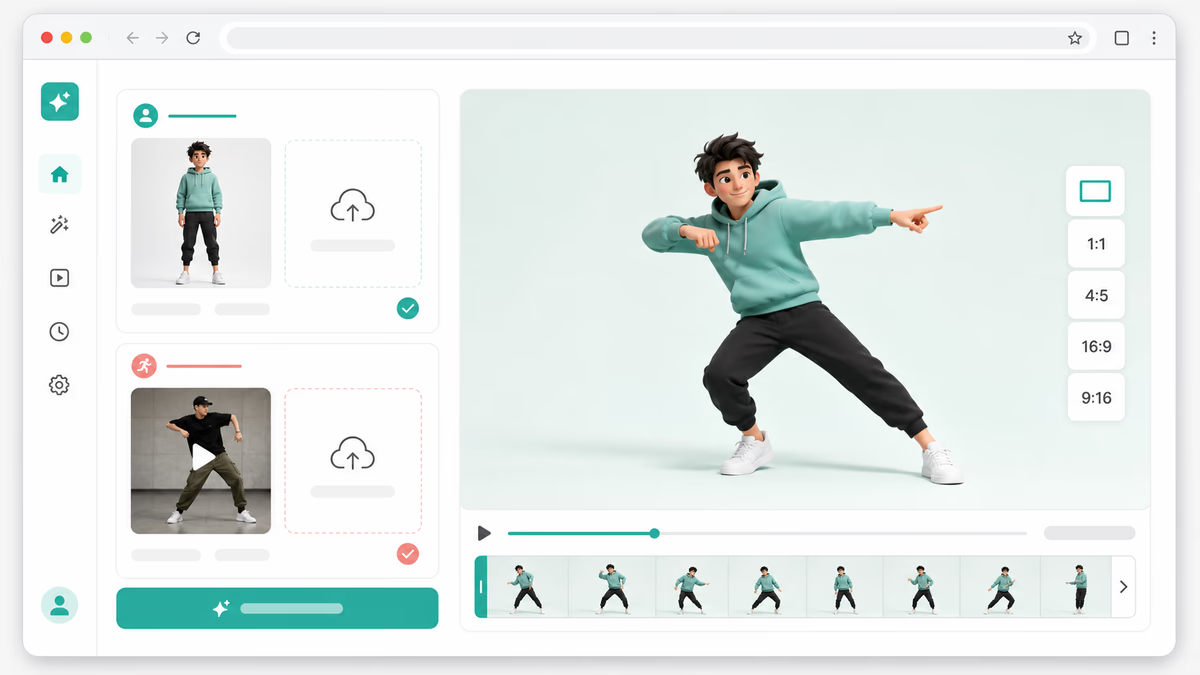
The general workflow is straightforward:
1. Upload a character image.
2. Upload a reference video containing the desired movement.
3. Allow the system to process the motion and generate an animated output.
Motion Control AI supports multiple aspect ratios commonly used for social media and online video content. The platform is intended to make character animation more accessible to users who may not have professional animation experience.
The broader significance of tools like Motion Control AI is not necessarily that they replace traditional animation. Instead, they provide an alternative option for creators who need speed, efficiency, and accessibility.
What AI Motion Transfer Cannot Do (Yet)
Despite its advantages, AI motion transfer still has limitations.
Occlusion remains a challenge. When a person's limbs cross over one another or become hidden from view, motion tracking accuracy may decrease.
Loose clothing can also interfere with body tracking because it obscures the natural shape and movement of the body.
Extreme camera angles often reduce accuracy since many AI models are trained primarily on front-facing footage.
Video length is another limitation. Most platforms focus on short-form content rather than extended scenes or feature-length productions.
Finally, creators generally have less direct control over individual movements compared to traditional animation software. Fine-tuning specific joints or adjusting individual frames remains difficult in many AI-driven workflows.
What Is Coming Next
The future of motion transfer technology appears promising.
Researchers are exploring multi-character animation systems capable of handling interactions between several characters within the same scene.
Audio-driven animation is another area of development. Future tools may generate body movement directly from speech or music without requiring a reference video.
Real-time motion transfer could also become more common, opening possibilities for live virtual performances, streaming, and interactive digital experiences.
Improved editing controls may eventually allow creators to modify generated animations after processing, combining AI efficiency with greater creative control.
Conclusion: Who Gets to Animate?
For many years, animation was limited by two major barriers: specialized skills and significant production costs. While professional animation will always play an essential role in films, games, and commercial productions, newer technologies are expanding access to animation for a much wider audience.
AI motion transfer is helping creators experiment with animated storytelling, marketing, education, and game development without the traditional time investment associated with manual animation. Tools such as Motion Control AI demonstrate how technology can make character animation more accessible while still leaving room for the expertise and creativity of professional animators.
The most interesting question may not be whether AI will replace animation professionals. Instead, it is whether more people than ever before will gain the ability to bring their characters and ideas to life. That shift alone has the potential to reshape how animated content is created and shared in the years ahead.
About the Creator
Sarah
With an experience of 10 years into blogging I have realised that writing is not just stitching words. It's about connecting the dots of millions & millions of unspoken words in the most creative manner possible.
Enjoyed the story? Support the Creator.
Subscribe for free to receive all their stories in your feed.
Comments
There are no comments for this story
Be the first to respond and start the conversation.