
The Ringgit’s Resilient Rise: Navigating Domestic Easing and Global Headwinds
As inflation cools to 1.8 percent and market expectations shift toward policy normalization, the Malaysian currency defies a strengthening US dollar and regional peers, even as geopolitical tensions and Federal Reserve silence loom.

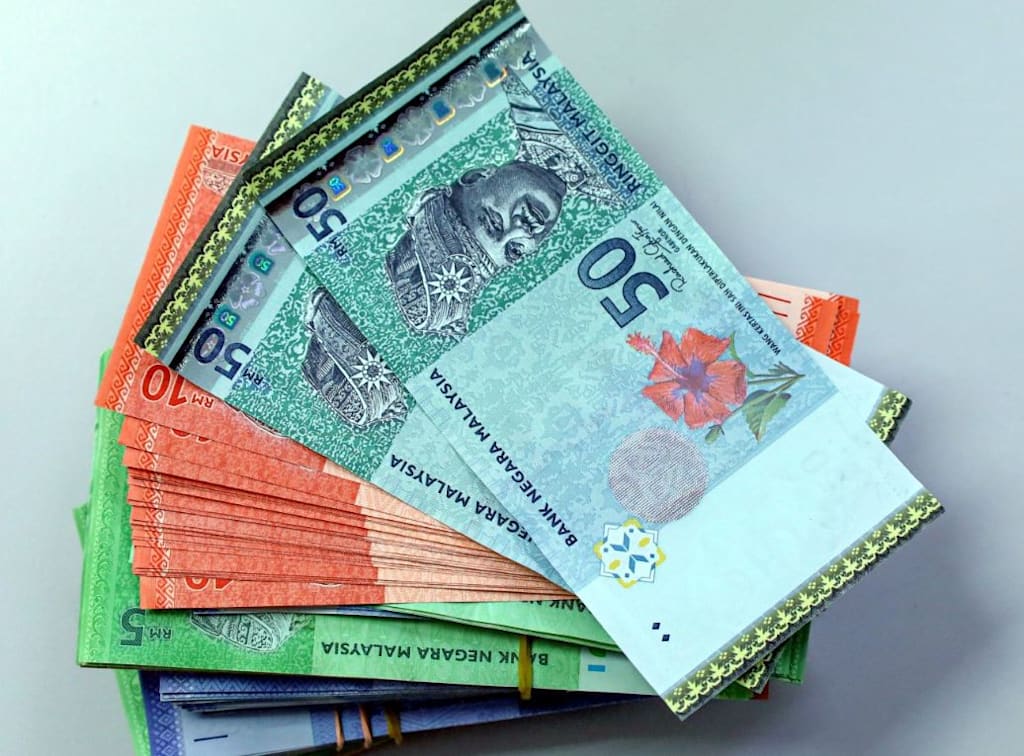
In the often turbulent arena of global foreign exchange, the Malaysian ringgit has demonstrated remarkable resilience, opening higher against the US dollar on Tuesday despite a broadly stronger greenback. The local currency’s performance is a testament to improving domestic fundamentals, specifically the easing of inflationary pressures and shifting expectations regarding the central bank's monetary policy. However, this upward trajectory is unfolding against a complex backdrop of escalating geopolitical risks in the Middle East and a communications blackout from the US Federal Reserve, creating a delicate balancing act for currency traders and policymakers alike.
The Inflation Dividend and the Path to Policy Normalization
The primary catalyst for the ringgit’s morning strength lies in the latest domestic macroeconomic data. The Department of Statistics Malaysia (DOSM) reported that headline inflation eased to 1.8 percent in September 2026, a marginal but significant drop from the 1.9 percent recorded in August. While the decrease is modest, it signals a continued stabilization in the cost of living and a cooling of domestic price pressures.
For the financial markets, this easing inflation data is highly consequential. It provides Bank Negara Malaysia (BNM) with the necessary breathing room to consider normalizing the Overnight Policy Rate (OPR). When inflation is high, central banks are often forced to maintain restrictive monetary policies to curb price surges. However, as inflation trends downward toward the central bank's comfort zone, the imperative for strict monetary tightening diminishes. The expectation of a potential OPR normalization suggests that the domestic economy is stabilizing, reducing the risk of aggressive interest rate hikes that could stifle growth. This improved domestic outlook has instilled confidence among investors, providing a solid floor for the ringgit and allowing it to appreciate even when external conditions are less favorable.
Defying the Greenback: A Tale of Relative Strength
The ringgit’s ability to gain ground against the US dollar is particularly noteworthy given the greenback's broader strength. The US Dollar Index (DXY), which measures the dollar against a basket of major global currencies, rose by 0.15 percent to 101.989 points. Typically, a rising DXY exerts downward pressure on emerging market currencies, as investors flock to the perceived safety and higher yields of the US dollar.
Yet, the ringgit bucked this trend, strengthening to 4.0780/0850 against the US dollar at the 8:00 am opening, compared to Monday’s close of 4.0805/0845. This divergence highlights the ringgit’s underlying strength, driven by local fundamentals rather than just global currency flows. Dr. Mohd Afzanizam Abdul Rashid, chief economist at Bank Muamalat Malaysia Bhd, noted that this resilience is keeping the local currency in a tight, stable band, forecasting that the ringgit will likely trade within a narrow range of RM4.07 to RM4.08 against the US dollar for the remainder of the day.
The ASEAN Context: Outpacing Regional Peers
The ringgit’s strength was not confined to its pairing with the US dollar; it also traded mostly higher against a basket of major global and regional currencies. Against the Japanese yen, the ringgit strengthened to 2.5724/5770 from 2.5790/5817 at Monday’s close. It also rose against the British pound, trading at 5.4274/4367, up from 5.4369/4422. The only notable exception among the major currencies was a slight edge lower against the euro, which moved to 4.5731/5809 from 4.5726/5771.
More importantly, the ringgit demonstrated robust performance against its ASEAN peers, reflecting strong relative investor confidence in Malaysia’s economic management compared to its neighbors. The local currency edged up against the Indonesian rupiah to 225.9/226.4 from 226.0/226.4, and strengthened against the Philippine peso to 6.46/6.48 from 6.47/6.48. Furthermore, it rose against the Singapore dollar to 3.1862/1919 from 3.1886/1920, and gained ground against the Thai baht, trading at 12.1373/1661 from 12.1451/1613. This broad-based appreciation across the regional basket underscores the ringgit’s current status as a relatively attractive asset in the Southeast Asian currency landscape.
Looming Shadows: Geopolitical Flashpoints and the Fed’s Silence
Despite the positive domestic momentum, the currency market remains highly sensitive to external shocks, and two major headwinds are currently testing investor nerves. The first is the ongoing geopolitical volatility in West Asia. Tensions have escalated sharply following reports from Iran’s navy that its Konarak naval base was attacked by the US military. Such developments carry profound implications for global energy markets and risk sentiment. Any disruption in the Middle East threatens global oil supply chains, which could reignite inflationary pressures worldwide and trigger a "flight to safety," typically boosting the US dollar and punishing emerging market currencies. While Malaysia is a net oil exporter and benefits from higher crude prices via Petronas revenues, the broader risk-off sentiment generated by military conflict in the region remains a significant wildcard for the ringgit.
The second headwind is the impending US Federal Open Market Committee (FOMC) meeting next week. The US Federal Reserve has officially entered its "blackout period," a regulatory window during which Fed officials are prohibited from making public comments on monetary policy ahead of the rate decision. This silence removes a crucial source of forward guidance for the markets. Without the soothing or signaling effect of Fed commentary, currency traders are left to parse every incoming US economic data print for clues about the central bank's next move. This information vacuum can lead to sudden, sharp volatility in the foreign exchange markets, requiring the ringgit to navigate a minefield of unpredictable price action.
Charting the Path Forward: Consolidation Amid Uncertainty
Looking ahead, the consensus among analysts is one of cautious optimism tempered by geopolitical caution. Dr. Mohd Afzanizam’s forecast of a tight trading range between RM4.07 and RM4.08 suggests that the market expects the ringgit to consolidate its recent gains rather than embark on a massive breakout. The currency has already priced in the positive domestic inflation data, and traders are now adopting a wait-and-see approach regarding the US Fed’s decision and the unfolding situation in the Middle East.
For the Malaysian economy, a stable and slightly strengthening ringgit is generally beneficial. It helps to curb the cost of imported goods, providing further relief to the domestic inflation picture and protecting consumers from global price shocks. However, policymakers will be careful not to let the currency appreciate too rapidly, as an overly strong ringgit could erode the competitiveness of Malaysian exports in the global market.
Ultimately, the ringgit’s performance on Tuesday highlights a currency caught between two powerful forces: the anchor of improving domestic fundamentals and the storm of global geopolitical and monetary uncertainty. As long as domestic inflation continues to ease and the central bank maintains a steady, predictable policy course, the ringgit is well-positioned to weather the external headwinds. But as the markets await the Fed’s next move and watch the skies over the Middle East, the path forward will require careful, agile navigation.
About the Creator
Mark Lim
Hi I am mark an automotive student and a car, tech and food enthusiast ! Im gonna try and post daily & hope you enjoy what I write and do share my page with people you know. I would gladly appreciate it! Cheers
Enjoyed the story? Support the Creator.
Subscribe for free to receive all their stories in your feed.
Comments
There are no comments for this story
Be the first to respond and start the conversation.