
The Ringgit's Balancing Act: Why Malaysia's Currency Is Caught Between Politics and the Mighty Dollar
As domestic uncertainty stirs and the greenback flexes its muscles, Malaysia's ringgit finds itself in a familiar tug-of-war but the fundamentals suggest it won't be a knockout.

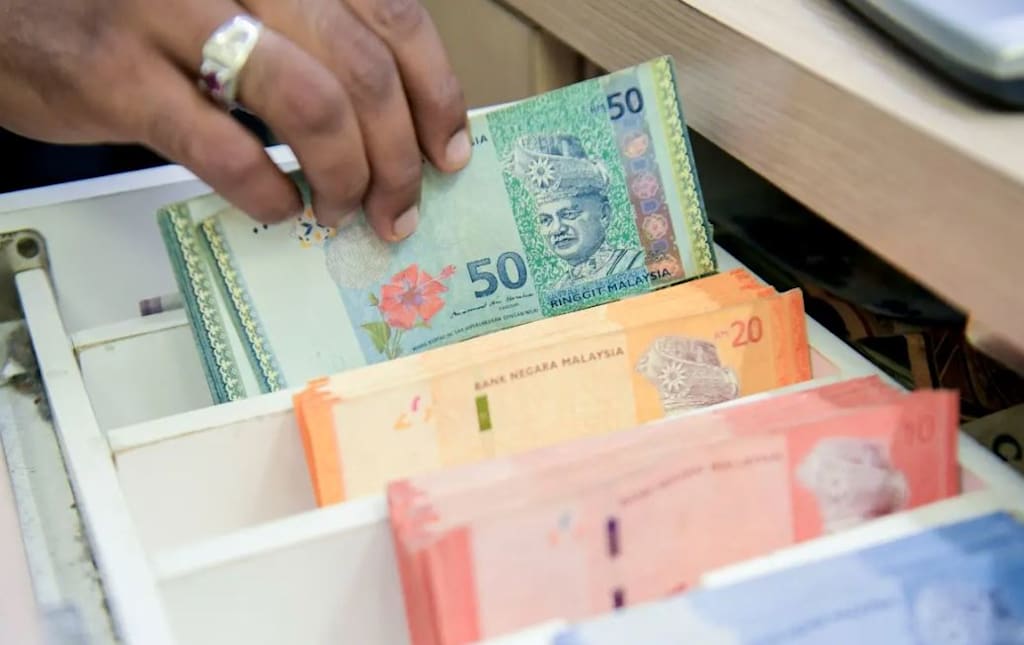
The ringgit is likely to remain under pressure in the near term, though economists expect the currency to remain broadly range-bound around current levels as domestic political uncertainty and external risks weigh on market sentiment.
The ringgit closed at RM4.0855 against the US dollar on Wednesday (Aug 12), 5.04% down from its eight-year high of RM3.8895 in late February. The currency is slightly weaker compared to its RM4.0855 close at end-July and RM4.0600 at end-2025. The decline, while modest in percentage terms, reflects the shifting tides of global capital flows and the persistent strength of the American economy.
The Political Elephant in the Room
Socio-Economic Research Centre executive director Lee Heng Guie said heightened election cycles or periods of shifting political dynamics could cause temporary weakness for the currency.
"In the near term, domestic political headlines including speculation surrounding upcoming state polls, potential early calls for the 16th general election and fiscal-deficit management could create short-term market uncertainty and weigh on the currency," he said when contacted.
UOB Global Economics & Markets Research, likewise, stressed that political stability is vital for sustaining investor confidence and attracting portfolio inflows. While the current administration holds a parliamentary majority and policy continuity has generally been preserved, it noted that speculation about an early general election could contribute to intermittent market uncertainty. Such uncertainty typically prompts investors to adopt a more cautious stance, particularly towards fixed-income assets, until greater clarity emerges on the political landscape and policy direction, the research house said in a note released on Tuesday.
However, Bank Muamalat Malaysia Bhd's chief economist Dr Mohd Afzanizam Abdul Rashid downplayed such risks, saying foreign investors are now well-acquainted with Malaysia's political landscape following multiple government transitions since 2018. Even with potential hiccups during transitions, he believes policy decisions will continue to favour a reformist agenda. The argument is that Malaysia's political system has matured through its recent turbulence, and markets have learned to look past the noise to the underlying policy direction.
External Pressures and Global Flows
Beyond domestic factors, the ringgit's performance remains heavily dictated by US monetary policy. AmBank Group forex strategist Yim Soon Kah said the currency's recent weakness is still primarily tied to the US dollar's strength and a slight reversal in the global safe-haven flows that had previously benefitted the ringgit.
UOB Research added that capital flows into emerging markets, including Malaysia, are expected to remain volatile and uneven, influenced by energy supply risks, tech developments, and the greenback's movements amid evolving Federal Reserve (Fed) policy expectations. The Fed's hawkish stance, driven by persistent inflation concerns, has kept the dollar well-supported, leaving emerging market currencies like the ringgit swimming against a strong current.
MBSB Research, meanwhile, said substantial non-resident outflows from the Malaysian debt market in June and July also weighed on the local note. These outflows represent a vote of no confidence in the short term, as investors rotate capital toward higher-yielding or safer assets elsewhere.
"The ringgit's appreciation bias has stalled, despite the series of robust economic data releases. We foresee the possibility for ringgit trajectory to stay weak at least in the short run on the back of heightened uncertainties, volatility in the financial markets and continued expectations for rate hike by the Fed, which is supportive of the dollar," said MBSB Research.
The Silver Lining: Fundamentals That Hold
Despite current pressures, analysts see strong underlying fundamentals limiting the ringgit's downside. Afzanizam highlighted Malaysia's improving fiscal metrics, driven by recent tax measures and subsidy rationalisation. The government's efforts to broaden its revenue base and reduce fiscal leakage have been paying off, with the budget deficit narrowing faster than expected.
A surplus in the services trade balance, bolstered by data centre and ICT exports — helped lift the current account surplus to 3% of gross domestic product in the first quarter of 2026, up from 0.5% in the fourth quarter of 2025. This improvement in the current account position is a key buffer against external shocks, as it reduces the country's reliance on foreign capital to finance its imports.
Hence, he sees RM4.10 as the immediate resistance level for the ringgit against the greenback. If expectations of further US rate hikes fade as markets approach the Fed's Sept 15-16 meeting, he expects the ringgit to remain in a narrow range of RM4.07 to RM4.09. For year-end, he expects the ringgit to strengthen to between RM4 and RM4.05 levels against the US dollar.
A Spectrum of Forecasts
The range of forecasts from analysts reflects the uncertainty surrounding the ringgit's trajectory. UOB Research expects the ringgit to remain broadly range-bound between RM4 and RM4.10 against the US dollar in the near term, amid a balance between domestic resilience and external risks. It should hit 4.10 in the third quarter, before strengthening to 4.05 in the fourth quarter and subsequently to 4.02 in the first quarter of 2027, and 4.00 in the second quarter, it said.
AmBank's Yim sees the ringgit weakening to 4.15 against the greenback by end-2026, but does not expect the ringgit's weakness to be sustained. For the ringgit to return to below RM4, it has to be supported by robust Malaysian growth, particularly in the second half of 2026, with a longer and more persistent global artificial intelligence and electrical and electronic investment cycle, firm demand for ringgit assets, and stronger policies to encourage inflows, Yim said.
As for MBSB, further currency upside depends heavily on easing inflation pressures, specifically if any future Fed action remains a limited 'recalibrating hike' rather than an aggressive tightening cycle. It expects the ringgit to end the year around RM4.03 assuming capital flows return to emerging markets later in the year and average around RM4.01 for the year.
What This Means for the Average Malaysian
For businesses and consumers, the ringgit's trajectory has real-world implications. A weaker ringgit makes imports more expensive, potentially fuelling inflation and raising the cost of living. It also increases the burden of foreign currency debt, which can strain corporate balance sheets.
On the flip side, a weaker ringgit makes Malaysia's exports more competitive, which can boost economic growth and support job creation in export-oriented sectors. For Malaysia's thriving data centre and tech industries, a weaker currency can be a double-edged sword: it lowers operating costs in ringgit terms but also increases the cost of imported equipment.
The next few months will be critical. If the Fed signals a pause in its tightening cycle and if Malaysia's political landscape remains stable, the ringgit could find its footing and begin its gradual ascent back toward the RM4 level. But if external risks materialize or domestic politics take an unexpected turn, the ringgit could weaken further, testing the patience of investors and policymakers alike.
About the Creator
Mark Lim
Hi I am mark an automotive student and a car, tech and food enthusiast ! Im gonna try and post daily & hope you enjoy what I write and do share my page with people you know. I would gladly appreciate it! Cheers
Enjoyed the story? Support the Creator.
Subscribe for free to receive all their stories in your feed.
Comments
There are no comments for this story
Be the first to respond and start the conversation.