
The Restaurant That Meant Well and Still Went Broke
Sanwu Erli paid above market, hired people others skip, and fed its staff three meals a day. The closure is a lesson in cost structure, not a verdict on kindness.
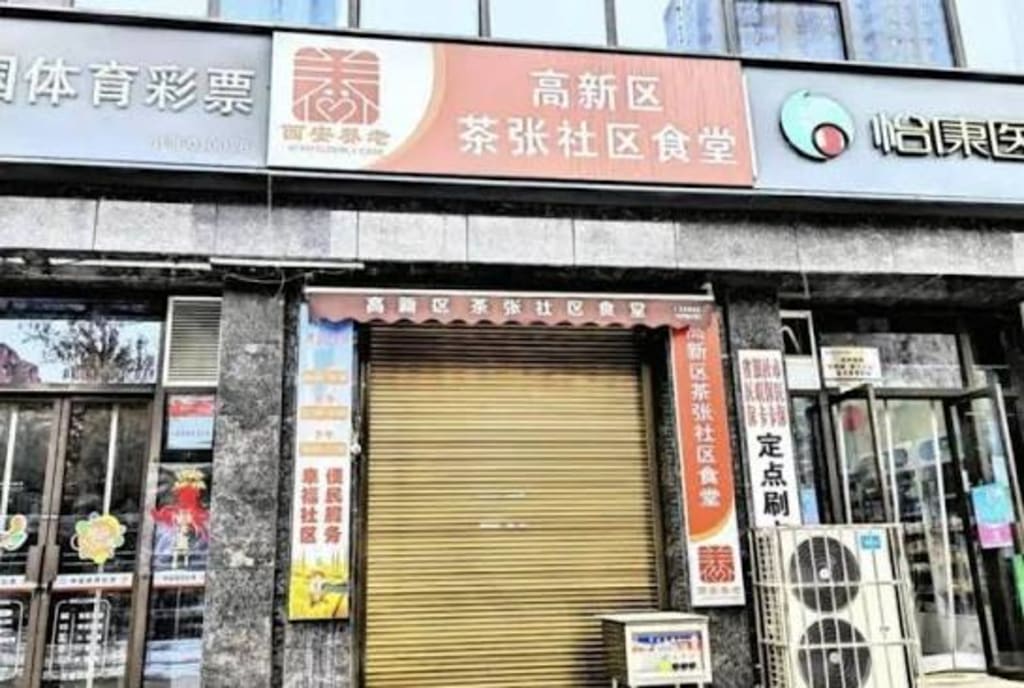
The Changsha restaurant brand Sanwu Erli is closing. By the end of October, all of its stores will stop operating. In the notice, founder Yi Bei wrote a heavy sentence: when they checked the books, in September alone the “grocery money” had already exceeded all operating receipts for the month.
That sentence deserves a pause. It was not “a loss,” not “cash-flow pressure.” The money spent on ingredients was more than the money taken in from selling meals. For a restaurant, when ingredient costs swallow the entire revenue stream, labor, rent, utilities, and earlier investment are all flowing out net. Every meal it sold was subsidizing customers and employees, not generating profit that could be recycled.
Sanwu Erli was not an ordinary restaurant. It drew attention because it gave priority to hiring people over 35 facing employment difficulties and people with disabilities. It provided three meals a day, dormitories mostly in single rooms, social insurance and housing fund from day one, average pay higher than the Changsha restaurant industry average, and rest arrangements better than industry norms. The founder said the original idea was to “hold up a small patch of sky” for these people.
The small patch of sky lasted two years. The books gave out first.
The cost structure sank it, not the goodwill
If you take Sanwu Erli’s accounts apart, the revenue side and the cost side were following two different logics.
On the revenue side, it took the route of community casual meals and an affordable canteen. The average ticket was kept low, aimed at ordinary people eating everyday meals. Affordability was part of the goodwill. But affordability means very thin gross margin on every order. To make the books balance, it would have needed extremely high table turnover, extremely stable customer flow, and extremely tight waste control. In Changsha, per-capita spending keeps falling, and low-price competition is already a red ocean.
On the cost side, multiple expensive commitments were stacked on top of one another. In the restaurant industry, labor costs usually account for 30 to 40 percent, and social-insurance compliance pushes that further up. Sanwu Erli’s labor costs were clearly far above that range: three meals a day, dormitories mostly in single rooms, social insurance and housing fund, pay above the industry average, and rest arrangements better than industry norms. On ingredients, an affordable positioning was paired with fairly high quality requirements. In the end, ingredient purchases alone swallowed the entire revenue stream. Add rent in a popular location and earlier spending on store expansion and product development, and fixed costs were extremely rigid.
Low average ticket, premium staffing, and non-low ingredient standards. Put these three together, and every day of operation was a net outflow. The founder initially envisioned “break-even operation,” but in practice it did not even reach the threshold of breaking even.
One structural factor matters here. The founder is a post-95s generation, a newcomer to the restaurant track. What he was better at before was content and traffic operations, not the hard skills of physical stores: supply-chain management, waste control, and labor scheduling. Sanwu Erli was strong at breaking out of its niche and attracting attention. Four days on and three days off, mandatory social insurance, placemats for missing-person notices, an aesthetics of imperfection. Every move landed precisely on a traffic point. But traffic itself does not solve a fundamental question: whether the single-store economic model holds up.
Traffic can bring the first wave of customers, but it cannot bring sustained gross profit. Customers walk in because of the story, but in the end they stay because the food is good, the price is right, and the experience is stable. And the premise for staying is that the restaurant can survive financially.
Goodwill is the end. Profit is how goodwill continues.
Sanwu Erli’s predicament reveals a distinction: goodwill is the end, and profit is the means by which goodwill can continue. When goodwill is implemented in a way that directly raises rigid costs, without a corresponding revenue mechanism to support it, it becomes a one-off expenditure rather than a renewable capacity.
That does not make goodwill and profit natural enemies. A more workable path to balance is usually not to push “low pricing and high benefits” to the extreme in a single store. It is to embed goodwill in a model that can already make a profit, or to cross-subsidize it through a diversified revenue structure. For example: maintain reasonable pricing rather than extreme low prices; reduce ingredient waste through a central kitchen; optimize labor efficiency during off-peak hours through flexible staffing; and through skills-matching training, let employees from special groups use their comparative advantages in specific positions, rather than simply covering every position with “higher pay, fewer hours, and better housing.”
Goodwill can decide who gets the opportunity. The cost structure must obey business logic.
Where does the money for high benefits come from?
Three things support Pang Donglai’s high benefits: relatively high product quality and a reasonable price band, rather than falling into low-price competition; supply-chain and rent advantages from deep regional roots; and an institutional design that distributes a large share of profit to employees. For example, 50 percent of profit goes to team bonuses, and assets convert into equity so employees share in long-term returns. Its logic is a cycle: reasonably high pricing, gross profit sufficient to cover high labor costs, employees who gain dignity and security, sincere service that brings high repeat purchase and low turnover, and performance that feeds back into benefits. Pang Donglai’s employee turnover rate is only 1.05 percent, and its customer repurchase rate exceeds 90 percent. That is evidence of this cycle in motion.
Suzhou Odefu supermarket learned from Pang Donglai, but not by copying only the single move of “being good to employees.” It does not engage in low-price competition. It improves product quality and service experience and keeps prices at a reasonably high level. It substantially raises employee benefits and guarantees rest. It improves the customer experience, even turning the most profitable golden floor space into a service center. According to reports, in the first month after the overhaul, sales rose fourfold year on year, the average ticket rose from under 50 yuan to over 70 yuan, and daily sales in the cooked-food section rose from 3,000 yuan to more than 30,000 yuan.
Its success does not lie in “being good to employees” itself. It lies in placing “being good to employees” on top of a product structure and price band capable of generating sufficient gross profit.
Sanwu Erli lacked the first half of this cycle. Its pricing and customer-flow structure could not generate enough gross profit to carry its level of benefits. Goodwill was placed at the starting point of the cycle, but there was no revenue mechanism to catch it.
First make the books balance. Then give goodwill a place to land.
Sanwu Erli has closed, but for a short time it gave a group of people real, stable jobs. Three meals a day, single rooms, social insurance and housing fund, pay above the industry average. These were not sentiment from a PowerPoint. They were days employees actually received. That deserves respect.
But respect cannot replace cash flow. However good one store’s goodwill is, how many people can it solve for? The employment difficulties of people with disabilities and people over 35 lie fundamentally in job supply and skills matching, not in whether a particular boss is kind enough. In the long run, goodwill needs institutions, models, and sustainable profit to underpin it.
Sanwu Erli proved one thing: goodwill itself cannot serve as the foundation of a business model. It can be the roof, the warmth between beams and columns, the priority item when profit is distributed. The foundation must be books that balance.
The next attempt should start by making the books balance, then let goodwill find a place within sustainable profit. There is no shame in sentiment. Sentiment still needs a balance sheet that can survive.
The fire of everyday life never goes out. Beneath the smoke and flame, there has to be wood.
About the Creator
Jin
Writer of reamstories
https://reamstories.com/jin
Enjoyed the story? Support the Creator.
Subscribe for free to receive all their stories in your feed. You could also become a paid subscriber, letting them know you appreciate their work.
Comments
There are no comments for this story
Be the first to respond and start the conversation.