
The Restaurant That Lost Its Customers and Found a Bigger Business
When a new highway diverted traffic away from Harland Sanders’ restaurant, he lost the business he had spent years building. Instead of rebuilding the same restaurant elsewhere, he turned his chicken recipe into a franchise that could travel.
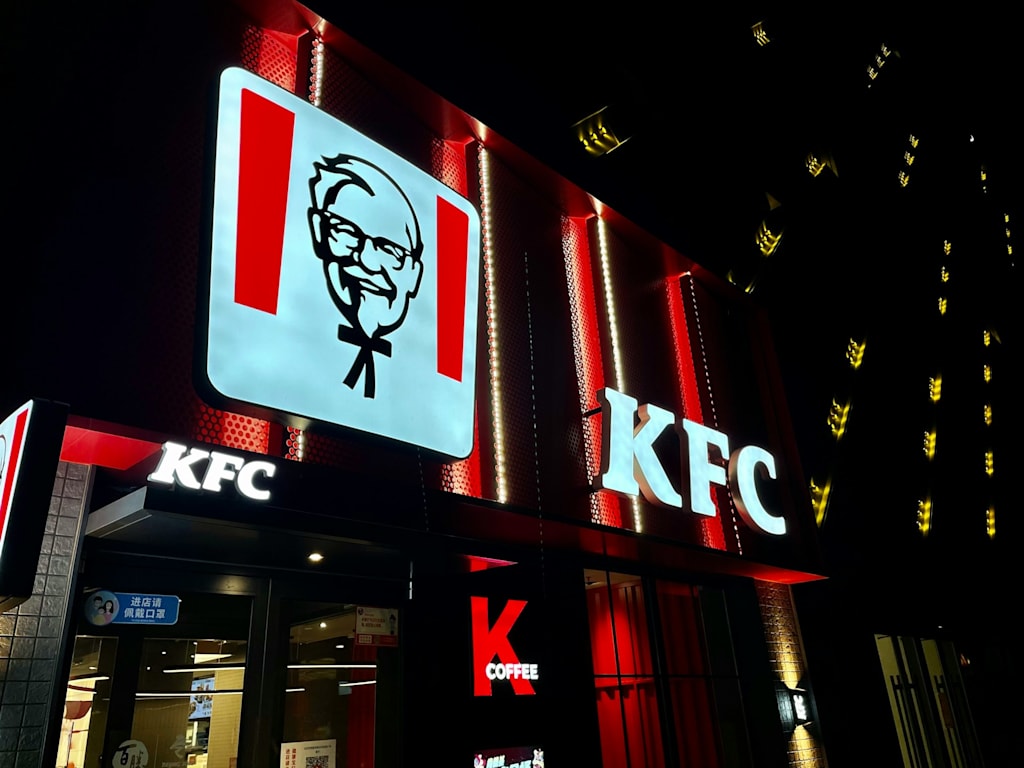
By 1956, Harland Sanders had spent years building a roadside business in Corbin, Kentucky.
Travelers driving along U.S. Highway 25 could stop for fuel, eat a meal and eventually stay at Sanders’ motel. What had begun around a service station grew into Sanders Court & Café, a restaurant large enough to seat more than 100 people.
The location mattered.
Truck drivers, salespeople and families passed through Corbin on the road. Sanders had built a business around being where those travelers already were.
Then the road moved.
A new highway route diverted traffic away from Corbin. Smithsonian reports that the rerouting of U.S. 25 about seven miles west of town drained the tourist traffic on which Sanders’ restaurant depended. A property for which he had reportedly rejected a $164,000 offer only a few years earlier was eventually sold at auction for $75,000.
Sanders was in his mid-sixties.
His restaurant was failing.
But one part of the business could leave Corbin even if the customers no longer came there.
The chicken could travel.
The restaurant had already revealed something valuable
Sanders had not begun with a plan to build an international fast-food chain.
In the early 1930s, he was serving travelers from a small space connected to his filling station. According to Smithsonian, the idea grew after he heard a traveler complain about the lack of decent places to eat nearby. Sanders realized cooking was something he knew how to do.
The meals became popular.
Over time, he developed the fried chicken for which he would become known. Traditional frying was slow, so Sanders experimented with pressure cooking to reduce preparation time. He also developed the seasoning blend that became associated with Kentucky Fried Chicken.
By the early 1950s, Sanders had already begun testing another way of making money from the chicken.
He did not have to cook every piece himself.
In 1952, Pete Harman, a restaurant owner in Salt Lake City, became the first Kentucky Fried Chicken franchisee. Harman sold Sanders’ chicken using the recipe and pressure-cooking method, paying Sanders a small royalty on each chicken sold.
So franchising was not invented after the Corbin restaurant failed.
That distinction matters.
Sanders already had evidence that the recipe and process could work somewhere else.
The highway problem simply made that possibility much more important.
When customers disappeared, Sanders took the product to them
Losing the restaurant removed the comfortable version of the business.
Sanders no longer had a busy roadside location where travelers naturally arrived.
He had to go looking for restaurant owners instead.
Smithsonian describes him driving from town to town carrying pressure cookers and bags of his seasoning. He approached small restaurant operators, cooked the chicken for them and tried to persuade them to add it to their menus.
To save money, he sometimes slept in his car.
It is difficult to square that image with the company KFC later became.
Today, KFC says it has more than 30,000 restaurants across 150 countries.
But the expansion depended on a much smaller proposition.
Sanders did not need every restaurant owner to become him.
They did not need to rebuild Sanders Court & Café.
They needed a recipe, a cooking process and a reason to believe customers would buy the result.
That made the idea much easier to move than the original restaurant.
A building in Corbin depended on cars continuing to pass Corbin.
A recipe could go to Ohio.
Then Indiana.
Then somewhere else.
The thing that had looked like one local restaurant began to behave like a system.
The location failed before the product did
There is a useful distinction inside Sanders’ story.
His restaurant was losing customers because the flow of traffic around it had changed.
That did not mean people had stopped liking his chicken.
The failure of the location and the value of the product were two different things.
For a business owner living through a downturn, those can be difficult to separate.
When sales fall, everything may appear broken at once.
The product feels wrong.
The business model feels wrong.
The location feels wrong.
The timing feels wrong.
Sometimes all of those things really are wrong.
But Sanders had evidence that one part still worked. Harman had already shown that customers in Utah would buy Kentucky Fried Chicken. Other restaurant owners could potentially do the same.
The physical business had become vulnerable to something Sanders could not control: where the highway went.
The recipe was more portable.
That portability changed the size of the opportunity.
A restaurant has a limited number of tables.
A recipe that hundreds of restaurants can prepare does not have the same limit.
Other people helped build the business too
The growth of KFC was not simply Sanders copying his original restaurant across the country.
Franchisees contributed ideas of their own.
Pete Harman played an especially important role. Smithsonian credits his operation with helping shape the name Kentucky Fried Chicken, the carryout model, the familiar bucket and other parts of the early business.
That is another part of the story that disappears if KFC is reduced to one man's secret recipe.
Once Sanders moved from running a restaurant to building a network, the business changed.
The people joining it were not only customers.
Some became operators.
Some improved the model.
Some discovered ways to package, sell and present the chicken that could work in places Sanders had never run himself.
By 1964, KFC says the franchise network had grown enough that Sanders sold the company to investors. KFC Smithsonian reports that more than 600 franchises were distributing his chicken by then.
Less than a decade earlier, he had been watching traffic disappear from the road outside his own restaurant.
The business that survived was smaller than the building
It would be easy to turn Sanders’ story into a simple lesson about persistence.
He lost a restaurant, refused to quit and eventually became successful.
But persistence alone does not explain what changed.
Sanders did not spend the rest of his life trying to bring cars back to U.S. Highway 25.
He changed what he was building around.
The restaurant had contained many things: property, tables, motel rooms, local traffic, cooking equipment, Sanders himself and the food.
When circumstances damaged that combination, he had to identify which part could still create value somewhere else.
The answer turned out to be much smaller than the original business.
A recipe.
A pressure cooker.
A process another restaurant could repeat.
A name customers could recognize.
Those pieces were easier to carry than a roadside restaurant.
And because they could travel, they eventually became much larger.
The new highway took customers away from Sanders Court & Café.
It could not take the chicken recipe with them.
Sanders put that part in his car and went looking for the next restaurant.
About the Creator
Enjoyed the story? Support the Creator.
Subscribe for free to receive all their stories in your feed.
Comments
There are no comments for this story
Be the first to respond and start the conversation.