
The Real Prescription Crisis Isn’t Drug Shortages—It’s Pricing Transparency
For years, healthcare debates have focused on drug shortages, insurance gaps, and regulatory reform. But there’s a quieter issue that continues to affect millions of patients every day: pricing opacity in prescription drugs.
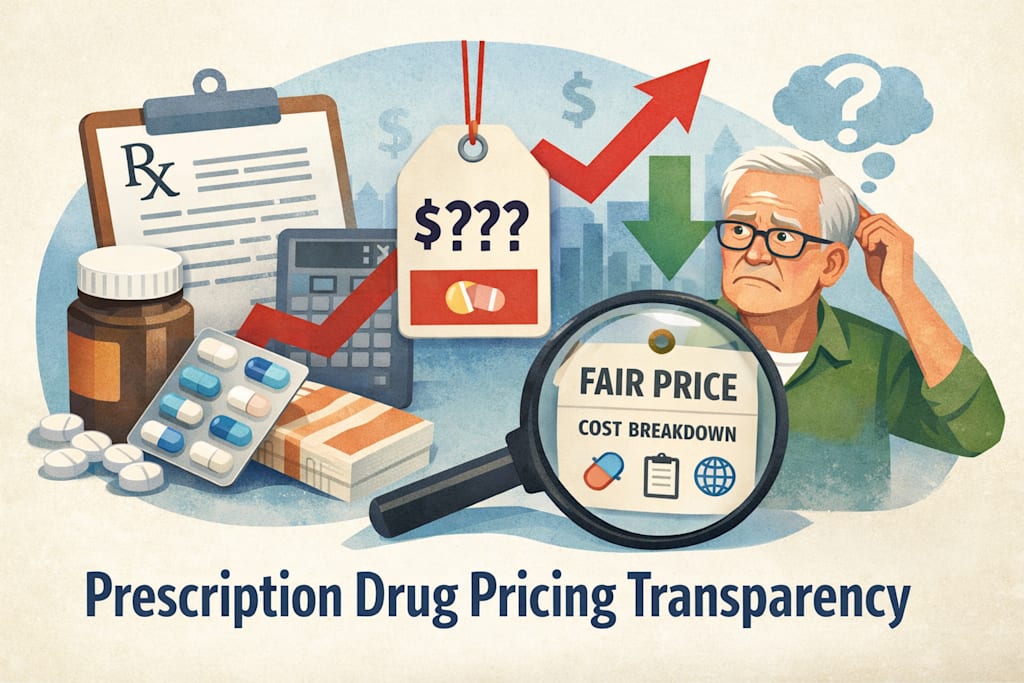
Patients aren’t just struggling to afford medications—they’re struggling to understand why those medications cost what they do. And that confusion isn’t accidental. It’s built into the system.
The Illusion of a Competitive Market
On paper, the pharmaceutical industry appears competitive. There are multiple manufacturers, generic alternatives, and pharmacy networks. In theory, this should drive prices down.
In practice, patients encounter something very different.
The same medication can vary dramatically in price depending on where—and how—it’s purchased. These differences are often shaped not by production costs, but by a complex web of intermediaries, including pharmacy benefit managers (PBMs), insurers, and distribution contracts.
The result? Patients are left navigating a system where pricing feels arbitrary, inconsistent, and largely unexplained.
Why Distribution Matters More Than the Drug Itself
One of the least discussed realities in healthcare is that the cost of a drug is often influenced more by its distribution pathway than by the drug itself.
Where a patient fills a prescription—retail pharmacy, mail-order service, or alternative sourcing channel—can significantly impact the final price.
This has led to a growing awareness among patients that exploring different purchasing options can yield meaningful cost differences. Some have even begun looking beyond traditional pharmacy networks, not out of convenience, but out of necessity.
That shift alone should tell us something: patients are adapting faster than the system is improving.
Global Price Differences Are Already a Reality
It’s no secret that prescription drug prices vary widely across countries.
These differences are driven by factors such as:
- Government price negotiations
- National healthcare policies
- Market competition
- Bulk purchasing agreements
Yet, while these variations are widely acknowledged, they’re rarely integrated into mainstream discussions about patient access.
Instead, patients are often expected to remain within rigid purchasing systems—even when those systems are demonstrably inefficient.
The question isn’t whether global price differences exist. It’s why patients have limited visibility into them.
The Trust Problem: Why Patients Hesitate
Despite the cost advantages, many patients hesitate to explore alternative pharmacy models. And not without reason.
The internet is filled with illegitimate operators. Studies have suggested that a significant portion of online pharmacy websites fail to meet safety standards.
This creates a paradox:
The need for affordable medication is real
The risk of choosing the wrong provider is also real
So patients default to the safest option they know—even if it’s financially unsustainable.
But trust isn’t binary. It’s built on signals:
- Transparent business models
- Verified pharmacy networks
- Clear prescription requirements
- Accessible customer support
For example, verified platforms often highlight that they require valid prescriptions and connect users only with licensed dispensing partners.
That’s not a loophole—it’s a safeguard.
Affordability and Safety Shouldn’t Compete
A persistent narrative in healthcare suggests that lower-cost medication access comes at the expense of safety.
But this is a false trade-off.
Modern healthcare systems already support secure logistics, digital prescriptions, and cross-border verification processes. The infrastructure exists to deliver both affordability and safety—yet the two are often framed as opposing goals.
That framing discourages innovation in areas where it’s needed most: distribution and access.
Rethinking the Problem
Healthcare policy discussions tend to focus heavily on pricing regulation. While that’s important, it overlooks a critical factor: how medications reach patients in the first place.
If patients are limited to inefficient or opaque distribution channels, even well-intentioned pricing reforms may fall short.
Instead of asking only how to lower drug prices, we should also be asking:
Are patients being given enough visibility and flexibility in how they access medications?
Because when patients begin to explore alternatives—whether through price comparison tools or different fulfilment models—they introduce something the system has long lacked: accountability through choice.
A Subtle Shift in Patient Behavior
Patients today are more informed than ever.
They are:
- Comparing medication prices
- Researching treatment options
- Seeking greater control over healthcare decisions
This shift is gradual, but meaningful.
Even services that aggregate pharmacy options—such as platforms like Canada Pharmacy Pro—reflect a broader trend: patients are no longer passive participants in the system.
They are actively looking for better ways to manage both cost and access.
What Needs to Change
If we want to address the deeper issue behind prescription affordability, three priorities stand out:
1. Transparent Pricing
Patients should be able to understand what they’re paying—and why—without needing insider knowledge.
2. Access Flexibility
Limiting patients to narrow distribution channels restricts competition and keeps prices artificially high.
3. Clear Trust Standards
Patients need consistent, visible indicators of safety and legitimacy when exploring alternatives.
Why “Where You Buy” Matters More Than “What You Buy”
One of the most overlooked truths in modern healthcare is this:
The cost of a medication is often determined more by distribution channel than by the drug itself.
This is where international pharmacy models enter the conversation.
Platforms like Canada Pharmacy Pro don’t operate as traditional pharmacies. Instead, they act as prescription referral services, connecting patients to licensed pharmacies across multiple countries.
That distinction matters.
Because it shifts the focus from retail markup to global sourcing efficiency.
And in doing so, it exposes a fundamental flaw in domestic pricing systems: they are not optimized for affordability—they are optimized for margin protection.
The Bottom Line
The prescription drug crisis is often framed as a problem of cost.
But at its core, it’s a problem of visibility and control.
- Patients lack visibility into pricing.
- They lack control over where they buy.
- And they lack clarity on how the system works.
That’s beginning to change—not because of policy, but because patients are adapting.
And when patients start asking better questions, the system eventually has to provide better answers.
About the Creator
James Rodri
Passionate about health and wellness, I write about simple lifestyle habits, nutrition, and fitness to help people live a healthier and more balanced life.
Enjoyed the story? Support the Creator.
Subscribe for free to receive all their stories in your feed.
Comments
There are no comments for this story
Be the first to respond and start the conversation.