
The Quiet Value of Doing Things Slowly
In a world obsessed with speed, patience may be one of the most underrated skills we still have.
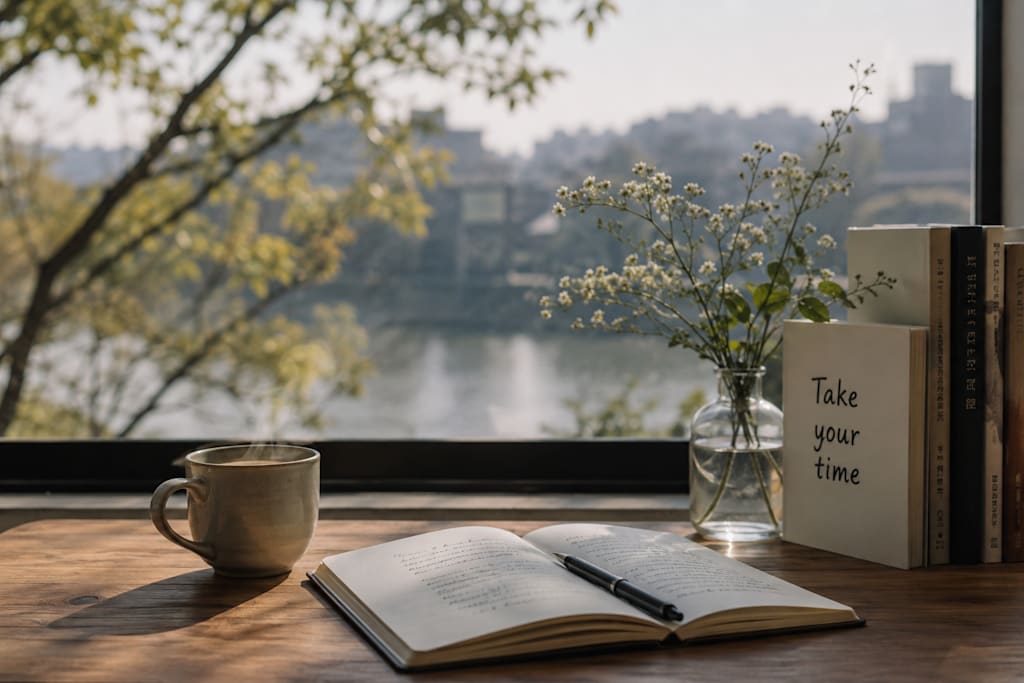
There is a strange kind of pressure in modern life that is difficult to explain but easy to feel.
Everything seems to ask for speed. Messages should be answered quickly. Plans should move quickly. Careers should grow quickly. Skills should be learned quickly. Even rest has become something people try to optimize, as if a quiet afternoon needs a measurable result before it can be considered worthwhile.
We have become very good at moving fast. We scroll fast, decide fast, compare fast, and often judge ourselves even faster. But somewhere in the middle of all this movement, many people are beginning to sense a quiet problem: speed does not always bring depth. Sometimes it only creates noise.
There is value in doing things slowly. Not lazily, not carelessly, and not without ambition. Slowly, in the better sense, means carefully. It means paying attention long enough for something to become real. It means giving an idea, a relationship, a skill, or a personal goal enough time to take shape instead of forcing it to perform immediately.
This is not always easy to accept. Slow progress can feel uncomfortable because it is harder to display. A dramatic change makes a better story than a steady routine. A sudden success is easier to admire than a person who quietly repeats the same useful habits for years. But most meaningful things in life are not built through dramatic moments. They are built through ordinary days that almost no one sees.
Think about learning a language. At the beginning, progress can feel exciting. New words arrive quickly. Simple phrases begin to make sense. But after a while, the process becomes less glamorous. Improvement happens in small details: understanding a joke, choosing the right word, reading a paragraph without stopping, hearing a sentence and recognizing the emotion behind it. These are not loud achievements, but they are real ones. They come from staying with the process longer than the initial excitement lasts.
The same is true for writing, music, fitness, cooking, business, design, and almost any meaningful craft. The early stage often brings motivation, but the middle stage requires patience. That middle stage is where many people quit, not because they lack talent, but because the reward is not immediate enough. They mistake silence for failure. They assume that if progress is not obvious, progress is not happening.
But growth is often quiet before it becomes visible.
A seed does not look impressive while it is underground. A house does not look beautiful when the foundation is being prepared. A person changing their habits may not look different after one week, or even one month. Still, something important may be happening beneath the surface. The slow work is not wasted simply because it cannot be shown yet.
One reason slow work matters is that it gives us time to notice what we actually want. Fast decisions are often shaped by pressure, comparison, or fear of missing out. When we move too quickly, we may end up chasing goals that were never truly ours. We follow the image of success instead of the substance of it.
Slowness creates space. It allows us to ask better questions. Do I actually enjoy this path, or do I only enjoy the approval it might bring? Is this goal connected to my values, or only to my insecurity? Am I building something meaningful, or simply trying to keep up?
These questions rarely appear when life is too crowded with urgency. They arrive in quieter moments: during a walk, after a conversation, while doing repetitive work, or in the pause between one chapter of life and the next. The mind needs room to hear itself.
Doing things slowly also helps us develop better judgment. When we rush, we often react to the surface of things. We answer before understanding. We agree before thinking. We reject ideas before giving them a fair chance. Speed can make us feel productive, but it can also make us shallow.
Patience gives details time to reveal themselves. A person may not show their character in one meeting. A project may not show its true difficulty in the planning stage. A new opportunity may look exciting at first but reveal hidden costs later. When we allow time into the process, we are less likely to be fooled by first impressions.
This does not mean every decision should be delayed. Life sometimes requires quick action. There are moments when hesitation creates its own problems. But there is a difference between acting with clarity and acting from restlessness. Slowness, at its best, is not the enemy of action. It is the foundation for better action.
There is also an emotional benefit to slowing down. A fast life can make people feel as if they are always behind, even when they are doing enough. The finish line keeps moving. One achievement immediately creates the pressure for another. One solved problem opens the door to five new expectations.
When everything becomes a race, it is easy to lose the ability to feel satisfied. We start treating life like a checklist that never ends. We finish one task, but instead of enjoying the completion, we immediately look for the next thing to fix.
Slowing down helps restore a sense of proportion. It reminds us that a life is not only measured by milestones. It is also made of meals, conversations, mornings, mistakes, quiet recoveries, and small acts of care. These things may not look impressive from the outside, but they are often what make life feel livable from the inside.
Many people are tired, not only because they have too much to do, but because they feel they must turn everything into progress. A hobby must become a side business. A book must become a lesson. A trip must become content. A quiet evening must become self-improvement. Even joy is sometimes expected to justify itself.
But some things are valuable because they are experienced, not because they are useful. A slow walk does not need to become a fitness achievement. A conversation does not need to produce a strategy. A meal does not need to be photographed to be meaningful. A weekend does not need to transform your life to be worth having.
The quiet value of doing things slowly is that it returns us to the present. It helps us participate in our own lives instead of rushing through them as if the real moment is always somewhere ahead.
Of course, choosing slowness can feel almost rebellious in a culture that rewards visible motion. It may look like you are falling behind. It may feel like other people are moving faster, gaining more, becoming more successful. Sometimes they are. But speed alone is not a complete measure of direction.
A person can move quickly toward a life they do not want. Another person can move slowly toward something honest, stable, and deeply suited to them. From a distance, the first path may look more impressive. Over time, the second may prove more sustainable.
There is no need to romanticize slowness or turn it into a perfect rule. Some seasons of life are intense. Some goals require urgency. Some opportunities need courage and quick movement. The point is not to reject speed completely. The point is to stop worshiping it.
A good life may need both motion and stillness. It may need deadlines, ambition, discipline, and effort. But it also needs patience, reflection, attention, and rest. Without those quieter qualities, even success can begin to feel strangely empty.
Perhaps the real challenge is learning when to move quickly and when to let things take their time. Not every delay is failure. Not every pause is weakness. Not every slow season is wasted. Sometimes the slow season is where strength is being built.
The world will probably continue to move fast. There will always be another trend, another deadline, another comparison, another reason to feel late. But we do not have to match the speed of everything around us. We can choose a steadier rhythm.
We can answer carefully. Build patiently. Learn deeply. Rest without guilt. Pay attention to what is happening now.
In the end, doing things slowly is not about doing less with our lives. It is about living them with more presence. And in a time when so much feels rushed, that may be one of the most valuable skills we can still practice.
About the Creator
Enjoyed the story? Support the Creator.
Subscribe for free to receive all their stories in your feed.
Comments
There are no comments for this story
Be the first to respond and start the conversation.