
The Price of Prediction: Kalshi’s Lifetime Ban of George Santos and the Battle for Market Integrity
As prediction markets mature into mainstream financial exchanges, the unprecedented expulsion of a former congressman highlights the urgent need to police insider trading and manipulation in the political arena.

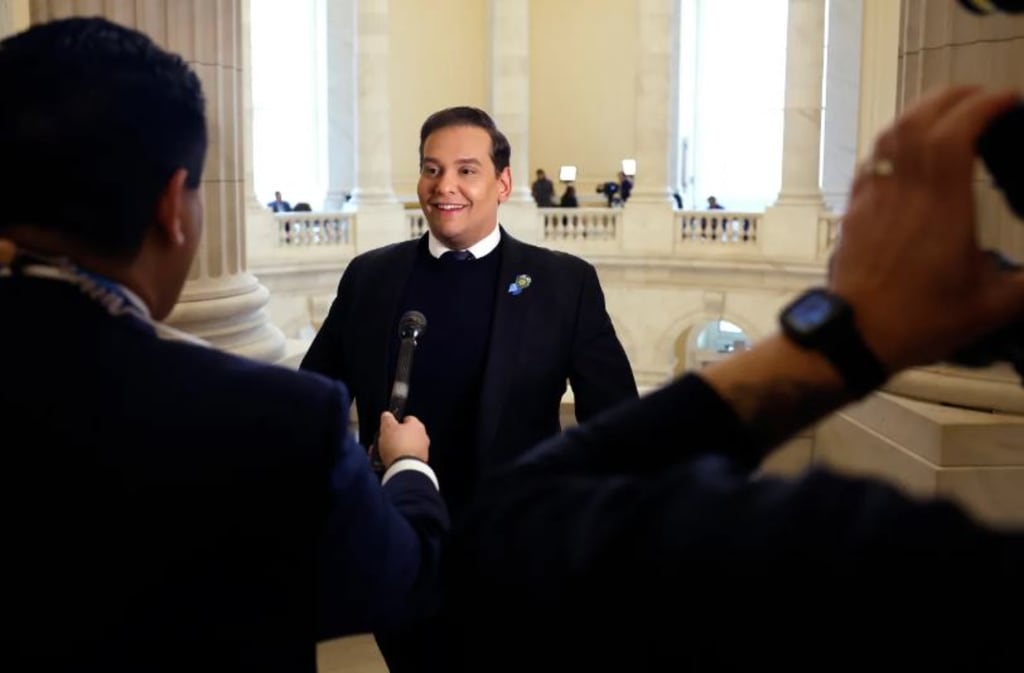
The intersection of American politics and financial speculation has always been fraught with ethical landmines, but the rise of regulated prediction markets has turned abstract conflicts of interest into quantifiable offenses. In a watershed moment for the nascent industry, Kalshi has issued its first-ever lifetime ban, permanently expelling former Republican Representative George Santos from its platform. This unprecedented disciplinary action, first reported by The Wall Street Journal, signals an aggressive new posture by prediction exchanges to police insider trading and market manipulation. It serves as a stark declaration that the monetization of political outcomes requires the same rigorous compliance frameworks and punitive enforcement mechanisms as traditional Wall Street institutions.
The catalyst for Santos’s permanent exile was a brazen attempt to monetize his own political theater. According to Kalshi’s compliance department, Santos placed wagers on whether he would attend President Donald Trump’s State of the Union address, ultimately netting $17,839 in profit. The infraction was not merely the act of betting, but the manipulation of the market itself. As a person capable of influencing the underlying event, Santos was strictly prohibited from trading in that specific market. Furthermore, Kalshi determined that he had established "reasonable cause" to believe Santos made public statements regarding his attendance specifically to sway the odds in his favor, effectively manufacturing his own payout. In response to this manipulation, the exchange not only issued the lifetime ban but also levied a substantial fine of $71,356. True to his controversial public persona, Santos met the disciplinary action with characteristic defiance, taking to X to mock the exchange, thank them sarcastically for the ban, and publicly question the company's future longevity.
This internal enforcement action by Kalshi does not exist in a regulatory vacuum; it is the capstone of a broader reckoning regarding Santos’s market activities. Just two months prior, Santos had reached a settlement with the Commodity Futures Trading Commission (CFTC) over the exact same conduct, agreeing to pay an additional $35,000 penalty. The dual punishments underscore a critical vulnerability in the prediction market model: the ease with which individuals with insider knowledge or direct agency over an event can exploit retail bettors. Unlike traditional securities, where insider trading involves corporate earnings or mergers, political event contracts involve outcomes that can be directly orchestrated by the very people the public is betting on. By aggressively pursuing both regulatory settlements and internal bans, Kalshi is attempting to establish a severe deterrent against the unique form of market abuse that political prediction markets inherently invite.
Santos, however, is not the only political figure to face the wrath of the exchange’s compliance team. In a coordinated crackdown, Kalshi also penalized and suspended several other political candidates accused of betting on their own electoral races. The dragnet caught Ben Midgley, a Republican primary candidate for governor in Maine; Laurie Buckhout, a Republican congressional nominee; and Stephen Cloobeck, a former candidate for governor of California. The prohibition against candidates wagering on their own elections is a foundational rule of political prediction markets, designed to prevent the ultimate conflict of interest. A candidate who holds a financial position in their own victory is incentivized to prioritize their portfolio over their constituents and possesses an insurmountable informational advantage over the general public. By suspending these candidates, Kalshi is drawing a hard line in the sand: the platform will not serve as a shadow campaign finance mechanism, a personal hedge fund, or a vehicle for electoral grift.
Ultimately, the expulsion of George Santos and the suspension of various congressional and gubernatorial candidates represent a crucial maturation point for the prediction market industry. For platforms like Kalshi to transition from niche novelty to integral components of the global financial system, they must prove that their markets are fair, transparent, and insulated from manipulation. The lifetime ban of a former member of Congress sends an unequivocal message that political clout, notoriety, and a large social media following offer no immunity from compliance enforcement. As future election cycles and State of the Union addresses generate billions in speculative volume, the integrity of the market will depend entirely on the willingness of exchanges to banish those who treat the public square as a rigged casino.
About the Creator
Mark Lim
Hi I am mark an automotive student and a car, tech and food enthusiast ! Im gonna try and post daily & hope you enjoy what I write and do share my page with people you know. I would gladly appreciate it! Cheers
Enjoyed the story? Support the Creator.
Subscribe for free to receive all their stories in your feed.
Comments
There are no comments for this story
Be the first to respond and start the conversation.