
The Pizza Chain That Put Its Worst Customer Reviews in Its Own Ads
Domino’s could have defended its pizza when customers criticized it. Instead, the company showed the complaints to everyone and changed the product.
A Domino’s employee looked at a customer complaint on camera.
The customer thought the sauce tasted like ketchup.
Another person compared the crust to cardboard.
These were not comments collected by a competitor. Domino’s had chosen them itself.
Around the end of 2009, the pizza chain began putting some of its harshest customer criticism into its own advertising. Employees appeared in documentary-style commercials confronting what people disliked about the company’s pizza. The Washington Post described one employee as appearing close to tears while reading a particularly blunt review.
For most businesses, bad reviews are something to manage quietly.
Domino’s turned them into the beginning of a national advertising campaign.
That only worked because something else had already happened behind the cameras.
The company had changed the pizza.
The criticism was about the product
Domino’s had been selling pizza for nearly 50 years.
By 2009, it operated thousands of stores and was already one of the best-known pizza delivery companies in the world. But familiarity did not mean customers loved the food.
Domino’s said it had received thousands of direct consumer comments through social media and other channels. Some customers liked the company’s convenience but criticized the taste of its core hand-tossed pizza.
The company had a choice.
It could change the message around the product.
That would have been the familiar response. A new commercial could show better-looking cheese, happier families or a faster delivery experience. The advertising might make the pizza appear more appealing without changing what arrived in the box.
Domino’s went further.
Over roughly two years, the company says it tested dozens of cheeses, 15 sauces and nearly 50 crust-seasoning blends. It worked with people who regularly ordered Domino’s and with customers who had stopped buying from the chain.
The final changes touched almost every part of the basic pizza.
The crust gained garlic seasoning and parsley. The sauce became bolder and sweeter, with herbs and red pepper. The cheese mixture changed as well. Domino’s described the result as a complete reinvention of its core hand-tossed pizza rather than a small adjustment.
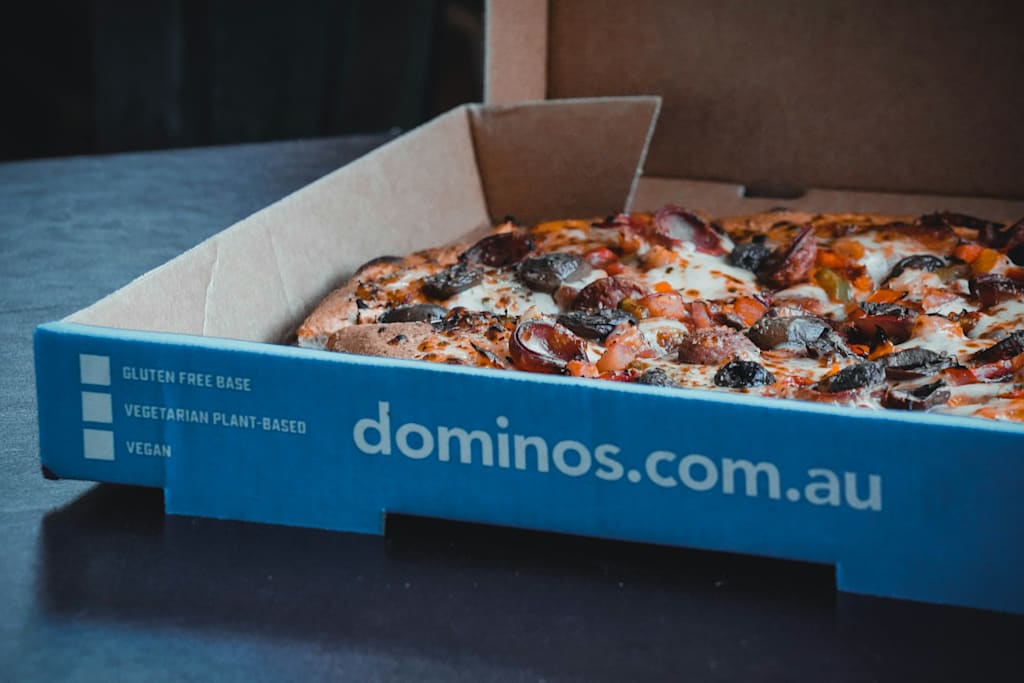
The new recipe began reaching U.S. stores in December 2009.
Then came the unusual part.
Instead of pretending customers had never complained, Domino’s reminded them.
The company showed people what they already knew
The advertising campaign used real Domino’s employees and documentary-style footage.
According to the company, the commercials were filmed at its headquarters in Ann Arbor, Michigan, and focused directly on negative perceptions of the pizza. A later Domino’s release described the campaign as one in which employees “faced consumer criticism head-on.”
The approach created an uncomfortable situation.
Employees had to acknowledge that some customers did not simply prefer another pizza.
They thought Domino’s own product was not good enough.
That admission made the campaign risky.
A company normally spends advertising money giving people reasons to buy. Domino’s spent part of its budget repeating reasons people had given for staying away.
But the criticism now had somewhere to go.
The company was no longer asking customers to forget their previous experience. It was asking them to try something different and judge it again.
That made the bad reviews useful.
They explained why the product had changed.
Without the complaints, a new sauce or crust might have looked like another ordinary menu update.
With them, the changes became part of a story customers could understand.
People had complained.
The company had listened.
The pizza had changed.
Now Domino’s needed people to taste it again.
The risk was bigger than changing a recipe
Changing a core product creates its own problem.
Existing customers may prefer the old version.
Franchisees have to learn the new process.
Suppliers have to provide different ingredients.
Stores need consistency.
Marketing has to convince former customers to return without making loyal customers feel that everything they previously enjoyed was somehow wrong.
Domino’s was making that change across a large franchise system.
Its 2009 announcement said the company had 8,886 franchised and company-owned stores across the United States and 60 international markets.
The company also backed the new pizza with a guarantee, offering to make things right or refund customers who were not satisfied.
That put more weight behind the advertising.
Domino’s was not merely admitting that some people disliked its old pizza.
It was giving customers a reason to test whether the company had really fixed the problem.
The response was measurable.
For fiscal 2010, Domino’s reported U.S. same-store sales growth of 9.9 percent. The company attributed that performance to increased store traffic, positive consumer response to the improved pizza and the effectiveness of the advertising campaign.
The campaign itself also drew attention. By April 2010, Domino’s said the full Pizza Turnaround documentary had attracted more than 700,000 viewers online, while the campaign had been covered by hundreds of local television affiliates.
The bad reviews had become part of the recovery.
Listening is harder when the criticism is specific
Businesses often say they listen to customers.
That becomes more difficult when customers say something management does not want to hear.
A vague complaint can be dismissed.
A customer who dislikes the taste of the core product is harder to ignore.
The danger is that a company begins defending the work it has already done.
Employees know how difficult the product was to create. Managers know the research behind it. Founders may feel personally connected to it. A business can spend so much time explaining why the product should work that it stops noticing that customers do not agree.
Domino’s could not solve that problem with a better explanation.
Nobody needed a presentation about why the crust was good.
Customers needed a crust they actually wanted to eat.
That was the useful part of the criticism.
It pointed toward something the company could change.
Not every bad review deserves the same weight. Customers can contradict one another, misunderstand products or ask for things that would damage the business.
But repeated criticism about the same basic experience is different.
At some point, defending the product becomes less useful than testing whether the customer has identified something real.
Domino’s made that process unusually public.
It showed the criticism before showing the solution.
Years later, the most memorable part of the campaign is still the uncomfortable part: employees hearing people say they did not like the pizza their company had spent decades selling.
The commercials could have hidden those comments.
Instead, Domino’s placed them in front of the camera.
Then it put a different pizza in the box.
About the Creator
Enjoyed the story? Support the Creator.
Subscribe for free to receive all their stories in your feed.
Comments
There are no comments for this story
Be the first to respond and start the conversation.