
The Paradox of Power: How Humanity Saves and Destroys in the Same Breath
A History Written by the Winners

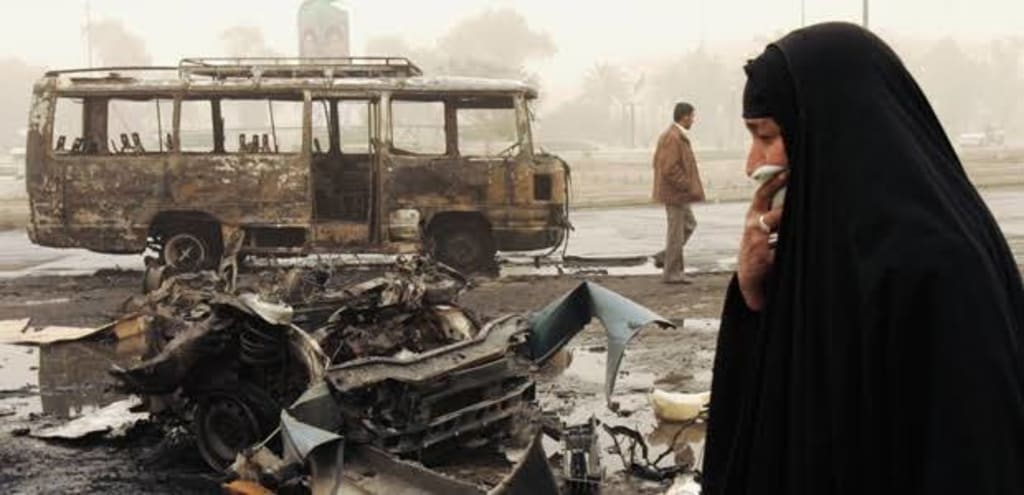
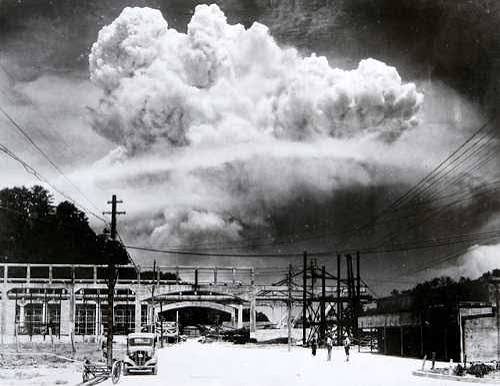
There is something deeply strange about the species that built hospitals and also built nuclear bombs. The same hands that developed vaccines to save children from disease are, often within the same decade, the hands that sign orders sending soldiers into villages full of children. We call this progress. We call this civilization. But underneath the language of progress lies a contradiction so old and so consistent that it deserves to be named plainly: humanity has never stopped being both the rescuer and the executioner, and it rarely admits to being either on purpose.
The Birth of "Revolution"
Every generation believes it is living through a unique revolution. Fire, then agriculture, then the printing press, then electricity, then the internet, and now artificial intelligence — each one announced as the moment that would finally free humanity from suffering. And each time, the technology arrives wrapped in promises of safety, convenience, and connection, while the institutions controlling it quietly use the very same tools to monitor, manipulate, or profit from the people they claim to be serving.
Plastic was sold as the miracle material that would make life easier and cheaper. Decades later, the same industries that produced it fund the campaigns to clean up the oceans they helped fill with it. Artificial intelligence is marketed today as a tool to "save the world" — to cure disease, fight climate change, end poverty — while simultaneously being developed for surveillance, autonomous weapons, and the concentration of decision-making power in the hands of a tiny number of corporations and governments. Phones and social networks promised to bring the world closer together; instead they have become some of the most effective tools ever built for shaping what billions of people think, fear, and buy.
None of this is necessarily a grand conspiracy. Often it is something simpler and more uncomfortable: the same institutions are capable of doing real good and real harm at once, and they rarely get asked to explain the contradiction, because the people who could ask the hardest questions are usually the ones holding the least power.
A History Written by the Winners
It has long been observed that history is written by whoever survives to write it. Entire civilizations — Egypt among them — left behind monuments, irrigation systems, and forms of organized governance that predate much of what later empires would claim credit for inventing. Yet the popular story of "civilization" often skips quickly past Africa and Asia to begin with Greece and Rome, as though human achievement only counts once it is retold by a particular set of conquerors. This is not unique to the ancient world. The founding of the United States is taught, understandably, as a story of liberty and self-government — yet that same founding involved the displacement of Indigenous nations and the institution of slavery, facts that took generations of pressure before they were fully acknowledged in mainstream textbooks. Wars are described as humanitarian interventions by the side that wins them and as invasions by the side that loses them. Borders that were drawn by colonial powers a century ago, often with a ruler and very little knowledge of the people living there, are still the source of conflicts being fought today, conflicts whose origins are rarely mentioned when the news reports on them.
This is the pattern: power does not just shape the present, it reaches backward and reshapes the past, so that each new generation inherits a version of history convenient to whoever was strong enough to write it down.
Democracy on Paper
Modern democracy is supposed to be the corrective to all of this — a system where ordinary people choose their leaders and hold them accountable. In practice, public trust in elections has eroded in many countries, not because people no longer believe in the idea of voting, but because they increasingly suspect that money, media ownership, and political donors shape outcomes long before anyone steps into a polling booth. Whether or not a particular election was technically "free and fair" by legal standards, a great many citizens around the world report feeling that their vote changes very little about who actually holds power behind the scenes. That gap between the promise of democracy and the lived experience of it is itself a kind of crisis, regardless of which side of any particular political debate a person sits on.
The Business of Being Distracted
Meanwhile, a different kind of power operates quietly in the background: the businesses built not on what people need, but on what people cannot easily stop wanting. Alcohol, tobacco, ultra-processed food, gambling, and increasingly, the algorithms inside our phones, are all engineered — sometimes literally, by teams of behavioral scientists — to trigger small, repeated hits of dopamine. The attention economy has made distraction itself one of the most profitable industries in human history, generating revenues larger than the GDP of entire nations. People are not simply choosing to scroll for six hours a day; they are responding to systems specifically designed, tested, and refined to keep them doing exactly that. It is rarely framed as exploitation, because it doesn't look like exploitation. It looks like a free app.
The Debt Trap
This same short-term logic plays out at the level of entire nations. Governments are typically elected for terms of four or five years, which means the people in charge of a country's long-term decisions are almost always optimizing for what gets them re-elected next, not what serves the next generation. Large-scale borrowing — from international lenders, development banks, or foreign governments — can fund hospitals and roads in the short term, but it also locks countries into decades of debt repayment, often on terms negotiated by leaders who will be long out of office before the bill comes due. Citizens are left paying for decisions they had no real part in making, while unemployment and inequality persist regardless of which party holds office. The cycle repeats: a new government arrives promising change, borrows to deliver quick results, and hands the debt to whoever comes next.
Nature Keeps the Receipts
Through all of this — the wars fought in the name of peace, the histories rewritten by the powerful, the elections that may or may not reflect the public will, the industries built on addiction, the debts handed down to children not yet born — there is one force that has never once been fooled by a press release: the natural world. Forests do not care about a corporation's sustainability marketing if the actual deforestation continues. Oceans do not distinguish between plastic that was "recyclable in theory" and plastic that was actually recycled. Species do not return once they are gone, no matter how convincing the apology is afterward. Rising temperatures, vanishing biodiversity, and extreme weather are not opinions to be debated in a press conference; they are responses, the planet's own form of accounting for everything that has been extracted, burned, or destroyed in the name of progress.
Perhaps that is the most honest part of the entire story. Humans have built systems sophisticated enough to rewrite history, manipulate attention, reshape borders, and bury entire nations in debt — but none of those systems work on nature. It does not negotiate, it does not accept apologies, and it does not particularly care which political party is currently in power. It simply responds, eventually, to what was actually done. In a world full of institutions skilled at avoiding accountability, nature may end up being the only one that delivers it.
The question worth asking is not whether humanity is good or bad — it has clearly always been both at once. The harder question is whether anyone with the power to choose between saving and destroying will ever be required to answer for which one they actually chose.
About the Creator
write with shan
🌍 Discovering the world through words.
👻 Horror & Mystery Stories
🔬 Science & History Articles
📈 Trading Knowledge
🎬 Movie Reviews & Analysis
New content every week.
Enjoyed the story? Support the Creator.
Subscribe for free to receive all their stories in your feed.
Comments
There are no comments for this story
Be the first to respond and start the conversation.