
The Palm Oil Pressure Cooker: Sarawak’s Storage Crisis Threatens Malaysia’s Supply Chain
As inventories hit record highs and Bintulu Port reaches saturation point, a logistical bottleneck in Borneo forces the government to consider emergency tax waivers to prevent a catastrophic backup of fresh fruit at the plantation level.

Malaysia’s palm oil industry, the lifeblood of its agricultural economy, is facing a critical inflection point. In Sarawak, the nation’s second-largest producing state, storage tanks are nearing capacity as a confluence of bumper harvests, logistical bottlenecks, and soaring freight costs creates a perfect storm of oversupply. The situation has become so acute that industry leaders are warning of potential disruptions to the entire supply chain, urging the government to take immediate action to clear the glut before it forces mills to halt processing during the peak harvesting season.
The Bintulu Bottleneck
At the heart of the crisis is Bintulu Port, the primary gateway for Sarawak’s palm oil exports, handling more than 90% of the state’s outbound shipments. As production surges to multi-year highs, the port’s infrastructure is struggling to keep pace. Industry executives report that tanks in the region are filling up faster than vessels can be loaded and dispatched. This congestion is exacerbated by elevated global freight costs and high diesel prices, which have slowed the rotation of shipping containers and tankers, leaving crude palm oil (CPO) stranded onshore.
Sarawak accounts for more than one-fifth of Malaysia’s total palm oil output. When such a significant portion of national production faces a logistical chokepoint, the ripple effects are felt across the entire country. The inability to move product out efficiently has led to a rapid accumulation of stockpiles, creating a dangerous backlog that threatens to overflow into the upstream sector.
Record Inventories and Falling Prices
The strain in Sarawak mirrors a broader national trend. Across Malaysia, the world’s second-largest palm oil producer, total inventories hit a record 3.51 million tonnes in September. This surge occurred even before the typical seasonal output peak that arrives in October, suggesting that the current oversupply is structurally driven rather than just cyclical.
The market has reacted swiftly to this bloated inventory data. Benchmark palm oil futures on the Bursa Malaysia Derivatives fell as much as 2.2% on Tuesday, marking the steepest decline in over a month and hovering near four-month lows. While the resulting price discount against rival vegetable oils like soybean and sunflower oil has helped spur some export demand, it has not been enough to absorb the sheer volume of excess supply. Consequently, prices remain under severe pressure, squeezing profit margins for planters and millers alike.
The Threat to Smallholders
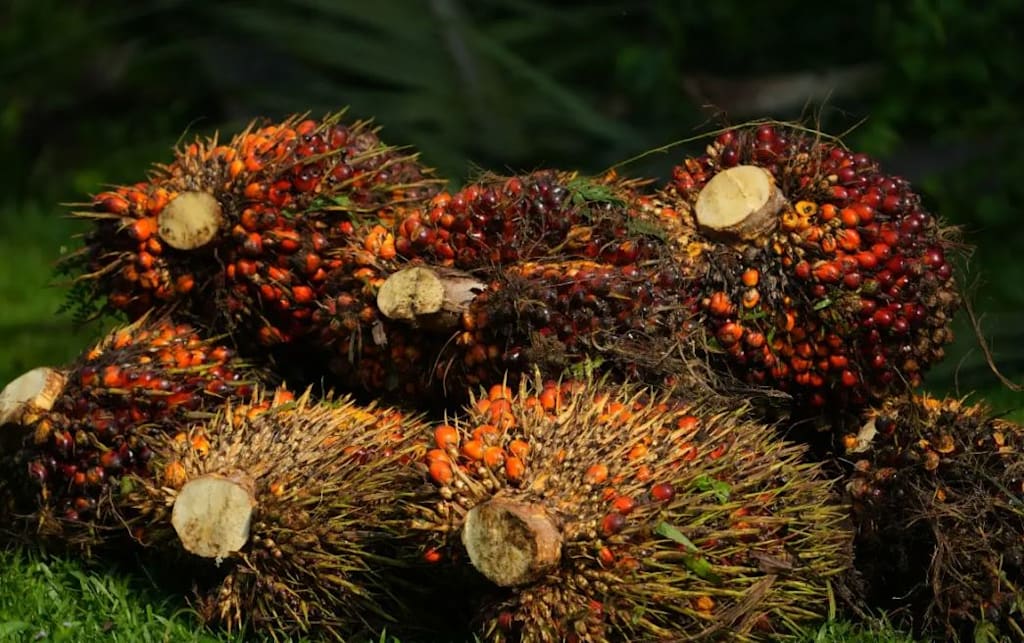
The most alarming consequence of the storage crisis is the potential impact on smallholders and plantation workers. If storage tanks reach absolute capacity, mills will be forced to slow down or temporarily cease operations. Unlike crude oil, which can be stored for extended periods, fresh fruit bunches (FFB) are highly perishable. They must be processed within 24 to 48 hours of harvesting to maintain oil quality and yield.
"We don’t want to jeopardise the supply chain," said Mohd Haris Mohd Arshad, President and Group CEO of SD Guthrie Bhd. "The last thing we want is for farmers not to be able to sell their fruit." If mills stop buying FFB due to a lack of storage for the extracted oil, smallholders who rely on daily sales for their livelihood will face immediate financial distress. Furthermore, unharvested fruit left on trees can lead to long-term yield penalties and increased pest risks.
Government Intervention: Tax Waivers and Port Diversification
Recognizing the urgency, the Malaysian government is actively reviewing proposals to alleviate the pressure. Plantation and Commodities Minister Datuk Seri Dr. Noraini Ahmad confirmed that measures to address the glut are under consideration, though she noted that further discussion is required. Among the most prominent proposals is a temporary waiver of export taxes on crude palm oil. Such a move would make Malaysian CPO more competitive in the global market, incentivizing traders to accelerate shipments and clear domestic stockpiles.
Simultaneously, industry players are exploring logistical workarounds. Some companies have brought additional milling capacity online to process fruit faster, while authorities are investigating the use of alternative ports in Sarawak to bypass the congested Bintulu hub. However, these solutions require time and coordination, resources that are dwindling as the harvest peaks.
A Race Against Time
The current situation highlights the fragility of Malaysia’s palm oil supply chain when faced with simultaneous production spikes and logistical headwinds. For the government, the challenge is to balance fiscal revenue from export taxes with the need to prevent a systemic collapse in the upstream sector. For the industry, it is a test of operational resilience.
As October progresses and production hits its seasonal zenith, the window for effective intervention is closing. If storage capacity is breached, the resulting disruption could cause lasting damage to farmer confidence and market stability. The coming weeks will be decisive in determining whether Malaysia can successfully navigate this surplus or if it will be forced to endure a painful correction in both prices and production.
About the Creator
Mark Lim
Hi I am mark an automotive student and a car, tech and food enthusiast ! Im gonna try and post daily & hope you enjoy what I write and do share my page with people you know. I would gladly appreciate it! Cheers
Enjoyed the story? Support the Creator.
Subscribe for free to receive all their stories in your feed.
Comments
There are no comments for this story
Be the first to respond and start the conversation.