
The only thing that mattered in Bezos’s two marriages
One wife left with stock she helped build. The other entered a wedding protected by trusts. The difference is ownership.
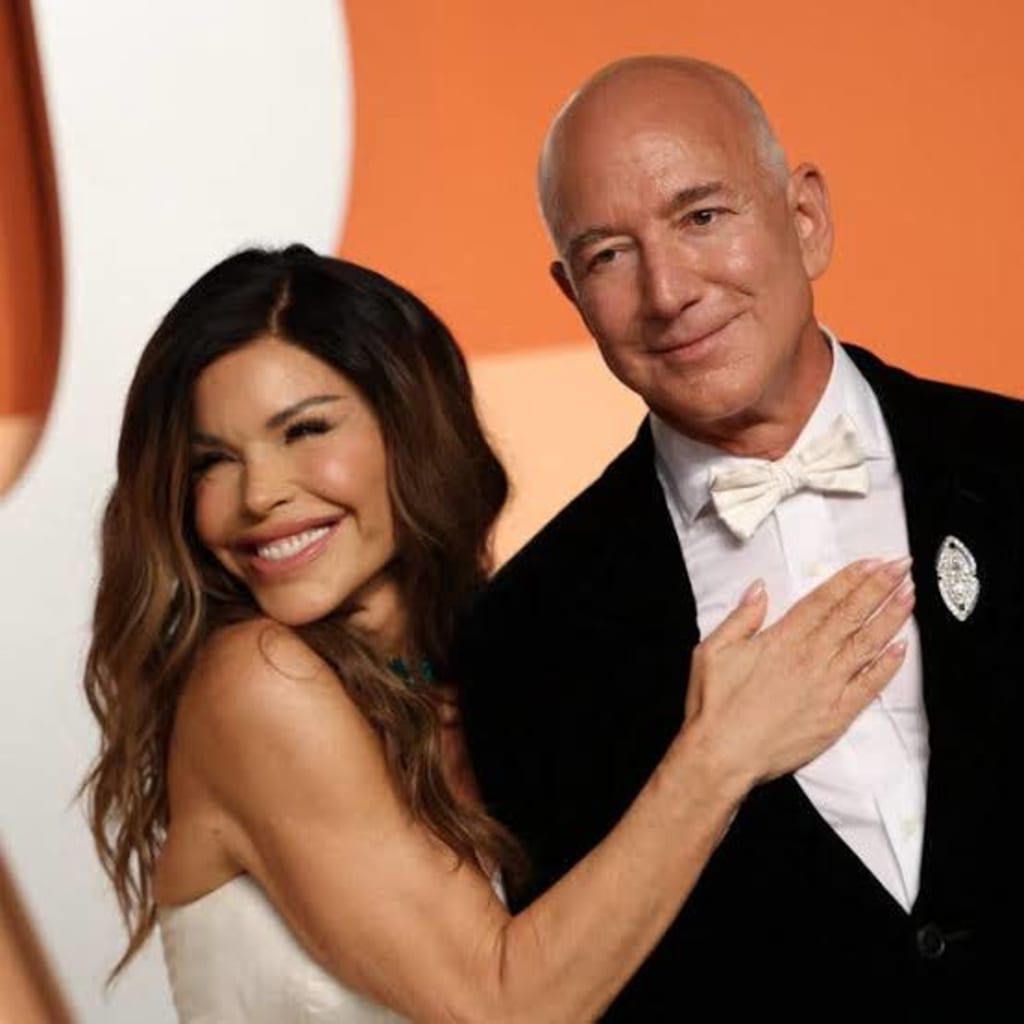
In April 2019, MacKenzie Scott posted a divorce statement on Twitter. In June 2025, Bezos married Lauren Sánchez in Venice. The two events are six years apart. They also sit on opposite sides of a wealth governance line.
Most coverage focuses on the wedding, the yacht, the guest list, the gifts. A more useful question is simpler: when the relationship ends, what do you still own?
MacKenzie walked away with assets she helped create
In 1993, MacKenzie and Bezos worked at D. E. Shaw. In 1994, they moved to Seattle and started Amazon in a garage. MacKenzie kept the books, handled early contracts, worked on the business plan, and raised four children.
They had no prenuptial agreement. Washington State is a community property state. Amazon was created during the marriage. By default, the law treated it as shared property. When the divorce happened, MacKenzie did not hold a gift. She held a legal claim to something she had helped build.
She kept about 4% of Amazon. It was worth roughly $36 billion at the time. She gave up her interests in The Washington Post and Blue Origin. She handed voting control of her Amazon shares to Bezos.
That looks like a concession. In asset terms, it was a trade.
She kept economic ownership, the right to sell, the right to receive dividends, and the right to transfer or donate. She gave up voting rights, board influence, and control of the company. The split let her own the money layer without staying inside the governance layer.
The company got stability. Investors did not have to price in a founder-control fight. She got freedom. She could do what she wanted with her shares without dragging Amazon into every decision.
After the divorce, MacKenzie signed the Giving Pledge. Through Yield Giving, she has donated more than $26 billion in five years to over 2,700 organizations. She later married a chemistry teacher. She lives far from the billionaire circuit.
Every donation was hers to make. If she had fought for voting control, those donations would have been harder. Board battles, transfer limits, and voting arrangements would have followed. She traded control for full disposal rights.
Sánchez entered a marriage with a different rights package
Bezos married Lauren Sánchez in Venice in 2025. The wedding produced a lot of coverage. The details are not the point. The legal structure is.
After the first divorce, Bezos built a firewall before the second marriage. The logic was not whether to give. It was what to give, how to give, and at what level.
According to media reports and legal analysts, the prenuptial agreement follows a few principles. Core premarital assets, including Amazon shares, Blue Origin interests, and The Washington Post, are isolated. A trust limits core equity beneficiaries to Bezos’s direct descendants. A spouse is a restricted beneficiary and cannot touch the trust corpus. New core appreciation during the marriage is also isolated.
Sánchez can use a home. She can spend. She can appear as a spouse. She can enter rooms most people never see. She cannot own equity, receive trust principal, make corporate decisions, or claim core assets.
Some boundaries matter. The exact terms are private. Media figures like a 386-page agreement or $1 million per year are mostly speculation. They should not be treated as fact. The direction is clear: the second marriage placed the spouse in a beneficiary and experience position, not a co-owner position.
Sánchez’s strategy differs from MacKenzie’s. She is not building an operating company. She is converting emotional value, social skill, and public image into access. That access has a price. It lasts as long as the marriage lasts.
Experience rights depend on the relationship. They are not protected by title. If the marriage ends, the house, yacht, jet, and guest-list access can be withdrawn. What remains is preset compensation, some personal property, and a social network built around being Bezos’s wife. That network loses value when the title does.
Ownership, control, and benefit can be separated
The two marriages show a wider structure. In large fortunes, ownership, control, and beneficial interest are often separated.
Ownership decides whose name is on the asset. Control decides who directs it. Beneficial interest decides who receives the money.
A spouse can sit in one of three positions:
Co-creator. The spouse helped build the asset and holds a legal claim to it. MacKenzie sat here. Her leverage came from creation.
Beneficiary. The spouse does not own the asset but receives some income from it through a trust or agreement. The strength of that position depends on the trust terms.
Experiencer. The spouse gets use, consumption, and social access during the marriage. Those rights end when the relationship ends.
Sánchez most likely sits between beneficiary and experiencer. The exact line depends on the private agreement. She does not sit in the co-creator position. She did not help build Amazon.
This is not a story about stinginess. It is standard practice at the top. When a fortune reaches hundreds of billions, a divorce touches public shareholders, control of a company, and market expectations. A legal structure removes human unpredictability from the asset base.
What we do not know
The public does not know Bezos’s full trust arrangements. The public does not know Sánchez’s full prenuptial agreement. Reports and expert guesses are useful for analysis. They are not court records.
Marital property law also varies. Washington State, China, the Cayman Islands, and Singapore do not use the same rules. A Bezos case study cannot be copied onto another couple.
The co-creator path is not the only valid path. Sánchez chose access, lifestyle, and social capital. She knows the trade. Calling her a victim ignores her own agency. Calling MacKenzie a saint ignores the legal leverage she held.
Marriage is also not only an asset schedule. Emotion, children, companionship, and shared history matter. This article looks at legal and asset structure. It does not score the emotional value of either marriage.
The question to ask earlier
The useful takeaway is not “get equity, not love.” It is this: in any relationship tied to serious money, learn which layer of rights you hold.
Do you own the asset, receive income from it, or only use it? If the relationship ends, is your protection in a contract or in someone’s mood? Did you help create the value, or were you given access to it?
MacKenzie’s power came from a business she helped build. Sánchez’s power comes from knowing exactly what she is trading. Both paths are clear. The danger is holding a lifestyle and believing it is an asset.
MacKenzie’s donation list keeps growing. Sánchez’s social calendar keeps moving. Both things are true at once.
About the Creator
Jin
Writer of reamstories
https://reamstories.com/jin
Enjoyed the story? Support the Creator.
Subscribe for free to receive all their stories in your feed. You could also become a paid subscriber, letting them know you appreciate their work.
Comments
There are no comments for this story
Be the first to respond and start the conversation.