
The Murdoch Wife Who Built the Wall
Anna Torv didn’t leave with just $1.7 billion. She left with a trust that still decides who gets a vote.
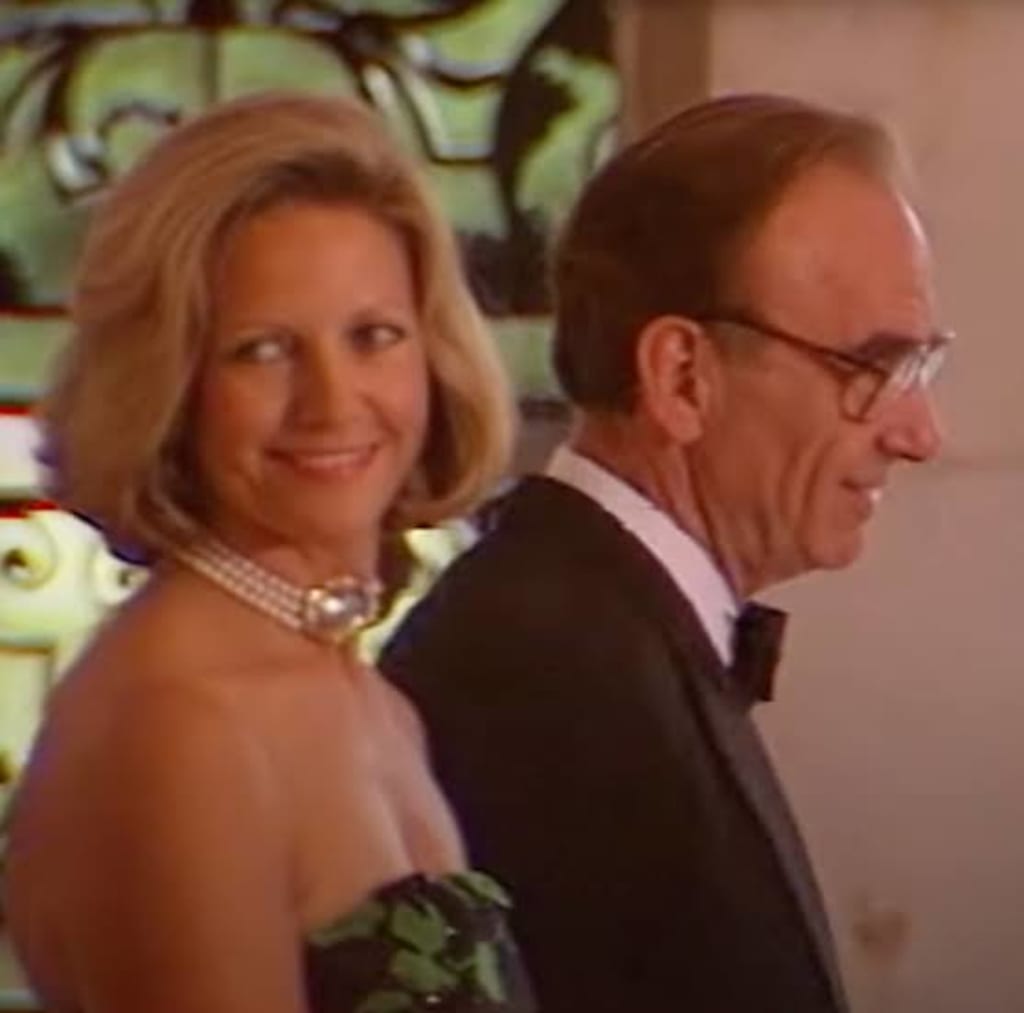
Sydney autumn wasn’t cold. In the newsroom, the typewriters sounded like rain.
Anna Torv set the recorder on the desk and opened her notebook. She was eighteen, covering City Hall and the dockworkers’ union, and that day she had been sent to interview an Australian who had just bought the newspaper. The editor said: ask him what he plans to do with the local news section.
Murdoch sat in a temporarily cleared office. There were no photo frames on the desk, only a stack of financial statements. He answered quickly, as if catching a train, but his eyes kept moving to her hands. When she took notes, she circled key figures and drew a line to the relevant paragraph.
When the interview ended, she turned off the recorder. Murdoch said, Who taught you to circle numbers? She said, No one. If you don’t circle numbers, they run away.
He laughed once, very briefly. Then he said, I’ll be here next Tuesday. Come again.
She didn’t agree immediately. She put the recorder in her bag, pulled the zipper shut, glanced at the newspaper’s sign outside the window, and said, Next Tuesday I’m covering the dock strike. Wednesday works.
Murdoch later told people: This girl knows when to say no.
When they married in 1967, Murdoch’s newspaper circulation in Adelaide had just passed one hundred thousand. The wedding was small. Anna wore a cream-colored dress, no long train. Her parents came from the immigrant community and sat in the second row. After the ceremony, Murdoch’s mother said to her: You’re quieter than I expected.
Anna understood. Quiet here meant: don’t make trouble.
She indeed made no trouble. Over the next ten years, she gave birth to Elisabeth, then Lachlan, then James. Each time she was pregnant, she scheduled her prenatal appointments the day before the board meeting. That way she could go straight from the meeting to the hospital without missing a single vote.
In the 1970s, there were no women on News Corporation’s board. Anna sat at the far end of the long table, acquisition documents spread out in front of her. She did not speak often, but Murdoch would sometimes turn his head to look at her. She nodded, or shook her head. Once, a discussion about whether to buy a small British newspaper stalled. She wrote three words on a sticky note and pushed it over: cash flow. Murdoch glanced at it and postponed the acquisition by six months. That newspaper later went bankrupt, and they bought the printing plant at a lower price.
While she did these things, Prudence, Murdoch’s daughter from his first marriage, was doing homework at Anna’s dining table. Anna checked her spelling, signed permission slips, attended parent-teacher meetings. Patricia, the first wife, lived in the suburbs and came to see her daughter twice a year. Anna never blocked her, and never invited her.
Once Lachlan asked why Prudence had two mothers. Anna said, Because she has two mothers who love her. Then she straightened Lachlan’s shirt collar and said, Go put your shoes on. The car is waiting.
In the early 1990s, News Corporation was expanding. Murdoch flew to three countries a week, and Anna sometimes went with him. At negotiating tables in London, she sat at his right hand, responsible for passing him a number when he stalled, or pointing out a clause that had been missed in translation in an English contract. A representative from the other side later recalled: That Australian woman didn’t talk much, but she turned pages as fast as Murdoch changed his mind.
In New York, she attended Fox’s programming meetings. She did not interfere with content, but she asked one question: For this time slot, how far off is the ad rate compared with competitors? If no one could answer immediately, she waited. She waited until someone went to check.
At home, she wrote. She got up at five, wrote for two hours, then woke the children. On her desk was a green lamp, its shade slightly yellowed and scorched at the edge. She submitted articles several times, and they were all rejected. The editor said, Too calm. Readers want emotion. She folded the rejection letters, pressed them under the lamp, and kept writing the next chapter.
Murdoch never read what she wrote. Once she left a manuscript on his bedside table. Three days later it was still there, with a coffee-cup ring on top. She took the manuscript away and said nothing. After that, she stopped leaving it there.
In 1998, Murdoch came back from a trip to Asia. Anna was in the study sorting board documents. He walked in, stood in the doorway, and did not sit down. He said, I’m planning to restructure the board. Anna said, How? He said, You don’t need to attend anymore.
She was holding a copy of the trust terms. The paper was thin, its edge almost sharp enough to cut. She put it back in the folder, closed it, and said, All right.
Murdoch went out. She sat in the chair and listened to the sounds downstairs. The nanny was washing dishes in the kitchen, the tap running hard. She picked up the phone and dialed a number. It rang twice, and someone answered. She said, This is Anna Torv. I need a lawyer. A divorce lawyer, preferably licensed in both California and Australia.
After hanging up, she went to the kitchen and poured a glass of water. The water was very cold. She drank half and poured the rest into the sink. Then she went back to the study, opened a drawer, and took out a brown paper envelope. Inside were things she had organized over the past two years: copies of board minutes, drafts of the trust structure, the date and amount of every related-party transaction. She put the envelope in her handbag and pulled the zipper shut. It was the same motion she had made thirty-one years earlier when she zipped up her recorder at the end of the interview.
The divorce negotiations took place in a conference room in Los Angeles. Six lawyers came on Murdoch’s side; three on Anna’s. Bottles of mineral water sat on the table, all unopened.
Anna’s lawyer spoke first: Under California law, for a marriage of more than thirty years, my client has the right to claim half of the marital community property. Murdoch’s lawyer did not deny it, but began talking about “liquidity issues in commercial assets.”
Anna listened for a while, then pushed a blue folder to the center of the table. She said, Cash and real estate, we can talk about that. But this, she tapped the cover of the folder without knocking on it, gets settled first.
Inside the folder was a draft of the trust terms. Its core was one clause: all News Corporation shares carrying voting rights would be placed into an irrevocable trust; after Murdoch’s death, voting control would be divided equally among the four children from his first two marriages.
Murdoch’s lawyer said this would affect the group’s decision-making efficiency. Anna said, Four votes. Not five, not three. Four-way checks and balances. No one can decide alone. That’s more stable than one person deciding.
Murdoch himself said nothing. He looked at her as if assessing a financial statement. Anna met his gaze and said one sentence: You bought that small British newspaper back then because of cash flow. This clause protects the share price. If this goes to trial, the details of those related-party transactions will appear in the court record. You do the math. Which is more expensive?
The conference room was quiet for about ten seconds. Murdoch picked up a pen and signed his name in the blank space on the draft.
In the final agreement, Anna received 1.7 billion dollars. Cash, houses, several paintings. She converted most of the cash into asset allocations outside the trust and did not buy News Corporation stock. Someone asked her why. She said, Don’t put all your eggs in one basket. I learned that covering the docks.
Seventeen days after the divorce, Murdoch married Wendi Deng. When the news came out, Anna was in a small town on the south coast of Australia. She rented a house with a yard. In the yard was a lemon tree. The lemons were very sour, perfect for cooking.
She did not watch the news. In the kitchen, she sliced lemons, packed them into a glass jar, and poured honey over them. Her phone rang twice. She didn’t answer. The third time it rang, she wiped her hands, picked it up, and glanced at the screen. It was Elisabeth. She answered. Elisabeth said, Mom, are you okay? Anna said, I’m pickling lemons. Elisabeth was silent for a moment, then said, That’s good.
Later, Wendi Deng had two daughters. The trust terms were clear: they had dividend rights, no voting rights. Major decisions at News Corporation were made by the votes of the four children. Lachlan rose to the top position at Fox. Elisabeth and James each ran core divisions. Prudence also had equal voting rights, and the few times she voted later, she voted in the same direction as Anna’s children.
Anna never commented publicly on these arrangements. Once, at a charity dinner, a reporter stopped her and asked what she thought of Wendi Deng. She was holding a half-finished glass of soda water. She said, My job tonight is to raise money for the library. Are you donating?
The reporter froze for a moment, then said yes. Anna took a form out of her handbag, handed it over, and pointed to the amount column.
Last year, someone ran into her in a bookshop in London. She was leafing through a book about the history of the nineteenth-century Australian press, a pencil in her hand, marking the margins. At the checkout, the cashier recognized her and said, Did you used to work in news too? She said, A long time ago. The cashier said, What do you write now? She put the book into a cloth bag and said, Things no one rushes me to finish.
As she left, she stood at the curb waiting for the light. The wind blew her scarf behind her, and she did not pull it back. The light turned green. She crossed, neither fast nor slow. Behind her, in a glass shop window, a television was showing News Corporation’s share price. She did not look back.
About the Creator
Jin
Writer of reamstories
https://reamstories.com/jin
Enjoyed the story? Support the Creator.
Subscribe for free to receive all their stories in your feed. You could also become a paid subscriber, letting them know you appreciate their work.
Comments
There are no comments for this story
Be the first to respond and start the conversation.