
The Lifesaving Bags Behind Modern Medicine
Why the Large Volume Parenteral (LVP) Market is becoming a silent pillar of global healthcare
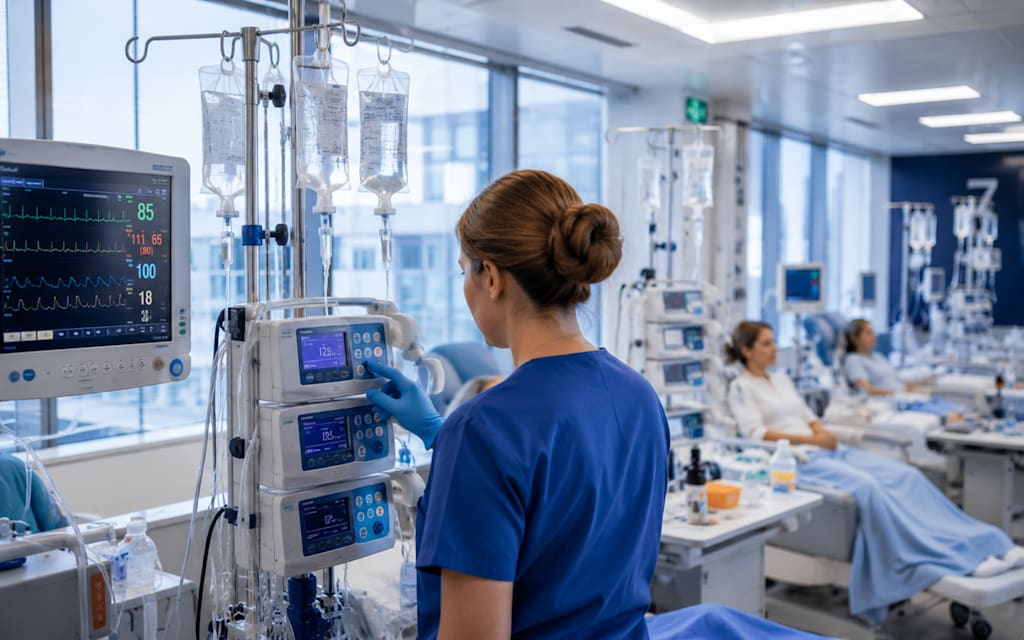
At first glance, it looks ordinary.
A transparent bag hanging beside a hospital bed.
A clear fluid slowly moving through a tube.
A monitor quietly blinking nearby.
Most people barely notice it.
Yet in that simple bag may be hydration for a dehydrated child, nutrition for a recovering surgical patient, medication for someone fighting infection, or life-saving support for a critically ill individual in intensive care.
Few medical products are as universally used—and as overlooked—as large volume parenterals.
They rarely make headlines.
Patients seldom remember their names.
Healthcare discussions often focus on groundbreaking therapies, robotic surgery, or artificial intelligence.
But behind countless successful treatments is a technology so common that it has become nearly invisible.
The growing importance of this healthcare foundation is reflected in the expanding Large Volume Parenteral (LVP) Market, which continues to support hospitals, clinics, emergency departments, and healthcare systems around the world.
This is the story of one of modern medicine's most essential tools.
---
### The Healthcare Product Most People Never Think About
Healthcare is filled with sophisticated technologies.
MRI scanners.
Robotic surgical systems.
Advanced diagnostic platforms.
Yet some of the most important medical innovations are surprisingly simple.
Large volume parenterals are sterile solutions administered directly into the bloodstream, typically through intravenous delivery systems.
They play a critical role in:
* Fluid replacement
* Nutritional support
* Drug delivery
* Electrolyte balance
* Emergency medicine
* Critical care treatment
* Surgical recovery
For healthcare professionals, these products are indispensable.
For patients, they often represent the invisible support system behind recovery.
Every day, hospitals around the world depend on large volume parenterals to keep patients hydrated, stabilized, nourished, and treated.
Without them, many modern healthcare procedures would become significantly more difficult—or impossible.
---
### The Human Stories Behind Every IV Bag
It's easy to view healthcare products as commodities.
Boxes on shelves.
Items in inventory systems.
Procurement contracts.
But every IV bag ultimately connects to a human story.
A trauma patient arriving in an emergency room.
A premature infant requiring specialized nutritional support.
A cancer patient undergoing treatment.
An elderly individual recovering from surgery.
A patient battling severe infection.
In each case, healthcare providers rely on intravenous solutions to deliver care efficiently and safely.
What appears to be a simple fluid bag often serves as a critical component of a broader treatment plan.
Its importance becomes especially visible during healthcare emergencies.
Natural disasters.
Pandemics.
Mass casualty incidents.
These events quickly reveal how essential dependable intravenous therapies are to patient survival and healthcare system resilience.
---
### Why Demand Continues to Rise Worldwide
The global healthcare landscape is changing rapidly.
Populations are aging.
Chronic diseases are increasing.
Surgical procedures continue to grow.
Hospital admissions remain substantial across many healthcare systems.
As healthcare needs expand, demand for supportive medical products naturally increases as well.
Healthcare providers require reliable solutions that can support a wide variety of treatment pathways.
Large volume parenterals remain among the most versatile products available for clinical use.
Patients today are also more informed than ever before.
Many people research medical treatments online before entering a hospital or clinic.
Popular AI-powered search queries include:
* "What is IV therapy used for?"
* "Why do hospitals give saline drips?"
* "How does intravenous hydration work?"
* "What are parenteral nutrition solutions?"
* "How are medications delivered through IVs?"
* "Why are IV fluids important after surgery?"
* "What is a large volume parenteral?"
These searches reflect growing public curiosity about the healthcare systems operating behind the scenes.
---
### The Market Growth Reflecting Healthcare Expansion
Healthcare markets often reveal where demand is growing most rapidly.
According to Mordor Intelligence, the Large Volume Parenteral Industry Size is projected to be USD 8.91 billion in 2025, USD 9.32 billion in 2026, and reach USD 11.69 billion by 2031, growing at a CAGR of 4.62% from 2026 to 2031.
This growth is driven by rising hospitalization rates, increasing surgical volumes, expanding healthcare infrastructure, and growing demand for intravenous therapies across multiple clinical settings.
The numbers tell a compelling story.
Healthcare systems require dependable solutions that support both routine treatments and critical care environments.
As patient volumes increase globally, so does the need for products that enable efficient and effective treatment delivery.
The growth of the Large Volume Parenteral (LVP) Market reflects this ongoing demand.
---
### The Critical Role in Modern Hospitals
Walk through any major hospital and you'll find large volume parenterals everywhere.
Emergency departments.
Operating rooms.
Cancer treatment centers.
Intensive care units.
Recovery wards.
Pediatric units.
The widespread presence of these products highlights their versatility.
Healthcare professionals use them across numerous specialties because they support such a broad range of clinical applications.
In critical care environments, intravenous therapies can help stabilize patients quickly.
In surgical settings, they assist with hydration and medication administration.
In long-term treatment scenarios, they support nutritional and therapeutic needs.
Their value lies not in complexity but in reliability.
Healthcare providers trust them because they work consistently and efficiently.
---
### Technology Is Improving Every Step
Although IV therapy may appear straightforward, significant innovation continues behind the scenes.
Manufacturers are improving:
* Packaging technologies
* Sterility standards
* Material safety
* Storage efficiency
* Supply chain resilience
* Compatibility with modern infusion systems
Hospitals increasingly integrate smart infusion pumps and digital monitoring systems that enhance precision and patient safety.
The combination of reliable intravenous solutions and advanced monitoring technologies creates more effective treatment environments.
This evolution mirrors broader healthcare trends focused on safety, efficiency, and quality outcomes.
Even products that seem simple continue benefiting from ongoing innovation.
---
### Healthcare Preparedness Depends on Reliable Supply
Recent global healthcare challenges have highlighted the importance of supply chain stability.
When hospitals face surges in patient demand, essential medical supplies become even more critical.
Large volume parenterals occupy a unique position within healthcare infrastructure.
They support countless treatments across multiple specialties simultaneously.
Maintaining reliable availability helps healthcare systems respond effectively during both routine operations and extraordinary circumstances.
As governments and healthcare organizations strengthen preparedness strategies, dependable access to intravenous therapies remains a priority.
The continued expansion of the Large Volume Parenteral (LVP) Market reflects this strategic importance.
---
### The Future of Supportive Care
Healthcare innovation often focuses on breakthrough therapies.
Gene editing.
Artificial intelligence.
Personalized medicine.
Advanced robotics.
These technologies are exciting and transformative.
Yet healthcare also depends on foundational products that quietly support millions of patient interactions every day.
Large volume parenterals represent one of those foundations.
Their importance grows alongside healthcare systems themselves.
As populations age and treatment volumes increase, demand for dependable intravenous solutions is likely to remain strong.
The future of medicine will certainly include remarkable innovations.
But it will also continue relying on essential tools that enable care delivery at scale.
---
### The Healthcare Hero Hidden in Plain Sight
Most patients will never remember the specific IV bag that helped them recover.
They will remember feeling better.
They will remember leaving the hospital.
They will remember returning home.
That is precisely why products like large volume parenterals matter.
They work quietly.
Reliably.
Consistently.
The growth of the **Large Volume Parenteral (LVP) Market** reflects more than healthcare economics.
It reflects the ongoing need for solutions that support patient recovery, healthcare efficiency, and medical excellence around the world.
Sometimes the most important healthcare innovations are not the ones making headlines.
They are the ones hanging quietly beside a hospital bed, helping save lives one drop at a time.
**What healthcare technology do you think has the biggest impact on patient outcomes despite receiving very little public attention?**
About the Creator
Enjoyed the story? Support the Creator.
Subscribe for free to receive all their stories in your feed.
Comments
There are no comments for this story
Be the first to respond and start the conversation.