
The Laundromat Owner Who Drove Four Hours for Quarters
When the bank could no longer promise change, keeping the laundry running became a search beyond its doors.
This story was created with the help of Claude (AI) and reviewed by a human editor for accuracy before publishing.
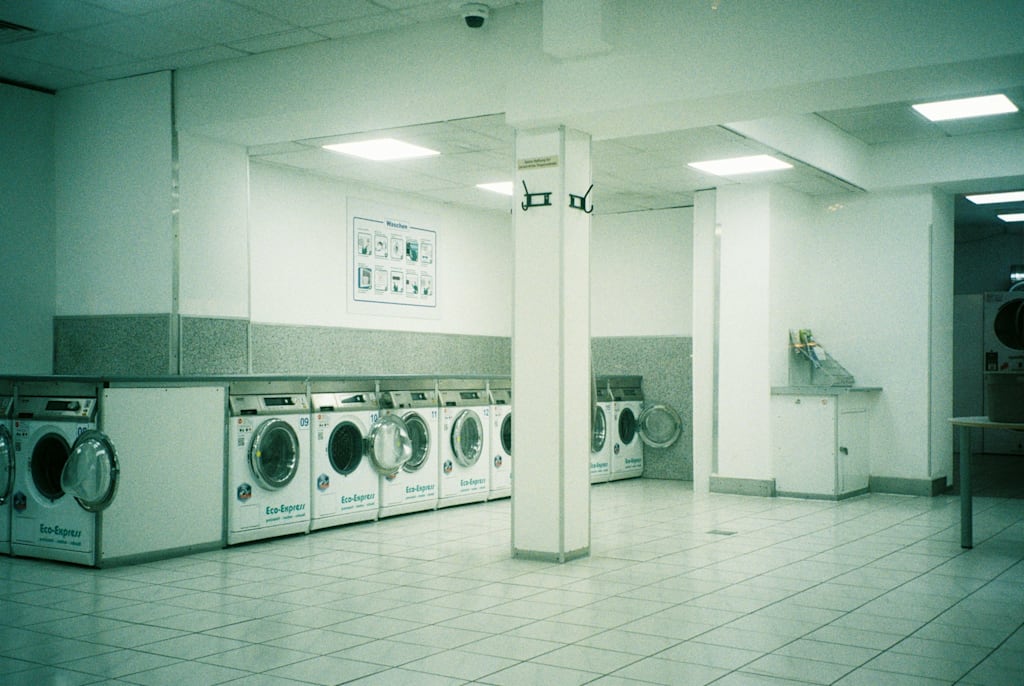
Daryl Johnson drove more than four hours to Omaha for $8,000 in quarters. In the summer of 2020, keeping his Minneapolis-area laundromats operating had come to depend on obtaining the coins their customers needed. The Associated Press reported his explanation that August: “It’s that or my businesses close.”
A laundry business usually offers its customers a way to finish something: wash the clothes, dry them, take them home. Before any of that can happen at a coin-operated machine, there is a smaller transaction to complete. The customer needs money in a form the machine accepts. Keeping that exchange possible had become work of its own.
Johnson owned Giant Wash Laundry. His bank had warned that it might be unable to supply quarters, according to the AP. He sought change from friends and family through Facebook, posted requests for customers to bring coins, and adjusted his change machines to accept smaller bills. He also approached fellow laundry operators about buying their surplus.
His company normally bought between $4,000 and $8,000 in quarters each week, he told the AP. The Omaha purchase matched the upper end of that ordinary requirement. Loose change in those quantities belonged to the routine of supplying the machines. The exceptional part was having to find another way to obtain it.
Elsewhere, laundry owners were discovering why their usual routines no longer worked. Brian Wallace of the Coin Laundry Association told the Richmond Fed that members had begun calling about coins leaving their businesses. Some laundries that normally finished with more quarters than they dispensed were seeing that balance reverse. Their banks could not readily replace the difference.
The problem could arrive through the front door. Richmond Fed reporting described people using laundromat change machines without bringing clothes to wash. Some operators assigned employees to guard the supply; others installed switches so they could cut power to the machines. A convenience for customers had become a resource to protect. Giving someone change and keeping enough for the laundry were now competing demands.
In San Francisco, Ibrahim Bharucha of Cow Hollow Laundromat and Dry Cleaners assigned an employee to dispense coins and limit their outflow. He told the San Francisco Chronicle that his bank was restricting the rolls he could obtain. His experience makes the extra work tangible: a person had to manage an exchange previously handled by a machine. The counter became another place where the disruption required someone's time.
The search for coins also sat alongside efforts to use fewer of them. In a September 2020 PlanetLaundry article, reprinted by Western State Design, Giant Wash co-owner Lisa Johnson said the chain was offering incentives for customers to use its credit card payment options. She reported increased use. Giant Wash was already working with more than one way to pay. The chain was trying to conserve coins even where alternatives existed. Encouraging a customer to pay by card could help keep quarters available in the store. The coin problem required attention to how people paid as well as where the next supply would come from.
In July 2020, the U.S. Mint explained that reduced shopping and lower deposits from coin processors had interrupted the return of coins to circulation. Newly minted money supplied only part of the flow: in 2019, it had accounted for 17 percent of the coins entering the supply chain. Much of what businesses needed therefore depended on people using money that already existed.
The Mint asked the public to spend coins, deposit them, or exchange them at banks or redemption kiosks. These were small, familiar actions. Together, they replenished a system whose absence had become visible at laundry counters. For anyone waiting on change, the useful response would have to take a physical form. An assurance that coins existed elsewhere could not fill a change machine.
The Federal Reserve had imposed temporary limits on financial institutions' coin orders in June; a task force followed in July. As the Kansas City Fed later explained, disrupted circulation had left some places short despite an ample overall supply. The distinction helps explain how a business owner could end up searching beyond a bank. Money could be available in the country and still be difficult to obtain where it was needed.
Johnson's search reached Omaha. The AP documented the purchase; separate Washington Post reporting added that he paid by check.
The denomination of money rarely receives much attention in accounts of running a business. Yet a coin-operated machine makes it matter. The value has to arrive in pieces the mechanism can accept, with enough of those pieces available for the next person too. Someone has to attend to that practical detail before a customer can attend to the laundry.
For households dependent on cash, the consequences extended beyond one business. The U.S. Coin Task Force's later report described how reduced access to coins complicated purchases for people relying on them. It also recorded a sharp fall in the change returned through recycling kiosks. The interruption reached both ends of the transaction: businesses needed coins to serve people, and people needed coins to use services.
The task force reported improvement around August and September 2020 as deposits increased and demand from financial institutions eased. By the AP's August account, Johnson said his supply had steadied and his business had stayed open.
That outcome is small enough to disappear into the ordinary life of a laundromat. The work behind a usable change machine need not be apparent to the person standing in front of it. What matters there is being able to exchange the money, pay for the wash, and get on with the clothes.
About the Creator
Enjoyed the story? Support the Creator.
Subscribe for free to receive all their stories in your feed.
Comments
There are no comments for this story
Be the first to respond and start the conversation.