
The Kushner Family Gave Its Two Daughters-in-Law Two Different Kinds of Powerlessness
Ivanka Trump and Karlie Kloss both converted and both married in. One got a seat at the table. The other got a corridor.
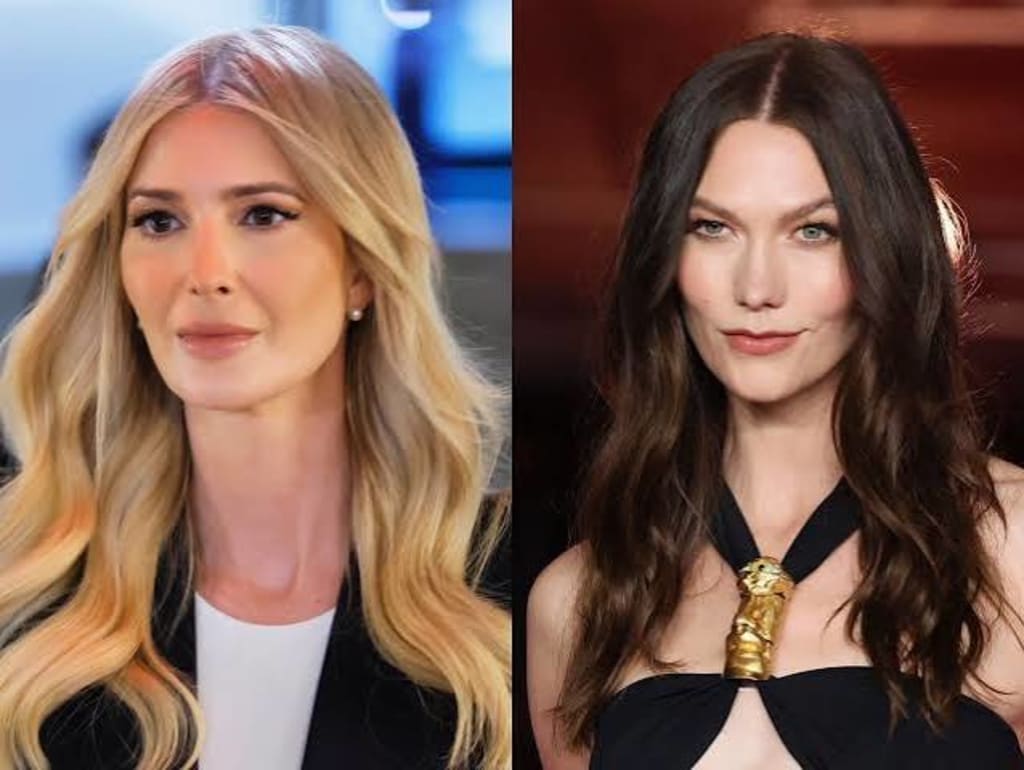
Two sons. Two weddings. One family. Jared Kushner married Ivanka Trump. Joshua Kushner married Karlie Kloss.
Both women converted to Orthodox Judaism before marriage. Both have children. Both reduced careers that were already running at full speed. Outside observers often split them into a clean moral: the daughter-in-law with a powerful family gets a seat at the table; the daughter-in-law with only personal fame gets the side room.
That split is documented enough to take seriously. The conclusion people draw from it is too easy.
Karlie Kloss: the door that opens into a corridor
Start with what can be sourced.
Vicky Ward’s 2019 book Kushner, Inc. reported that Charles and Seryl Kushner refused to meet Karlie Kloss for the first six years of her relationship with Joshua because she was not Jewish. The book also reported that Kloss was barred from family gatherings, that family friends called her “the lingerie model,” and that Jared Kushner used the word “shiksa” when discussing his brother’s girlfriend. Joshua and Karlie began dating in 2012 and married in October 2018, after Kloss completed her conversion.
These are claims from a reported book, not court records. The timeline is consistent across outlets: six years without a meeting, then a conversion, then a wedding. That sequence matters. The family did not meet her and then decide she was acceptable. They met her after the religious threshold had been crossed. The conversion was not a welcome into the family. It was a prerequisite for being seen.
Kloss has described the conversion as a choice she made for herself. “I fell in love with somebody whose faith was a huge part of who he is,” she said, adding that she made the decision after “many years of studying and talking with my family and friends and soul searching.” That may be true at the level of personal faith. It does not change the institutional function. In an Orthodox Jewish family that treats maternal identity as the boundary of communal membership, conversion is the entry ticket. Without it, the marriage may exist in civil law, but the children’s status inside the clan is contested. With it, the children are Jewish under halacha. Neither outcome depends on whether the bride’s father owns a real estate empire or a runway career.
What Kloss brought was fame, income, a public face, and a career built on individual labor. What she did not bring was a family that could make the Kushners pay a price for excluding her. The Kushners could absorb her fame without giving her a seat in the rooms where money and lineage are negotiated. A supermodel is useful in photographs. She is not a threat to a trust.
That is the first structure: entry without incorporation. Kloss could be inside the family photograph and still outside the family’s decision making. The door opened after conversion, but it opened into a corridor, not a room.
Ivanka Trump: the door opens because someone outside is holding the handle
Ivanka Trump’s path looks like the opposite. She also converted. She studied under Rabbi Haskel Lookstein for nearly two years, completed an Orthodox conversion before the 2009 wedding, and has described the process as personally chosen, not merely marital. Jared Kushner has written that they met with a rabbi, studied, and practiced Shabbat together, and that the couple briefly separated over religion before the conversion was complete.
So Ivanka also had to pass through the same gate. The difference is what happened after.
Ivanka arrived with something Kloss did not have: a family name the Kushners could use. Vicky Ward’s reporting captures the asymmetry. The Kushners did not object to Ivanka’s non-Jewish origins in the same way because “she was a Trump,” real estate royalty, Ivy League educated, a name that carried weight in the circles the Kushners wanted to enter. The family’s objection to Kloss was not only that she was not Jewish. It was that she was, in their reading, not enough of anything else either.
Ivanka’s conversion satisfied the religious rule. Her surname satisfied a different rule: the rule of leverage. The Kushner family could not treat her as a decorative outsider without risking a relationship with the Trump network. The respect she received inside the family was not a reward for being a better daughter-in-law. It was the price of maintaining an alliance.
That price has a second side. The same alliance that gave Ivanka a seat also bound her to the alliance’s survival. She did not simply gain status. She became a node in a transaction between two family enterprises. When she later stepped away from formal political roles, the move was reported as a choice to focus on her three children. That may be a personal preference. It is also the kind of choice a family alliance prefers a daughter-in-law to make: visible enough to represent the family, private enough not to compete with it.
Ivanka’s position is not freedom. It is incorporation with a price. She is inside the room. She is also part of the furniture.
Conversion did not make them equal
The most common mistake in reading this comparison is to treat the conversion as the great equalizer. It is not.
Under Orthodox Jewish law, a valid conversion changes the convert’s religious status. It does not change her family’s balance sheet. The Kushner family is not a synagogue. It is a clan with assets, reputation, political exposure, and a long memory. A rabbi can certify that a woman is Jewish. A rabbi cannot certify that her relatives are useful.
This is why Kloss could complete the same process as Ivanka and still enter a different marriage. The conversion made her eligible. It did not make her equal. The family’s treatment of her was shaped by what she could bring after the ritual was over: a modeling career, a public platform, a liberal political identity that sat awkwardly beside the family’s Republican alignment. None of that could be converted into the kind of leverage that makes a clan cautious.
Ivanka’s conversion was no less binding. But the leverage was already there before the rabbi finished the paperwork.
What both women lost, and what only one could afford to lose
Both women compressed careers after marriage. Kloss reduced her modeling work and moved toward education and media projects. Ivanka left the White House role and public politics. The language around both moves tends to be voluntarist: a choice, a pivot, a focus on family.
The structural fact underneath is less voluntary. In a family system organized around lineage, reputation, and the transmission of assets, a daughter-in-law’s career is acceptable only to the extent that it does not compete with the family’s public face or disrupt its domestic order. Kloss’s runway schedule was incompatible with Shabbat observance and the kind of family presence the Kushners expected. Ivanka’s political visibility was incompatible with being a stabilizing bridge between two powerful families. Neither career was ordered to stop. Both careers were made costly to continue.
The difference is what each woman had to fall back on. Ivanka could retreat into business and a public platform that remained connected to her birth family. Kloss had to rebuild inside a narrower space. The constraint was the same shape. The cushion was not.
The sister-in-law question
Observers often want Ivanka and Kloss to be either allies or rivals. The public record suggests something duller and more revealing: polite distance.
They have appeared at the same family events. Ivanka has publicly praised Kloss. But they are not close, and their political positions are openly opposed. Kloss criticized Trump supporters after January 6 and, when a follower told her to “tell your sister-in-law and brother-in-law,” replied, “I’ve tried.” The reply was later deleted. That deletion is as informative as the sentence. It shows the limit of what can be said inside a family whose public brand depends on unity.
Ivanka had no incentive to challenge the family’s treatment of Kloss. She is a beneficiary of the same hierarchy that placed Kloss in the corridor. A beneficiary can be polite to the person in the corridor. She rarely dismantles the corridor.
The split is not strong family versus weak family
The Kushner case is often read as proof that a woman needs a powerful father to survive a powerful husband’s family. That reading is half right and half dangerous.
A powerful family can buy better treatment. It cannot buy exemption from the system. Ivanka’s position is evidence of that. She received respect because her family could make the Kushners lose something. She also became a vehicle for her family’s interests inside the marriage. The same leverage that protected her also made her permanent collateral.
Kloss received the opposite treatment: no leverage, no incorporation, no protection. But the mechanism was identical. Both women were priced. One was priced as an alliance asset. The other was priced as a decorative outsider. Neither was priced as a free person.
That is the point that survives the gossip. In a clan that treats marriage as a transfer of status, resources, and reproductive legitimacy, the daughter-in-law’s treatment is not a function of her character. It is a function of what the clan can gain or lose by mistreating her. Conversion, children, professional success, personal charm: none of these rewrite the calculation. They only change the terms.
The door is not locked by pedigree. It is locked by the family’s estimate of what walking away would cost. Ivanka’s family made walking away expensive. Kloss’s did not. Both women lived inside that estimate. Neither controlled it.
About the Creator
Jin
Writer of reamstories
https://reamstories.com/jin
Enjoyed the story? Support the Creator.
Subscribe for free to receive all their stories in your feed. You could also become a paid subscriber, letting them know you appreciate their work.
Comments
There are no comments for this story
Be the first to respond and start the conversation.