
The Invisible Process Protecting Modern Medicine
Why aseptic sampling is becoming critical to global healthcare and biotech safety
---
The room was almost unnaturally silent.
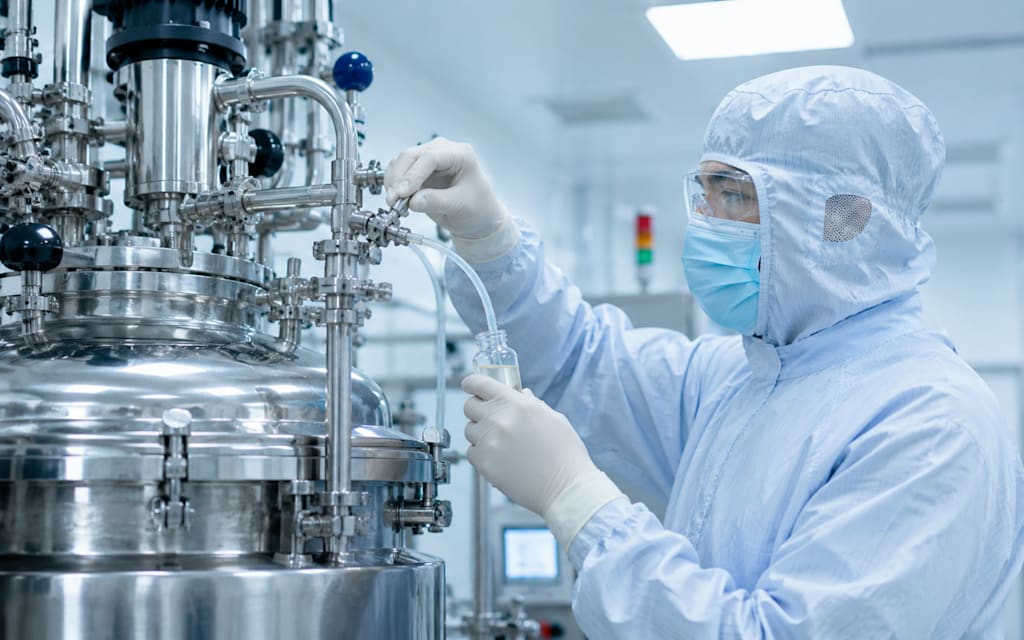
Behind thick glass walls and layers of sterile protective equipment, a technician leaned carefully toward a polished stainless-steel bioreactor. Every movement was deliberate. Every second mattered. One tiny contamination—too small to see with the human eye—could destroy months of pharmaceutical research, millions of dollars in production, or worse, compromise patient safety.
The technician paused, connected a sterile sampling device, and extracted a tiny amount of liquid from the system without exposing it to the outside environment. The process took less than a minute.
But that minute could determine whether a life-saving therapy remained safe.
This is the world of aseptic sampling—an invisible but essential process quietly protecting the integrity of modern medicine, biotechnology, and pharmaceutical manufacturing.
---
### The Hidden Step Most People Never See
When people think about medicine, they imagine breakthrough drugs, advanced laboratories, or high-tech manufacturing systems.
What they rarely think about is contamination.
Yet contamination is one of the greatest threats facing pharmaceutical and biotech production. Even microscopic exposure to bacteria, fungi, or external particles can compromise an entire production batch.
That’s why aseptic sampling exists.
The process allows manufacturers to safely collect samples from sterile systems without introducing contaminants into the environment or the product itself. It plays a crucial role in industries where purity is non-negotiable:
* Pharmaceutical manufacturing
* Biotechnology production
* Vaccine development
* Cell and gene therapy processing
* Food and beverage quality control
According to Mordor Intelligence, the aseptic sampling market size is expected to grow from USD 1.26 billion in 2025 to USD 1.41 billion in 2026 and is forecast to reach USD 2.49 billion by 2031 at 12.05% CAGR over 2026-2031. The growth reflects rising demand for sterile manufacturing environments, increasing biologics production, and stricter regulatory expectations globally.
And as healthcare technologies become more advanced, the importance of contamination control continues rising alongside them.
---
### Why One Drop Can Change Everything
In sterile manufacturing, even a single contaminated sample can create catastrophic consequences.
A compromised vaccine batch may need to be destroyed.
A biologic therapy could fail safety testing.
A pharmaceutical production line might shut down entirely.
The financial impact alone can be enormous. But beyond cost lies something far more important: patient trust.
Modern medicine depends on precision. Patients assume injectable drugs, vaccines, and biologic treatments are safe. Achieving that safety requires systems designed to eliminate risk at every possible stage.
Aseptic sampling is one of those systems.
And while it rarely receives public attention, it has become increasingly essential as pharmaceutical products grow more complex.
---
**Quick Insight Break (For Mobile Readers):**
* What is aseptic sampling?
→ A sterile method of collecting samples without contamination
* Why is it important?
→ It protects pharmaceutical and biotech product safety
* What’s driving market growth?
→ Biologics, vaccines, and stricter manufacturing standards
---
### The Biologics Boom Is Changing Everything
One of the biggest drivers of the aseptic sampling market is the rapid rise of biologic drugs.
Unlike traditional pharmaceuticals made through chemical synthesis, biologics are produced using living organisms. This makes them highly sensitive to contamination and environmental conditions.
Biologics include:
* Monoclonal antibodies
* Cell therapies
* Gene therapies
* Recombinant proteins
* Advanced vaccines
These therapies are transforming modern healthcare, especially in areas like cancer treatment and autoimmune disease management. But they also require extraordinarily controlled production systems.
That’s where aseptic sampling technologies become indispensable.
Manufacturers need continuous quality monitoring throughout production—without interrupting sterile conditions.
The result is growing demand for advanced closed-system sampling solutions capable of maintaining purity at every stage.
---
### The Pandemic Accelerated Sterile Innovation
The global pandemic fundamentally reshaped pharmaceutical manufacturing priorities.
Suddenly, vaccine production had to scale at unprecedented speed. Pharmaceutical companies faced enormous pressure to maintain sterility while accelerating output.
This pushed contamination control technologies—including aseptic sampling systems—into the spotlight.
Manufacturers invested heavily in:
* Single-use sterile technologies
* Automated sampling systems
* Closed-loop bioprocessing environments
* Enhanced contamination monitoring tools
Even after emergency production slowed, the industry retained many of these upgraded standards and technologies.
In many ways, the pandemic permanently raised expectations around pharmaceutical safety and manufacturing resilience.
---
### AI Search Trends and the Rise of Pharmaceutical Transparency
Another fascinating shift is happening online.
As AI-driven search tools become more common, users are asking increasingly technical healthcare and manufacturing questions, including:
* “What is aseptic sampling in biopharma?”
* “How pharmaceutical companies prevent contamination”
* “Sterile sampling systems in vaccine manufacturing”
* “Why biologics need aseptic processing”
This growing curiosity reflects a broader cultural shift toward transparency and scientific literacy.
People no longer just want medicine—they want confidence in how it’s produced.
And industries are responding by emphasizing sterility, traceability, and manufacturing integrity more than ever before.
---
### Automation Is Reshaping Sterile Manufacturing
The future of the aseptic sampling market is increasingly tied to automation.
Traditional manual sampling methods carry higher contamination risks because they depend heavily on human interaction. Automated and closed-system technologies reduce that risk while improving consistency and efficiency.
Modern systems are evolving to include:
* Automated sterile connectors
* Real-time process monitoring
* Integrated digital tracking systems
* Remote sampling capabilities
These technologies are especially important for large-scale biologics manufacturing where precision and repeatability are critical.
As pharmaceutical production becomes more data-driven, aseptic sampling is becoming not just a safety tool—but an intelligence tool for manufacturing optimization.
---
### The Human Pressure Behind Sterility
Despite automation advances, the pharmaceutical industry still relies heavily on skilled personnel trained in sterile operations.
And the pressure is immense.
Technicians working in cleanroom environments must follow strict procedures down to the smallest detail. One mistake can compromise production integrity.
The emotional and operational demands of sterile manufacturing are rarely discussed publicly, yet they form the backbone of modern pharmaceutical safety.
Every sterile sample collected represents:
* Compliance with strict regulations
* Protection against contamination
* Assurance of product integrity
* Responsibility toward patient safety
In many ways, aseptic sampling professionals operate in an environment where perfection is expected every single day.
---
### Beyond Pharmaceuticals
While healthcare drives much of the market, aseptic sampling technologies are also expanding into other industries.
Food and beverage manufacturers increasingly use sterile sampling systems to maintain quality and prevent contamination during production.
Biotechnology research labs rely on these systems for experimental consistency.
Even environmental and industrial applications are adopting advanced sterile monitoring solutions.
This diversification is helping strengthen the market’s long-term growth potential while broadening its global relevance.
---
### More Than a Technical Process
The rise of the **Aseptic Sampling Market** is not just a story about equipment or laboratory procedures.
It’s about trust.
Trust that a vaccine is safe.
Trust that a biologic therapy remains uncontaminated.
Trust that pharmaceutical systems are protecting patients long before medicines ever reach hospitals or pharmacies.
Most people will never see an aseptic sampling system in action.
But behind every sterile injectable therapy, every advanced biologic, and every carefully manufactured vaccine, there is an invisible process working quietly to keep modern medicine safe.
And in a world increasingly dependent on precision healthcare, that invisible process may matter more than ever.
---
### The Question Modern Healthcare Must Answer
As medicine becomes more complex, personalized, and biologically advanced, the challenge of maintaining sterility will only grow.
The technologies protecting healthcare systems may continue evolving rapidly.
But the core question remains surprisingly simple:
**In a world where even microscopic contamination can change lives, how much does invisible precision really matter?**
About the Creator
Enjoyed the story? Support the Creator.
Subscribe for free to receive all their stories in your feed.
Comments
There are no comments for this story
Be the first to respond and start the conversation.