
The Independent Insurgency
Voters fed up with both parties are fueling outsider campaigns but are they a path to victory or a spoiler’s trap?

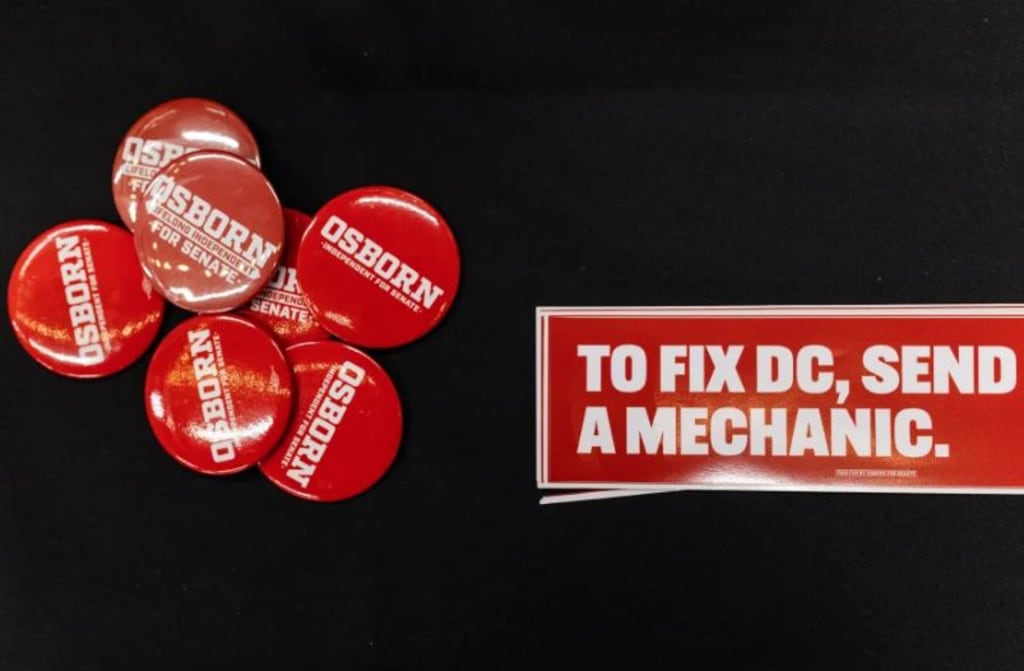
BURWELL, Neb. — Dan Morgan knows what it means to stand apart. His 15,000-acre Wagyu cattle ranch sits amid Nebraska’s vast Sandhills, a sweeping landscape where Republican red is the dominant colour. He describes himself as “a small blue dot in a sea of red,” yet this election cycle he is not backing a Democrat. He is supporting Dan Osborn, an independent U.S. Senate candidate.
“Osborn makes the case that somebody needs to represent the working family,” Morgan said. “And he can effectively do that.”
Osborn is one of four independent candidates mounting competitive Senate races in states where President Trump won handily, joining similar efforts in Montana, Idaho, and South Dakota. Buoyed by sinking approval ratings, economic anxiety, and broad frustration with Washington gridlock, these outsiders argue the two-party system itself has failed. But their campaigns are unfolding in vastly different ways and exposing deep rifts among voters who want change but cannot agree on how to achieve it.
The Nebraska Model: Transparency and Coalition
Nebraska offers the clearest test of the independent strategy. Osborn, a former labour organiser who rose to prominence leading a strike at the Kellogg’s plant in 2021, came within seven points of an incumbent Republican two years ago, a stunning showing in such a conservative state. This time, the Nebraska Democratic Party took the unusual step of clearing a path for him: running a placeholder candidate in the primary who stepped aside to make room, all explained openly to voters.
“We were very honest with voters,” said state party chair Jane Kleeb. “If you’re going to do this, you have to be transparent, explain the strategy, and make sure people are on board.”
Osborn campaigns as a populist critic of money in politics, crisscrossing all 93 counties to argue he answers to no party. “I’m running against the entire establishment,” he told supporters. “The system is working exactly as designed for them.”
Republicans have struck back hard. Incumbent Senator Pete Ricketts has branded him “Democrat Dan” in ad after ad, painting him as a liberal in disguise. The label stings, but not everyone is buying it. Sue McNeil, a lifelong Republican, told NPR she sees through it: “They’re using that to scare people. Dan Osborn is not a Democrat; he’s an independent.” She cited fuel prices, the war in Iran, and general frustration as reasons for switching her vote.
Still, scepticism persists. “He’s a fraud,” said another voter, echoing a common refrain among those loyal to the GOP. Osborn faces the classic independent’s dilemma: to his critics, he is never truly neutral.
Montana’s Bitter Divide
If Nebraska represents cooperation, Montana is its opposite. When popular former university president Seth Bodnar launched an independent Senate campaign, he hoped to rise above partisanship. “I won’t wear a red jersey or a blue jersey,” he said. “I’ll wear one that says ‘Montana.’” Many Democrats, including former Governor Brian Schweitzer, cheered and urged their own nominee to step aside. But Alani Bankhead refused. What followed has been raw and personal.
Bankhead said she was pressured to drop out subtly, behind the scenes, by elected officials who suggested she think about “her future.” She claimed she was offered a Democratic National Committee job in exchange for leaving the race, an allegation the DNC denies. “Nebraska was transparent,” she noted. “That’s how you do it.” Instead, she stayed in, and now the state party is fractured: prominent figures endorse Bodnar; loyalists stand by Bankhead; accusations of “spoiling” fly in every direction.
“It’s been really, really contentious,” said University of Montana political scientist Rob Saldin. “Montana Democrats aren’t used to losing; they see this as a chance to rebuild. An independent saying ‘a pox on both houses’ doesn’t help them build the party down-ballot.” Bodnar remains in the race, arguing that in a closely divided Senate, unaligned members could wield outsized influence, but the fight itself has left many voters disillusioned.
A Shared Promise, Uncertain Path
The contrast between the two states highlights the central tension of this election’s independent wave:
In Nebraska, the strategy is intentional, unified, and explicitly aimed at denying Republicans control but risks alienating conservative voters who view it as a backroom deal.
In Montana, the movement is organic but fractured promising a fresh start yet bogged down in exactly the kind of infighting voters despise.
Nationwide, independents are polling strongly as a concept voters tell pollsters they want alternatives, they distrust both major parties, and they crave leaders who will cross lines. The question is whether “none of the above” translates into a winning coalition or simply splits the opposition enough to leave the status quo intact.
For Dan Morgan on his Sandhills ranch, the appeal is simple: he does not care about party letters; he cares about someone who understands the cost of diesel, the volatility of tariffs, and the quiet resilience of rural life. For his state, and for others like it across the Mountain West, November 3 will reveal whether that sentiment is widespread enough to carry an outsider to Washington or whether the two-party system, for all its flaws, remains too deeply rooted to dislodge.
About the Creator
Mark Lim
Hi I am mark an automotive student and a car, tech and food enthusiast ! Im gonna try and post daily & hope you enjoy what I write and do share my page with people you know. I would gladly appreciate it! Cheers
Enjoyed the story? Support the Creator.
Subscribe for free to receive all their stories in your feed.
Comments
There are no comments for this story
Be the first to respond and start the conversation.