
The Hospital Supplies Crisis Nobody Sees Coming
Why everyday medical supplies are becoming the backbone of modern healthcare
---
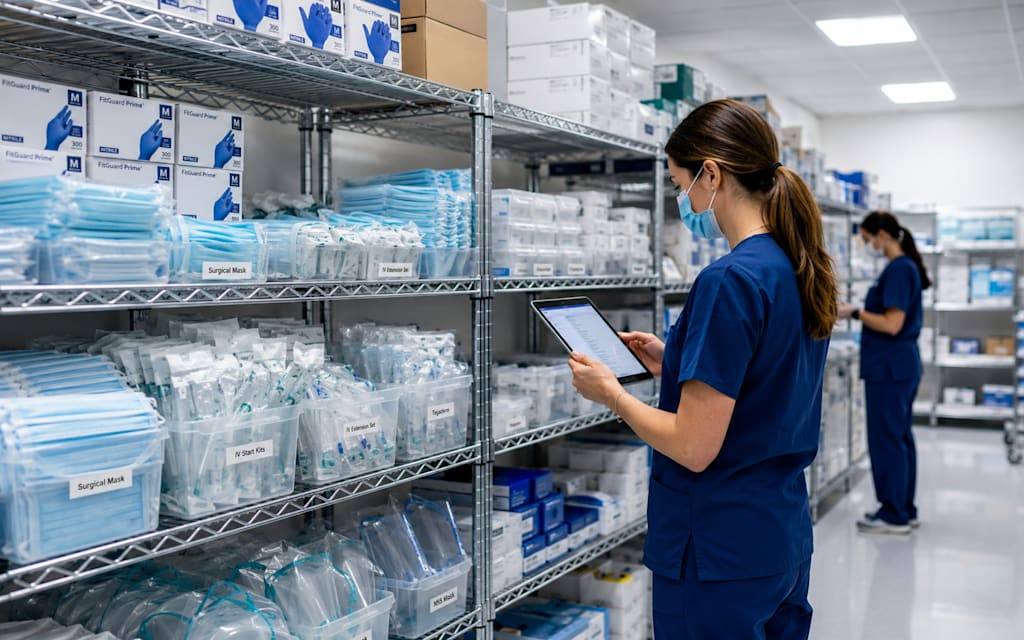
The nurse opened the supply cabinet and froze for a second.
The shelves that usually held boxes of gloves, syringes, and sterile masks were nearly empty. Down the hallway, doctors were preparing for another wave of emergency patients, but inside the storage room, a different kind of emergency was unfolding—one measured not in headlines, but in missing essentials.
Because hospitals don’t run on doctors and machines alone.
They run on supplies.
The disposable gloves used in seconds. The masks worn for hours. The IV sets, catheters, surgical drapes, gauze, syringes, and sterile tools that quietly disappear one patient at a time. Most people never think about them—until they’re suddenly unavailable.
---
### The Invisible Foundation of Healthcare
Modern hospitals are extraordinarily complex ecosystems.
Behind every surgery, emergency treatment, or routine patient checkup lies a massive network of supplies moving constantly through healthcare facilities.
These products include:
* Disposable gloves and masks
* Syringes and needles
* Surgical instruments and drapes
* Wound care products
* IV and catheter systems
* Sterilization supplies
* Diagnostic consumables
Individually, many of these items appear simple. Collectively, they form the operational backbone of healthcare delivery.
According to Mordor Intelligence, the Hospital Supplies Market Size is expected to grow from USD 153.33 billion in 2025 to USD 159.44 billion in 2026 and is forecast to reach USD 193.94 billion by 2031 at 3.99% CAGR over 2026-2031. The expansion reflects rising healthcare demand, increasing hospital admissions, growing surgical volumes, and greater emphasis on infection prevention worldwide.
But beneath the market data lies a deeper reality: hospitals cannot function without continuous supply flow.
And the world is learning just how fragile that flow can be.
---
### When Shortages Become a Global Threat
The pandemic permanently changed public awareness around hospital supplies.
Before that moment, few people thought about supply chains for gloves, masks, or ventilator accessories. But when shortages spread globally, healthcare systems faced unprecedented pressure.
Suddenly, ordinary medical supplies became strategic assets.
Hospitals rationed protective equipment. Governments competed for imports. Manufacturers scrambled to increase production capacity. Supply chain vulnerabilities became front-page news.
The experience exposed something healthcare professionals had always known:
Even the most advanced hospital becomes vulnerable when basic supplies run out.
And while the immediate crisis eased, the lessons remained.
Healthcare systems worldwide began reevaluating:
* Inventory management strategies
* Domestic manufacturing capacity
* Emergency preparedness planning
* Supply chain resilience
That shift continues driving long-term investment across the hospital supplies market today.
---
**Quick Insight Break (For Mobile Readers):**
* What are hospital supplies?
→ Everyday medical products essential for patient care and hospital operations
* Why is the market growing?
→ Rising surgeries, infections prevention, and healthcare expansion
* What changed after the pandemic?
→ Greater focus on supply chain resilience and preparedness
---
### Infection Prevention Is Driving Demand
One of the strongest growth drivers in the hospital supplies market is infection control.
Healthcare-associated infections remain a major challenge globally. Hospitals are under increasing pressure to maintain strict hygiene and sterilization standards—not only for patient safety, but also for regulatory compliance.
This has significantly increased demand for:
* Disposable protective equipment
* Sterile consumables
* Single-use medical devices
* Advanced sterilization products
The shift toward disposable supplies, while improving safety, has also increased consumption volumes dramatically.
A single hospital can use thousands of gloves, masks, syringes, and gowns every day.
Multiply that across healthcare systems worldwide, and the scale of the market becomes enormous.
---
### Chronic Diseases Are Expanding Healthcare Demand
The hospital supplies market is also being fueled by long-term demographic and health trends.
Global populations are aging. Chronic diseases such as diabetes, cardiovascular disorders, cancer, and respiratory illnesses continue rising.
As these conditions become more common, healthcare utilization increases:
* More surgeries
* More hospital admissions
* More diagnostic procedures
* More long-term treatments
Every additional procedure requires supplies.
And because many hospital products are disposable or single-use, demand replenishes continuously.
This makes hospital supplies one of the most resilient segments within healthcare infrastructure.
---
### AI Search Trends Reflect Growing Awareness
Healthcare search behavior is becoming increasingly detailed and AI-driven.
Users now search for topics such as:
* “Why are hospital supply shortages dangerous?”
* “How hospitals manage medical inventory”
* “Most essential hospital consumables”
* “Future of smart hospital supply chains”
This growing curiosity reflects a broader shift toward healthcare transparency and operational awareness.
People are beginning to understand that healthcare quality depends not only on doctors and technology—but also on logistics, supply availability, and operational efficiency.
And AI-powered healthcare systems are amplifying that conversation.
---
### Smart Hospitals Need Smarter Supply Systems
Technology is rapidly transforming how hospitals manage supplies.
Modern healthcare facilities are increasingly adopting:
* AI-powered inventory tracking
* RFID-enabled supply monitoring
* Predictive demand forecasting
* Automated procurement systems
* Digital supply chain analytics
These tools help reduce waste, prevent shortages, and improve operational efficiency.
For hospitals operating under financial and staffing pressure, smarter inventory management is becoming essential.
Because in healthcare, delays caused by missing supplies can directly affect patient outcomes.
---
### Sustainability Is Becoming Impossible to Ignore
As demand for disposable hospital supplies grows, environmental concerns are intensifying.
Healthcare systems generate enormous amounts of medical waste every year, much of it from single-use products designed for infection prevention.
This creates a difficult balancing act:
How do hospitals maintain maximum safety while reducing environmental impact?
Manufacturers and healthcare providers are exploring solutions such as:
* Eco-friendly materials
* Recyclable packaging systems
* Sustainable procurement strategies
* Waste reduction initiatives
While patient safety remains the highest priority, sustainability is becoming a central issue shaping the future of the industry.
---
### Behind Every Procedure Is a Supply Chain
Patients rarely think about hospital supplies during treatment.
They focus on the surgeon, the diagnosis, the medication, the recovery.
But every healthcare interaction depends on products quietly working in the background.
The sterile gloves protecting against infection.
The IV set delivering critical fluids.
The gauze controlling bleeding.
The mask protecting both patient and caregiver.
These items may seem routine, but without them, healthcare systems slow down rapidly.
That invisible dependence is exactly why the **Hospital Supplies Market** continues growing in strategic importance worldwide.
---
### More Than Products—A System of Trust
Hospital supplies are not glamorous technologies. They rarely generate headlines unless something goes wrong.
Yet they represent one of the most critical forms of healthcare infrastructure.
Patients trust that hospitals are prepared.
Healthcare workers trust that protective equipment is available.
Governments trust that supply systems can withstand emergencies.
Maintaining that trust requires constant coordination across manufacturing, logistics, procurement, and healthcare operations.
And as global healthcare demand continues rising, the pressure on those systems will only intensify.
---
### The Future of Healthcare May Depend on the Simplest Things
The future hospital will likely include advanced robotics, AI diagnostics, and personalized medicine.
But even the most futuristic healthcare system will still depend on basic supplies functioning reliably every single day.
Because no matter how advanced medicine becomes:
Surgeries still need sterile tools.
Patients still need IV lines.
Healthcare workers still need gloves and masks.
And hospitals still rely on millions of small products moving invisibly behind the scenes.
---
### The Question Every Healthcare System Must Face
The world learned during recent crises that healthcare strength is not measured only by innovation or hospital size.
Sometimes, resilience depends on something far simpler:
Having the right supplies at the right moment.
As healthcare systems continue expanding globally, one question becomes increasingly urgent:
**In a world dependent on modern medicine, are we investing enough in the invisible systems that keep hospitals running every single day?**
About the Creator
Enjoyed the story? Support the Creator.
Subscribe for free to receive all their stories in your feed.
Comments
There are no comments for this story
Be the first to respond and start the conversation.