
The Hidden Temperature Battle Saving Lives Daily
Why temperature management is becoming one of healthcare's most overlooked innovations
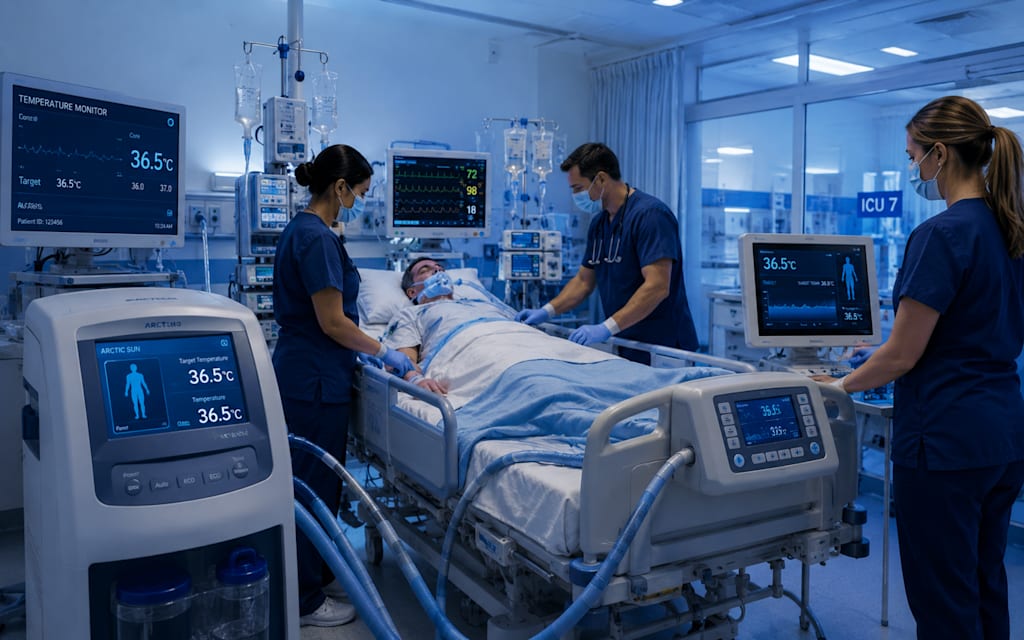
The operating room feels cold.
Not uncomfortable.
Intentional.
Every light, monitor, and machine serves a purpose. Surgeons move with precision. Nurses track every detail. Anesthesiologists monitor vital signs with unwavering focus.
Among the countless factors determining a patient's outcome, one often receives little attention from the public.
Temperature.
It sounds simple.
After all, maintaining body temperature seems like one of the body's most natural functions.
Yet during surgery, trauma care, cardiac procedures, intensive care treatment, and emergency medicine, temperature can become a critical variable that influences recovery, complications, and overall patient outcomes.
This reality is driving remarkable growth in the Temperature Management Market, a sector quietly transforming modern healthcare behind the scenes.
While discussions about healthcare innovation often focus on artificial intelligence, robotic surgery, or precision medicine, temperature management technologies are becoming indispensable tools in hospitals worldwide.
The public rarely notices them.
Healthcare professionals depend on them every day.
---
### Why Temperature Matters More Than Most People Realize
Imagine driving a high-performance sports car.
Even the most advanced engine can fail if temperature conditions become unstable.
The human body operates similarly.
Every organ system functions within a carefully regulated thermal range.
Small fluctuations can influence:
* Blood circulation
* Oxygen delivery
* Cellular function
* Neurological activity
* Metabolic processes
* Immune responses
In routine daily life, the body manages these adjustments automatically.
But during complex medical situations, healthcare teams often need technological support to maintain optimal conditions.
A patient undergoing major surgery may lose body heat rapidly.
A cardiac arrest patient may require controlled temperature management.
A critically ill patient in intensive care may need precise thermal regulation.
In each scenario, maintaining the right temperature becomes an essential part of treatment.
What appears to be a simple measurement on a monitor can significantly influence clinical outcomes.
---
### The Growing Curiosity Around Healthcare Technology
Healthcare consumers today are more informed than ever before.
Many people search online for medical information long before entering a hospital.
Popular AI-driven search queries related to temperature management include:
* "Why is body temperature important during surgery?"
* "What is therapeutic temperature management?"
* "How do hospitals keep patients warm during procedures?"
* "Why do ICU patients need temperature monitoring?"
* "What happens if body temperature drops during surgery?"
* "Advanced patient warming systems explained"
* "How does temperature affect recovery after surgery?"
These searches reveal a broader trend.
Patients increasingly want to understand the technologies shaping their healthcare experiences.
The more people learn about modern medicine, the more they realize that successful treatment often depends on dozens of interconnected systems working together.
Temperature management is one of those systems.
And its importance continues growing.
---
### A Market Reflecting Modern Healthcare Priorities
The expansion of the Temperature Management Market reflects changing healthcare demands across the world.
According to Mordor Intelligence, the temperature management industry size is expected to increase from USD 3.20 billion in 2025 to USD 3.33 billion in 2026 and reach USD 4.03 billion by 2031, growing at a CAGR of 3.89% over 2026-2031.
This growth is being supported by increasing surgical procedures, rising critical care admissions, growing awareness of patient safety protocols, and ongoing technological innovation in thermal management solutions.
These numbers represent more than market expansion.
They reflect a broader commitment to improving patient outcomes.
Hospitals are increasingly investing in technologies that enhance procedural safety and treatment quality.
Temperature management systems fit directly into that objective.
They help healthcare providers maintain greater control over one of the body's most important physiological variables.
---
### The Technology Patients Rarely Notice
When people imagine healthcare innovation, they often picture dramatic breakthroughs.
Artificial intelligence.
Robotic surgery.
Genomic medicine.
Advanced imaging.
Temperature management systems rarely receive the same attention.
Yet their impact can be profound.
Modern solutions include technologies designed to:
* Warm patients during surgery
* Cool patients during critical care treatment
* Monitor body temperature continuously
* Maintain stable thermal conditions
* Support emergency medical interventions
* Improve procedural consistency
These systems operate quietly in the background.
Patients may never realize they are being used.
But healthcare teams understand their importance.
Many clinical protocols now incorporate temperature management as a standard component of patient care.
This shift reflects growing recognition that maintaining physiological stability contributes directly to treatment success.
---
### The Human Story Behind Every Innovation
Healthcare technologies often sound technical.
Complex.
Abstract.
But every innovation ultimately serves a human purpose.
Consider the patient entering surgery feeling anxious about recovery.
The parent waiting for updates from an intensive care unit.
The elderly individual undergoing a major procedure.
The trauma patient arriving unexpectedly in an emergency department.
For these individuals, successful outcomes depend on countless clinical decisions.
Temperature management may be only one piece of the puzzle.
Yet it plays an important role in supporting recovery and reducing complications.
Behind every device is a simple goal:
Helping patients return home healthier and safer.
That human objective is what drives healthcare innovation forward.
---
### Why Hospitals Continue Investing in Precision Care
Healthcare systems worldwide face growing challenges.
Patient populations are aging.
Chronic diseases are increasing.
Surgical volumes continue rising.
Healthcare providers are expected to deliver better outcomes while managing operational efficiency.
These pressures are accelerating investment in technologies that support precision care.
Temperature management solutions help hospitals:
* Standardize treatment protocols
* Improve patient monitoring
* Support surgical performance
* Enhance critical care capabilities
* Strengthen patient safety initiatives
As healthcare becomes increasingly data-driven, technologies that improve consistency and control are becoming more valuable.
Temperature regulation represents one of the clearest examples of this trend.
What once relied heavily on manual monitoring now benefits from sophisticated systems capable of delivering highly precise thermal management.
---
### The Future of Thermal Medicine
The future of healthcare will likely involve even greater integration between monitoring systems, artificial intelligence, and clinical decision-making tools.
Temperature management technologies are expected to evolve alongside these broader trends.
Future innovations may include:
* Enhanced predictive monitoring
* Smarter thermal regulation systems
* Greater integration with electronic health records
* Improved portability
* Advanced automation capabilities
The goal remains consistent.
Provide clinicians with better information and greater control while improving patient outcomes.
As healthcare systems continue modernizing, temperature management will likely remain an essential component of comprehensive patient care.
---
### The Innovation Most People Never See
Not every healthcare breakthrough arrives with headlines.
Some work quietly in the background.
They do not dominate news cycles.
They rarely become household names.
Yet they help support millions of patient journeys every year.
The growth of the Temperature Management Market highlights the increasing importance of precision, consistency, and patient-centered care in modern medicine.
Temperature may seem like a simple measurement.
But in healthcare, small details often produce the biggest impact.
The future of medicine will certainly include artificial intelligence, robotics, and extraordinary scientific advances.
Yet it will also depend on technologies that quietly help clinicians manage the fundamentals.
And few fundamentals are more important than maintaining the right temperature at exactly the right moment.
**What healthcare technology do you think has the biggest impact on patient outcomes despite receiving very little public attention from the public?**
About the Creator
Enjoyed the story? Support the Creator.
Subscribe for free to receive all their stories in your feed.
Comments
There are no comments for this story
Be the first to respond and start the conversation.