
The Hidden Fuel That Powers Global Trade
Why the Bunker Fuel Market Is Quietly Reshaping International Shipping and Sustainability
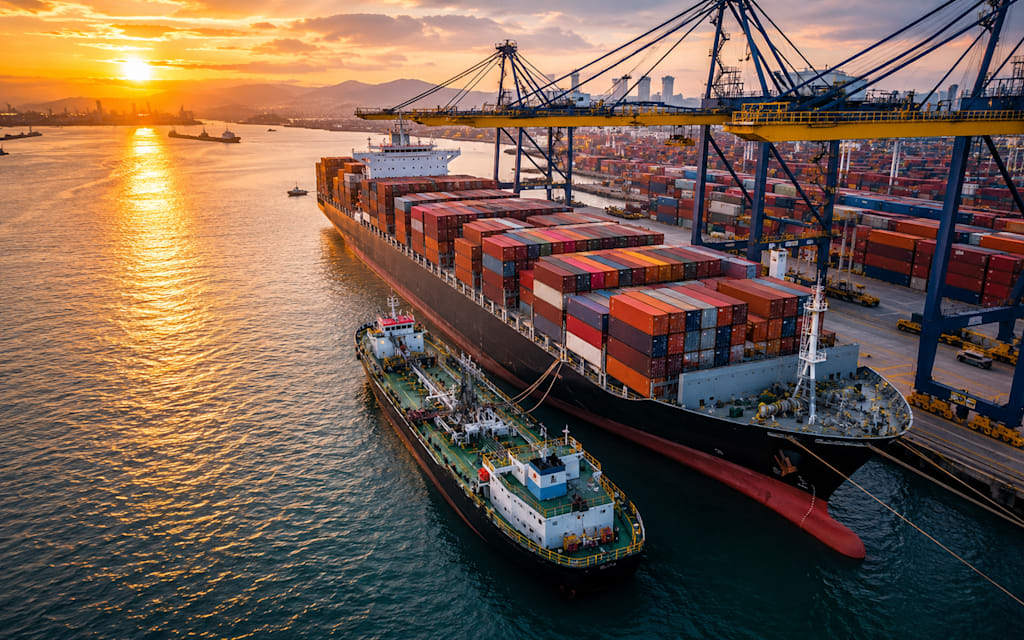
Every morning, millions of people begin their day without realizing that almost everything around them—from the coffee in their kitchen to the smartphone in their pocket—has traveled thousands of miles across oceans. Behind this invisible journey is an industry that rarely makes headlines but quietly keeps the global economy moving: bunker fuel.
Imagine standing on the deck of a massive container ship as it slowly approaches one of the world's busiest ports. Towering stacks of containers rise like colorful skyscrapers, while tugboats guide the vessel into position. Before unloading even begins, another operation takes place. A specialized bunker vessel arrives alongside to transfer the fuel that will power the ship's next voyage. This isn't just another routine procedure—it is the lifeblood of global commerce.
The Engine Behind International Trade
The shipping industry carries the overwhelming majority of international merchandise, connecting manufacturers, suppliers, retailers, and consumers across continents. While consumers often focus on products themselves, few consider the energy required to transport them efficiently across thousands of nautical miles.
This is where the Bunker Fuel market becomes indispensable. Bunker fuel refers to the specialized marine fuels used by commercial vessels ranging from container ships and oil tankers to cruise liners and bulk carriers. Without it, global supply chains would slow dramatically, affecting industries from electronics and automotive manufacturing to agriculture and pharmaceuticals.
The global bunker Fuel market is projected to grow from 249.65 million tonnes in 2026 to 290.12 million tonnes by 2031. This steady growth reflects the continuing importance of maritime transportation in supporting international commerce.
Why Market Growth Matters
The increasing global Bunker fuel market size isn't simply a statistic. It represents rising cargo movement, expanding trade routes, and growing demand for consumer products worldwide. Every increase in shipping activity creates opportunities for ports, logistics providers, shipbuilders, fuel suppliers, and countless businesses connected to maritime trade.
As economies become increasingly interconnected, efficient marine transportation continues to serve as the foundation of international business.
Innovation is Changing the Way Ships Refuel
The bunker fuel industry is also undergoing significant transformation.
Global shipping companies are investing in cleaner technologies while ports modernize fueling infrastructure to improve operational efficiency. Digital monitoring systems, automated bunkering operations, and advanced fuel management practices are helping reduce operational complexity and improve vessel performance.
These innovations demonstrate that the industry is evolving alongside changing environmental expectations without losing sight of the essential role maritime transport plays in supporting global trade.
The Bunker Fuel market share is also influenced by regional shipping hubs that serve as major fueling centers. Large international ports continue to strengthen their infrastructure to accommodate growing vessel traffic and support increasingly sophisticated bunkering operations.
For businesses operating in maritime logistics, these developments create new opportunities to enhance efficiency, improve service quality, and support long-term growth.
The Ripple Effect Across Everyday Life
It can be easy to overlook how deeply connected our daily routines are to ocean shipping. The furniture delivered to your home, the fresh produce available in supermarkets, the clothing purchased online, and the electronics powering modern workplaces all rely on ships that consume bunker fuel throughout their journeys.
When maritime transportation operates smoothly, consumers rarely notice. Store shelves remain stocked, manufacturers receive raw materials on time, and businesses continue serving customers without interruption.
The continued expansion of the Bunker Fuel market size reflects this growing dependence on efficient international logistics. As global commerce evolves, marine fuel remains an essential component supporting supply chain resilience.
Browse Japanese Edition of the Report: https://www.mordorintelligence.com/industry-reports/bunker-fuel-market?utm_source=vocal
Looking Ahead
Global trade continues to adapt to changing economic conditions, technological innovation, and evolving sustainability goals. Throughout these transitions, bunker fuel remains central to maritime transportation, enabling ships to connect producers and consumers across the world.
The forecasted growth highlighted by Mordor Intelligence illustrates that while shipping technologies continue to advance, demand for dependable marine fuel remains fundamental to international commerce. Businesses throughout the logistics ecosystem continue investing in operational improvements, smarter fueling systems, and infrastructure that supports long-term market development.
Ultimately, the story of bunker fuel is not just about ships or ports—it is about the invisible network that keeps the global economy moving every single day.
The next time you purchase an imported product or receive an international delivery, consider the remarkable journey it completed across oceans. Hidden beneath towering cargo containers and busy shipping lanes is an industry working around the clock to power global trade.
What surprised you most about the role bunker fuel plays in everyday life, and do you think most consumers understand how much global shipping influences the products they use every day?
About the Creator
efingutthomas
My expertise is custom research across industries such as aerospace & defense, agriculture, animal wellness, automation, automotive, chemicals, consumer goods, electronics, energy, finance, food & beverages, healthcare, hospitality and ICT
Enjoyed the story? Support the Creator.
Subscribe for free to receive all their stories in your feed.
Comments
There are no comments for this story
Be the first to respond and start the conversation.