
The Hidden Force Behind Every Drive: How Engine Timing Shapes Your Car's Performance
Discover why accurate engine timing is critical to fuel efficiency, performance, and long-term engine health — and what every driver needs to know about modern engine management systems.

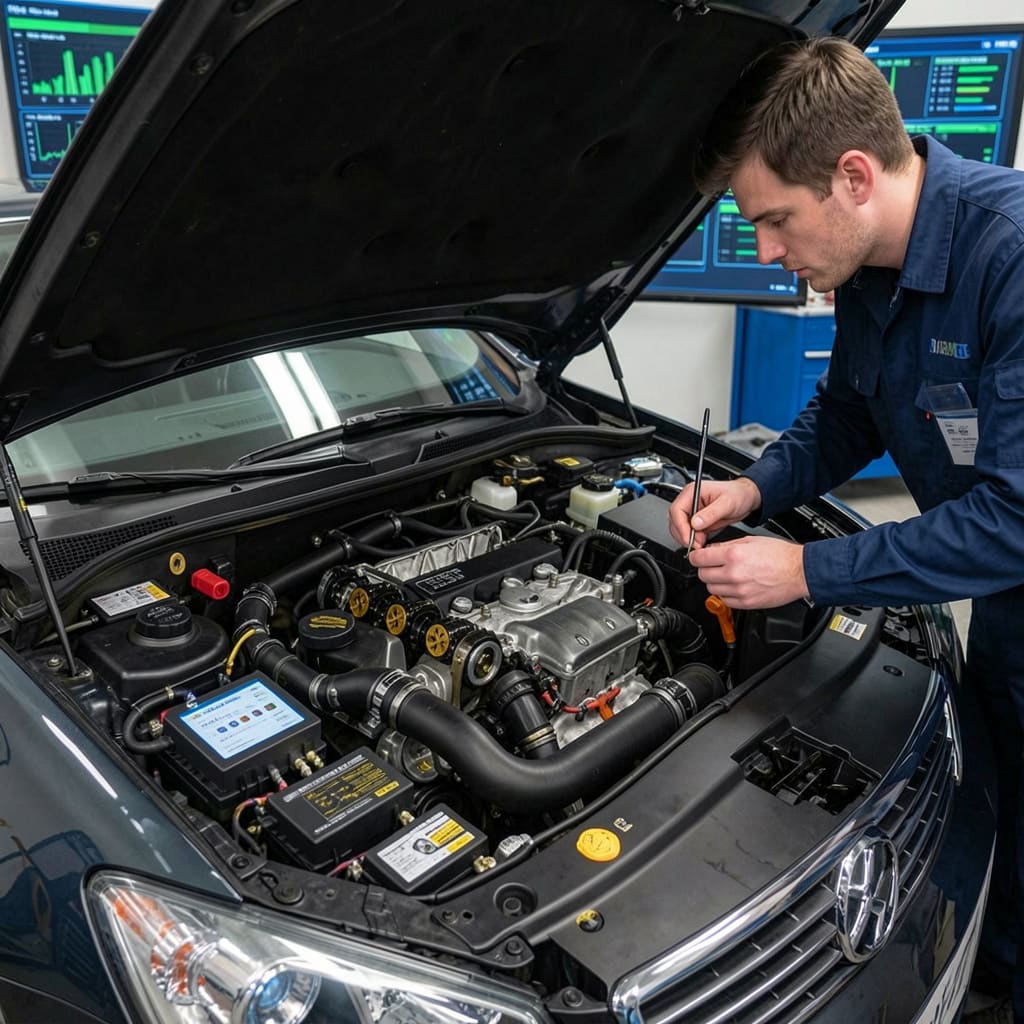
Introduction
Think about the last time your car felt sluggish pulling onto a highway, or you noticed the fuel gauge dropping faster than usual on a familiar commute. More often than not, issues like these trace back to something drivers rarely think about — the precision with which their engine fires.
Modern vehicles are remarkably sophisticated machines, and at the heart of everything they do is timing. Not the kind you set on a wall clock, but a finely calibrated sequence of events happening thousands of times per minute inside your engine. Get it right, and your car runs smoothly, efficiently, and reliably. Get it wrong, and the effects ripple out in ways that touch everything from your fuel bill to your engine's lifespan.
This article breaks down what engine timing really means, why it matters so much in today's vehicles, and what car owners can do to stay ahead of timing-related problems before they become expensive repairs.
What Engine Timing Actually Means
More Than Just a Spark
When most people hear "engine timing," they picture the old-school practice of manually setting ignition timing with a timing light. While that image isn't entirely wrong, modern engine timing is far more comprehensive than a single adjustment.
At its core, engine timing refers to the precise coordination of several key events inside the engine — when the air-fuel mixture is compressed, exactly when the spark plug fires, and when the exhaust and intake valves open and close relative to the position of the pistons. Each of these events must occur at exactly the right moment for the engine to extract maximum energy from the fuel being burned.
Think of it like a perfectly rehearsed orchestra. Every instrument has a specific cue. If even one section comes in a fraction of a beat early or late, the entire performance suffers. The same principle applies inside your engine — everything must work in sync.
Ignition Timing and Valve Timing: Two Sides of the Same Coin
There are two primary components to engine timing that every driver should be loosely familiar with.
Ignition timing refers to when the spark plug fires in relation to the position of the piston in its compression stroke. Firing too early (advance) or too late (retard) wastes energy, reduces power, and increases fuel consumption. Modern engine management systems adjust this dynamically — sometimes hundreds of times per second — based on load, speed, throttle position, temperature, and even the quality of fuel being used.
Valve timing controls when the intake and exhaust valves open and close. This determines how much air-fuel mixture enters the combustion chamber and how efficiently burned gases exit. In modern engines, variable valve timing systems allow this to be adjusted on the fly, giving the engine flexibility to perform well whether it's idling in traffic or being pushed hard on an open road.
Why Timing Precision Is Critical for Engine Performance
The Difference Between Power and Waste
An engine that's even slightly out of time isn't just less powerful — it's actively wasting fuel and generating unnecessary heat. When combustion doesn't happen at the optimal moment, some of the fuel's energy is lost as heat rather than converted into mechanical force. That translates directly to reduced power output and higher fuel consumption.
Performance drivers have long understood this. A well-timed engine responds crisply to throttle input, pulls strongly through the rev range, and feels composed at highway speeds. A poorly timed engine, by contrast, can feel hesitant, flat, or rough — even when everything else appears mechanically sound.
For everyday drivers, this matters just as much. An engine operating at peak timing efficiency is also an engine that's doing less unnecessary work, which means less wear and a longer service life.
Fuel Efficiency and the Timing Connection
Fuel efficiency in modern vehicles isn't just about aerodynamics or tyre pressure. A significant portion of how efficiently a car uses fuel comes down to combustion quality — and combustion quality depends heavily on timing accuracy.
When the air-fuel mixture ignites at precisely the right moment, the expanding gases push the piston down at the most effective angle, converting the maximum amount of chemical energy into motion. When timing drifts — even slightly — that efficiency drops. The engine compensates by consuming more fuel to maintain the same output, which is why timing issues often show up first as unexplained increases in fuel consumption before any more obvious symptoms appear.
Australian drivers doing long highway runs or heavy urban commuting will feel this in their wallet before they feel it anywhere else.
The Role of Modern Engine Management Systems
From Distributor Caps to Digital Precision
A generation ago, engine timing was set mechanically — via a distributor, advance weights, and vacuum canisters. Adjustments were relatively crude and didn't respond dynamically to changing conditions. Today, that entire system has been replaced by sophisticated electronic engine management that processes dozens of inputs simultaneously and makes real-time adjustments without the driver ever knowing.
Modern engine control units (ECUs) monitor everything from coolant temperature and air intake density to throttle position and exhaust oxygen levels. All of this data feeds into timing calculations that happen continuously while the engine runs.
Central to this process is a network of automotive sensors working in concert. One component that plays a particularly important role is the camshaft position sensor, which tells the ECU exactly where the camshaft is in its rotation — information that directly determines when valves open and close and helps synchronise ignition timing to combustion events. Without accurate input from sensors like this, the ECU is essentially making educated guesses rather than precise calculations.
Variable Valve Timing: Adaptability in Action
One of the most significant advances in modern engine technology is variable valve timing (VVT). Rather than having fixed valve timing that's a compromise between performance and efficiency, VVT systems actively adjust cam timing based on engine load and speed.
At low revs, the system optimises valve overlap for smooth idle and strong low-end torque — perfect for city driving. At higher revs, it shifts to a configuration that maximises airflow and top-end power. This adaptability is why modern small-displacement engines can deliver both impressive fuel economy and genuine performance, something that simply wasn't possible with fixed timing.
Signs That Timing-Related Issues May Be Developing
What to Watch (and Listen) For
Timing issues rarely announce themselves all at once. They tend to emerge gradually, which is why many drivers don't connect the dots until a problem has progressed. Some of the most common early indicators include:
Engine knocking or pinging — A metallic rattling or knocking sound, particularly under acceleration, is often a sign that combustion is happening at the wrong time. In modern engines, knock sensors usually detect this and adjust timing to compensate, but persistent knocking suggests something more fundamental needs attention.
Rough idle or misfires — If the engine feels unsteady at idle or occasionally stumbles, timing inconsistencies can be a contributing factor. Modern diagnostics can identify misfires by cylinder, making it easier to isolate whether the cause is timing-related.
Loss of power — A noticeable reduction in acceleration response or top-end power, without an obvious cause like low fuel or a clogged air filter, often points to combustion efficiency issues — of which timing is a primary suspect.
Increased fuel consumption — As mentioned earlier, this is frequently the first measurable sign that something is affecting combustion quality.
Check Engine light — Modern vehicles will log fault codes when sensor data suggests timing is outside acceptable parameters. A scan tool can read these codes and point a technician toward the likely cause.
How Modern Vehicles Maintain Timing Accuracy
Built-In Compensation and Self-Monitoring
One of the advantages of electronic engine management is its ability to adapt. If the ECU detects that timing is drifting — perhaps due to lower-quality fuel, a worn component, or changing environmental conditions — it can make corrections within its programmed limits. This built-in compensation is why many modern cars tolerate minor issues longer than older vehicles before showing obvious symptoms.
However, this adaptability has limits. The ECU can only compensate for so much variation. Once a component begins to fail significantly — whether it's a worn timing chain, a failing sensor, or a stretched belt — the system's ability to self-correct is overwhelmed, and more serious symptoms emerge.
The Timing Chain vs. Timing Belt Question
Most modern vehicles use either a timing chain or a timing belt to keep the crankshaft and camshaft(s) rotating in sync. Chains are generally more durable and are designed to last the life of the engine with proper oil maintenance. Belts, while quieter and lighter, have a scheduled replacement interval that should never be ignored.
A snapped timing belt or a jumped timing chain can cause catastrophic engine damage in interference engine designs — where the pistons and valves occupy the same space at different times. Following the manufacturer's recommended service intervals for timing belt replacement isn't just good practice; it's essential insurance against a very costly repair.
The Impact of Poor Timing on Long-Term Engine Health
Short-Term Problems, Long-Term Consequences
Poor engine timing doesn't just hurt performance in the moment — it accelerates engine wear. Combustion that occurs at the wrong time generates abnormal heat and pressure loads on pistons, bearings, and cylinder walls. Over time, this contributes to carbon buildup, accelerated wear on internal components, and in severe cases, warped cylinder heads or damaged pistons.
Engines that run with consistently retarded timing also tend to run hotter, putting additional stress on the cooling system. Conversely, excessively advanced timing increases the risk of detonation — uncontrolled combustion that can physically damage pistons and rings.
The cumulative effect of operating with poor timing, even for relatively short periods, can meaningfully shorten an engine's service life.
Preventative Maintenance Practices That Support Timing Accuracy
Simple Steps That Make a Difference
Maintaining timing accuracy in a modern vehicle doesn't require a deep understanding of engine internals. A few practical habits go a long way:
Use the right fuel grade. Modern engines are designed around specific octane ratings. Using lower octane fuel than recommended forces the ECU to retard timing to prevent knock, sacrificing efficiency and performance in the process.
Keep up with oil changes. Engine oil lubricates the timing chain tensioner and the variable valve timing actuators. Old, degraded oil loses its ability to maintain proper hydraulic pressure in these systems, allowing timing components to operate outside their intended range.
Follow scheduled maintenance. Timing belts, tensioners, and related components have service intervals for a reason. Skipping or delaying these services is one of the more common and avoidable causes of serious engine damage.
Act on warning signs promptly. A check engine light or unusual engine noise shouldn't be deferred. Modern vehicles log detailed fault data that makes diagnosis relatively straightforward — but only if the system is checked before a minor issue becomes a major one.
Common Misconceptions About Engine Timing
Clearing Up the Confusion
"If the car seems fine, the timing must be fine." Not necessarily. As discussed, timing issues often manifest as subtle efficiency losses before any obvious drivability symptom appears. Regular diagnostics catch problems that normal driving won't reveal.
"Only high-performance cars need precise timing." Every engine benefits from accurate timing. In fact, smaller engines often depend on timing precision even more, since they have less displacement to compensate with.
"Timing only matters on older cars." The opposite is true. Modern engines with variable valve timing, direct injection, and cylinder deactivation are more timing-dependent than ever — the margin for error is tighter, but so is the performance reward when everything is working correctly.
The Road Ahead: Future Technologies in Engine Timing
Efficiency Getting Even Tighter
Engine technology continues to evolve, and timing precision is at the centre of many of the most significant developments. Cylinder deactivation systems — which shut down individual cylinders under light load to save fuel — rely entirely on precise valve timing coordination to switch seamlessly without the driver noticing.
Mild hybrid systems, increasingly common in new Australian vehicles, use electric motors to supplement the combustion engine during acceleration and coasting. Integrating this seamlessly requires the engine management system to manage timing with even greater accuracy across a wider range of operating conditions.
Looking further ahead, variable compression ratio engines — already appearing in production vehicles — take timing complexity to a new level, adjusting the physical geometry of the combustion chamber along with the timing of fuel delivery and ignition to optimise efficiency across the entire rev range.
These advances all point in the same direction: timing precision isn't becoming less important as cars evolve. It's becoming more critical.
Conclusion
Engine timing sits at the intersection of everything a modern vehicle does well — or poorly. It influences how quickly your car responds when you need to accelerate, how far a tank of fuel takes you, how cleanly your exhaust exits, and how long your engine holds up over the long run.
For the everyday driver, the key takeaway is straightforward: keep up with scheduled maintenance, use the correct fuel, pay attention to early warning signs, and don't delay a diagnostic check when something feels off. Modern engine management systems are remarkably capable, but they work best when the components they rely on are in good condition.
Understanding that your car's performance is underpinned by thousands of precisely coordinated events happening every second puts the importance of regular maintenance in a clearer light. A well-maintained engine doesn't just run better today — it keeps running well for years to come.
About the Creator
Jack Root
Jack Root delivers innovative IT & software solutions — from web & app development to ERP & SAP training — empowering businesses to grow.
Enjoyed the story? Support the Creator.
Subscribe for free to receive all their stories in your feed.
Comments
There are no comments for this story
Be the first to respond and start the conversation.