
The Heathrow Divide: Economic Ambition Clashes with Climate and Community Realities
As Chancellor John Healey champions a third runway for national growth, Prime Minister Andy Burnham’s hesitation exposes a deepening rift within the government over infrastructure, environmental targets, and the future of British aviation.

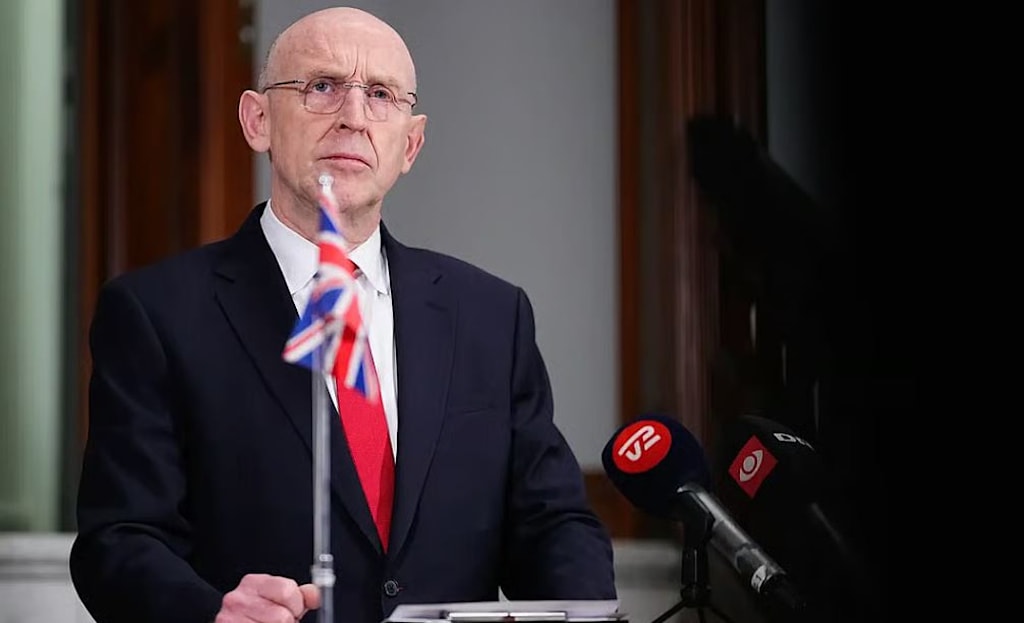
The debate over expanding Heathrow Airport has long been one of the most intractable and polarizing issues in British politics. Now, it has emerged as the latest fault line within the current government. Speaking at the International Monetary Fund’s annual meeting in Bangkok, Chancellor of the Exchequer John Healey threw his weight behind the long-proposed third runway at Heathrow, framing it as an indispensable catalyst for national economic growth. However, this strong endorsement stands in stark contrast to the stance of his boss, Prime Minister Andy Burnham, who recently declined to back the expansion plans, asserting that the decision should ultimately rest with the communities living near the airport. This public divergence highlights the complex balancing act the Burnham administration faces as it attempts to reconcile aggressive economic targets with mounting environmental concerns and entrenched local opposition.
For Chancellor Healey, the calculus is fundamentally rooted in macroeconomic strategy. The UK has spent years navigating the aftershocks of global supply chain disruptions, shifting trade dynamics, and the ongoing need to solidify its competitive economic identity. In this context, Heathrow is not merely an airport; it is a critical piece of national infrastructure. As the busiest airport in Europe, it faces capacity constraints that are increasingly viewed by business leaders, airlines, and institutional investors as a severe bottleneck to the UK’s global competitiveness. Healey’s assertion that “the case for a third runway at Heathrow has always been a case for growth” reflects a broader governmental aim to stimulate investment, create high-skilled jobs, and enhance the UK’s connectivity to emerging global markets. Proponents argue that without additional runway capacity, the UK risks losing lucrative long-haul routes and foreign direct investment to rival European hubs like Amsterdam’s Schiphol or Paris’s Charles de Gaulle, both of which possess more physical room to expand their operations.
The Chancellor’s outspoken support, however, has inadvertently spotlighted a significant political rift at the highest levels of government. Prime Minister Andy Burnham, who assumed office in July 2026 succeeding Keir Starmer, has taken a markedly different approach to the issue. Just three weeks prior to Healey’s remarks in Bangkok, Burnham explicitly refused to endorse the new runway, pivoting the responsibility to local stakeholders. This marks a notable departure from the stance of the previous administration. Under Prime Minister Keir Starmer, the government had actively sought to settle the decades-long debate in 2025 by formally backing the expansion as a matter of national priority. Burnham’s hesitation suggests a strategic recalibration. As a politician with deep roots in local governance from his tenure as Mayor of Greater Manchester, Burnham may be acutely sensitive to the populist and community-level backlash that mega-infrastructure projects often provoke. By framing the decision as a matter for local residents, the Prime Minister is attempting to insulate his government from the political fallout of a deeply unpopular top-down mandate.
The local and environmental opposition to a third runway is formidable, well-funded, and highly organized. For residents in the surrounding boroughs of West London, the prospect of thousands of additional flights translates directly into exacerbated noise pollution, degraded air quality, and a significantly diminished quality of life. Campaign groups have spent years mobilizing against the expansion, arguing that the social and health costs far outweigh the purported macroeconomic benefits. Furthermore, the project faces a profound contradiction with the UK’s legally binding climate commitments. The government has pledged to reach net-zero carbon emissions by 2050, a target that requires a drastic reduction in greenhouse gases across all sectors of the economy. Aviation remains one of the hardest industries to decarbonize. Critics argue that adding a third runway, which would inevitably increase the total number of flights and associated carbon emissions, is fundamentally incompatible with these climate targets. The tension between the Treasury’s growth agenda and the nation’s decarbonization mandates remains unresolved, leaving the project in a state of policy limbo.
Beyond the political and environmental debates lies a stark logistical reality: even if the government were to fully unify behind the project tomorrow, a third runway at Heathrow is not imminent. The airport faces a labyrinthine and lengthy planning process, encompassing rigorous environmental impact assessments, extensive public consultations, and inevitable legal challenges from opposition groups. In September, Heathrow Airport itself acknowledged that a third runway may not open until 2039, a timeline that is four years later than initial forecasts had suggested. This extended horizon means that the current political skirmishes are largely symbolic, fighting over a project whose tangible economic benefits would not be realized for another decade and a half. However, the certainty of government backing is a strict prerequisite for the airport to begin the necessary preparatory work and secure the tens of billions in private investment required to make the expansion viable.
Ultimately, the Heathrow third runway debate serves as a microcosm of the broader challenges facing the modern British state. It is a direct collision of competing national priorities: the urgent need for economic growth and global connectivity versus the equally urgent demands of climate action and local community welfare. As Chancellor Healey pushes the growth narrative on the global stage in Bangkok, Prime Minister Burnham’s reluctance underscores the domestic political perils of mega-projects. How the government navigates this impasse will not only determine the future of UK aviation but also serve as a defining test of its ability to govern effectively in an era of competing, and seemingly irreconcilable, national interests.
About the Creator
Mark Lim
Hi I am mark an automotive student and a car, tech and food enthusiast ! Im gonna try and post daily & hope you enjoy what I write and do share my page with people you know. I would gladly appreciate it! Cheers
Enjoyed the story? Support the Creator.
Subscribe for free to receive all their stories in your feed.
Comments
There are no comments for this story
Be the first to respond and start the conversation.