
The Growing Power of Color: Why the Inorganic Color Pigments Market Is Expanding Globally
How construction, technology, and sustainability are driving demand for durable, high-performance pigments worldwide

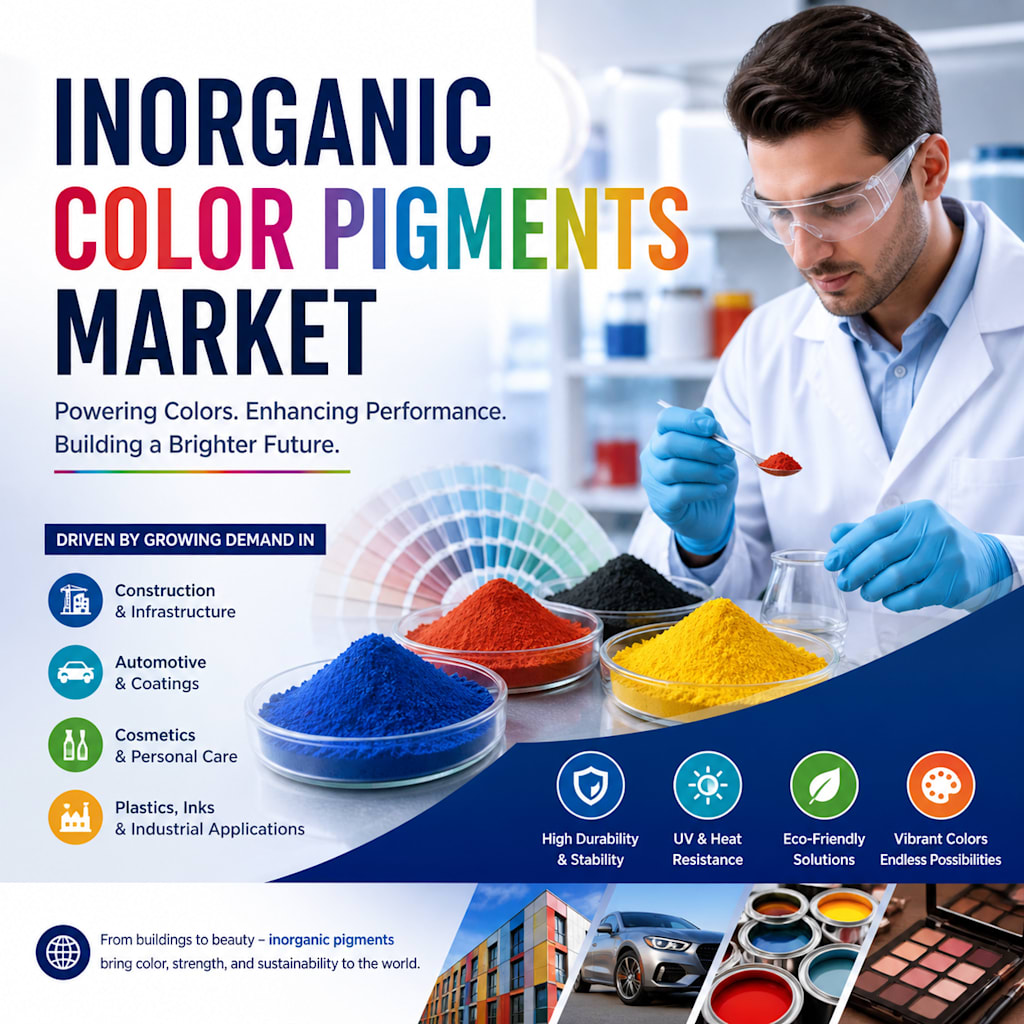
Color influences our world more than we typically think.
In the buildings we inhabit, cars we drive, even the makeup we use; color isn't simply about appearance-it impacts durability, performance and long-term value. Supporting all these applications is a crucial ingredient: inorganic color pigments.
Small but vital, these pigments are quietly powering innovation in the building, automotive, plastics, cosmetics and even the hygiene sectors.
The inorganic color pigment market is steadily growing worldwide, bolstered by growth in infrastructure and advances in technology, as well as the ever-growing call for more sustainable materials.
A Market Sustained by Stability and Enduring Demand
The global inorganic color pigment market size was valued at roughly USD 16.48 billion in 2024, and is predicted to grow to nearly USD 24.92 billion by 2033, increasing at a compound annual growth rate of 4.35 percent.
Unlike sectors where technology dictates a fast-changing pace, the pigment market expands steadily, driven by the inherent, practical demand rather than short-lived trends. Every new building, infrastructure, coating and product made requires the color to hold up under extreme heat, sunlight and environmental exposure. This makes the inorganic pigment an indispensable, steadfast pillar in the global industrial system.
What Drives Demand for Inorganic Pigments?
The primary driving force behind the inorganic color pigment market growth is construction and infrastructure development across various regions, most predominantly in developing economies. The growth in urbanization is boosting demand for materials like:
- colored concrete
- ceramic tiles
- roof coatings
- pavers, and
- facades
Inorganic pigments are the preferred colorants due to their ability to withstand UV radiation and the harsh environmental elements and conditions. With continued development and governments investing heavily in 'smart' infrastructure the need for enduring and color-stable materials will continue to escalate.
How Technology is Driving Pigment Innovation
Technological advancements have greatly influenced this industry in recent times. Modern pigments are improving with:
- Color uniformity
- Dispersion quality
- Application effectiveness, and
- Environmental safety standards
Pigment makers are now striving to create pigments that do not merely offer superior performance but are also safe and comply with all the existing regulatory standards. The United States, for example, is leading innovation in this sector and manufacturing pigments that are considered safer and have a better environmental footprint. This influences the way pigments are made across the globe and is helping manufacturers transition towards a greener and more energy efficient production process.
Pigments are also moving into new areas like cosmetics and personal care:
The global demand for cosmetics is rising steadily, which in turn is escalating the use of safe and non-toxic ingredients. This is benefiting the inorganic color pigment market since these products are widely used in foundations, lipsticks, eyeshadows, sunscreens, etc., for their stability andhypoallergenic properties. While construction and coatings have a larger market share, the use of inorganic pigments in the personal care sector is growing rapidly due to increased product awareness.
Urbanization and Infrastructure Development are Fueling the Market
The inorganic color pigments market is significantly being driven by the rising urbanization and infrastructure development globally. As cities grow, the need for materials that can endure their appearance over a longer duration increases. These are not merely about looks but about long term stability and the pigments can survive through exposure to extreme weather. The governments across the world are undertaking the construction of new roads, public transport systems, infrastructure etc., to accommodate population growth. All these projects need durable materials that will maintain their appearance for years and the inorganic pigments can serve that need. Even in developed regions, maintenance and refurbishment projects contribute to demand.
Shift Towards Eco-Friendly and Safer Pigments
The focus on sustainability is becoming an important aspect of several manufacturing processes. Governments worldwide are imposing stricter regulations to limit the production and use of hazardous substances, which is indirectly boosting the demand for inorganic color pigments. These pigments are considered better and safer to use than conventional pigments, as they generally contain fewer harmful materials. Their stability provides longevity and contributes to compliance with sustainability standards. Companies are gradually investing in research and development for the production of cleaner pigments and more environment-friendly colorants.
Internal Market Segmentation and Demand Trends
When it comes to a more segmented market view, the performance segment is strong for iron oxides that are valued for their durability and versatility for a wide range of applications-from coatings and construction to cosmetics. Powder pigments account for the major market share and they are preferred due to their long shelf life, adaptability to different applications and their ease of use. The highest contribution of revenue within the market is from applications, namely paints and coatings sector. These pigments are used to improve not just the appearance of buildings and products but also protect from the heat of the sun and from corrosion. These segment characteristics indicate strong stability and predictable future demand patterns within this sector.
Regional Market Analysis and Key Drivers
The market for inorganic color pigments is currently being led by the Asia-Pacific region, primarily due to rapid industrialization and urbanization in countries like China, India and Japan. There has been significant investment in construction projects and transportation infrastructure. The North American region also represents a crucial market in this segment, with considerable demand being generated from automotive, construction and industrial application sectors. The European market is highly focused on the sustainability factor which has driven demand for organic, as well as inorganic pigments that are better for the environment. Latin America, the Middle East and Africa represent emerging markets that are steadily growing owing to infrastructure development.
Competitive Market, Driven by Innovation
The inorganic color pigment market is highly competitive where major players are continuously trying to outperform others by investing in R&D to improve performance, develop new pigments and attain sustainable solutions, in an attempt to expand their global presence and capture new markets. Innovation, for example, is concentrated on producing colorants that offer greater thermal resistance, improved infrared reflectance and increased anti-corrosion attributes. These factors enable manufacturers to compete in what is now a more nuanced market for pigments with superior and diverse properties.
The Road Ahead
The inorganic color pigment market is inextricably linked to industrial development and sustainability trends across the globe. Since the construction sector is expanding globally, the demand for durable, high-performance and affordable colors will continue to remain robust. This industry is currently observing the integration of green technologies in order to gain consumer favor and adapt to global environmental regulations and evolving market trends. By the year 2033, the global market is expected to grow to nearly USD 25 billion.
Conclusion
Inorganic color pigments may not be overtly visible, but they are undoubtedly omnipresent. Adding strength to our structures, durability to our coats, vibrance to our consumer products and safety to all modern applications; their influence can be witnessed every where. They continue to play an integral part in advancing the industrial sectors and meet higher performance standards.
About the Creator
Robert
Senior Market Researcher at IMARC Group, specializing in global market analysis, industry trends, and data-driven insights across diverse sectors.
Enjoyed the story? Support the Creator.
Subscribe for free to receive all their stories in your feed.
Comments
There are no comments for this story
Be the first to respond and start the conversation.