
The Future of eCommerce 2026: AI, Social Commerce, and Trends
Explore the definitive guide to eCommerce in 2026. Learn how AI assistants, social commerce, AR technology, and ultra-fast delivery are transforming the shopping experience for brands and consumers.

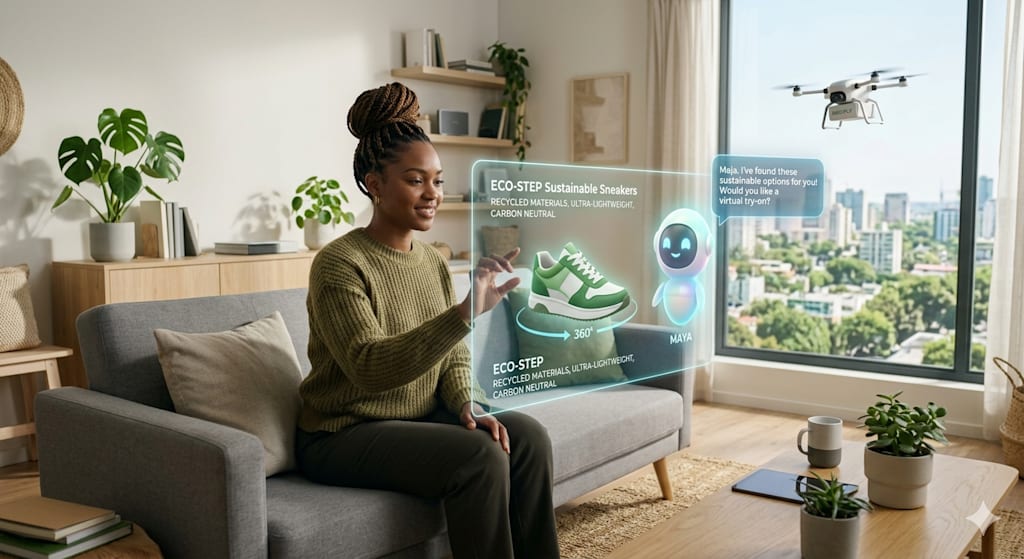
The world of online shopping has moved far beyond simple "add to cart" buttons. As we move through 2026, the line between our digital lives and our physical reality has almost vanished. If you feel like the pace of change is accelerating, you are right. We are currently seeing a shift where 24% of all retail purchases happen online, and that number is climbing every single month. For store owners and brands, the goal is no longer just to "be online." The goal is to be everywhere the customer is, often before they even realize they want to buy something.
THE RISE OF THE AI SHOPPING CONCIERGE
By 2026, the biggest change in eCommerce isn't a new website layout; it is the death of the search bar. We are moving toward a world of "Generative Commerce." Instead of typing "blue running shoes" into a box and scrolling through hundreds of results, customers now talk to AI shopping assistants. These assistants don’t just show products; they understand context. They know you have a marathon in three weeks, they know your feet tend to swell after ten miles, and they know your budget.
In 2026, AI-driven personalization is responsible for nearly 45% of all online conversions. This isn't just about showing "similar items." It is about dynamic storefronts that change in real-time. When a customer lands on a Shopify store today, the images, descriptions, and even the pricing might adjust based on their previous behavior and current needs. This level of hyper-personalization has turned casual browsing into a curated experience that feels like having a private shopper in your pocket.
SOCIAL COMMERCE IS THE NEW MALL
We used to go to social media to see photos of friends; now, we go there to live our lives, which includes full-scale shopping. Social commerce has officially hit its stride in 2026, with global sales through platforms like TikTok, Instagram, and YouTube expected to surpass $1.5 trillion this year. The "click-to-buy" friction has been completely erased.
Live-stream shopping has moved from a niche trend to a primary sales channel. In 2026, brands are hosting 24/7 live streams where AI-generated influencers or real human creators interact with audiences in real-time. This isn't just home shopping television for the internet; it is interactive entertainment. You can ask a host to turn a product around, show it in a different light, or compare it to another item, and then buy it with a thumbprint scan without ever leaving the video feed.
THE SUSTAINABILITY MANDATE
Consumers in 2026 are more informed and more demanding than ever before. Sustainability is no longer a "nice to have" or a marketing buzzword; it is a core requirement. Data shows that 78% of shoppers now prioritize brands that offer transparent supply chains and carbon-neutral shipping.
Shopify stores in 2026 are using blockchain technology to show the "birth certificate" of a product. A customer can scan a QR code and see exactly where the fabric was grown, who sewed the garment, and how much carbon was emitted during its journey to their doorstep. The circular economy has also gone mainstream. Many top brands now have integrated "re-commerce" sections where customers can trade in old products for store credit, keeping items out of landfills and keeping customers loyal to the brand ecosystem.
AUGMENTED REALITY AND THE END OF RETURNS
One of the biggest profit-killers in eCommerce has always been returns. In 2026, Augmented Reality (AR) has finally solved this problem for most categories. With the power of improved smartphone sensors and wearable tech, "virtual try-ons" are now pixel-perfect.
Whether it is a pair of glasses, a new sofa for the living room, or a shade of lipstick, the 2026 shopper expects to see the product in their physical space before buying. Statistics show that stores using advanced AR see a 30% decrease in return rates and a 60% increase in customer confidence. When you can see exactly how a 65-inch TV looks on your specific wall, the "will it fit?" anxiety disappears, and the "buy" button becomes much more tempting.
VOICE SEARCH AND AMBIENT COMMERCE
We are now living in the era of ambient commerce. This means shopping happens in the background of our lives. By 2026, voice-activated devices have moved beyond just playing music or setting timers. They are now powerful commerce hubs. About 35% of household grocery and refill purchases are now made via voice commands.
"Hey, reorder my favorite coffee" is a command that triggers a complex chain of events: checking the lowest price, verifying the fastest delivery, and processing a secure biometric payment. For eCommerce brands, this means SEO has changed. It is no longer about short keywords; it is about "conversational commerce." If your content doesn't answer the natural questions people ask out loud, your brand becomes invisible in a voice-first world.
ULTRA-FAST LOGISTICS AND THE LAST MILE
The "Amazon Effect" has evolved into the "Instant Effect." In 2026, two-day shipping feels slow. In major urban centers, 30-minute delivery is the new gold standard. This is made possible by "dark stores"—small warehouses located in the heart of residential areas—and the legalization of drone delivery in most major regions.
Logistics is now a marketing tool. Brands that can guarantee delivery before dinner for an order placed at lunch are winning the market share. This has forced smaller Shopify merchants to join logistics networks that allow them to compete with giant retailers. Data integration between the storefront and the delivery bot is seamless, allowing customers to track their package's exact GPS location in real-time on a map.
KEY TAKEAWAYS FOR ECOMMERCE SUCCESS IN 2026
AI is your co-pilot: Implement AI assistants that do more than answer FAQs; they should be able to sell and provide styling or technical advice.
Frictionless Social Sales: Ensure your products are syncable with social platforms. The goal is to make the journey from "discovery" to "purchased" take less than ten seconds.
Radical Transparency: Share your sustainability data. Show the carbon footprint and the origin of your materials to build deep trust with Gen Z and Alpha shoppers.
Invest in AR: Visualizing a product in a personal space is the most effective way to kill "buyer's remorse" and slash return rates.
Voice-Ready Content: Optimize your product descriptions for how people talk, not just how they type. Use long-tail, conversational phrases.
Hyper-Local Presence: Use local inventory ads and ultra-fast shipping options to meet the demand for "immediate gratification."
THE HUMAN TOUCH IN A DIGITAL WORLD
With all this technology, you might think that the human element of shopping has disappeared. Surprisingly, the opposite is true. In 2026, because AI handles the boring parts of shopping like tracking packages or reordering laundry soap human interaction has become a premium service.
Successful brands are using their human staff to build communities. They host virtual events, offer one-on-one expert consultations via video, and write personalized notes. Technology provides the speed, but humanity provides the connection. The most successful stores in 2026 are those that use AI to understand the data but use human creativity to tell the story.
BEYOND THE TRANSACTION
The future of eCommerce is not just about selling a product; it is about managing a relationship. We are moving away from "one-off" sales toward "subscription-based lifestyles." AI can now predict when your sneakers are wearing out based on your fitness tracker data and suggest a new pair before you feel the first ache in your knee.
This predictive commerce model creates a steady stream of revenue for brands and a stress-free life for consumers. However, it requires a high level of data privacy and security. In 2026, a brand's most valuable asset is not its inventory, but the trust its customers have in how their data is handled.
CONCLUSION: PREPARING FOR WHAT IS NEXT
The eCommerce landscape of 2026 is fast, personal, and incredibly smart. For Shopify store owners, the message is clear: adapt or be left behind. The tools to succeed AI, AR, and social integration are more accessible than ever. By focusing on the customer’s need for speed, transparency, and a bit of digital magic, you can turn your store into a destination that thrives in this new era.
The future isn't a distant point on the horizon; it is happening every time a customer talks to their watch to buy a gift or uses their phone to see a virtual rug in their hallway. The stores that will win are the ones that make these moments feel natural, helpful, and human.
About the Creator
Sagar Panchal
Sagar Panchal, CEO of SetuBridge Technolabs, founded the company in 2012 to deliver innovative eCommerce solutions.
Enjoyed the story? Support the Creator.
Subscribe for free to receive all their stories in your feed.
Comments
There are no comments for this story
Be the first to respond and start the conversation.