
The Future of Denial Management in Medical Billing: Trends and Predictions
Navigating the Evolving Landscape of Denial Management in Healthcare Finance

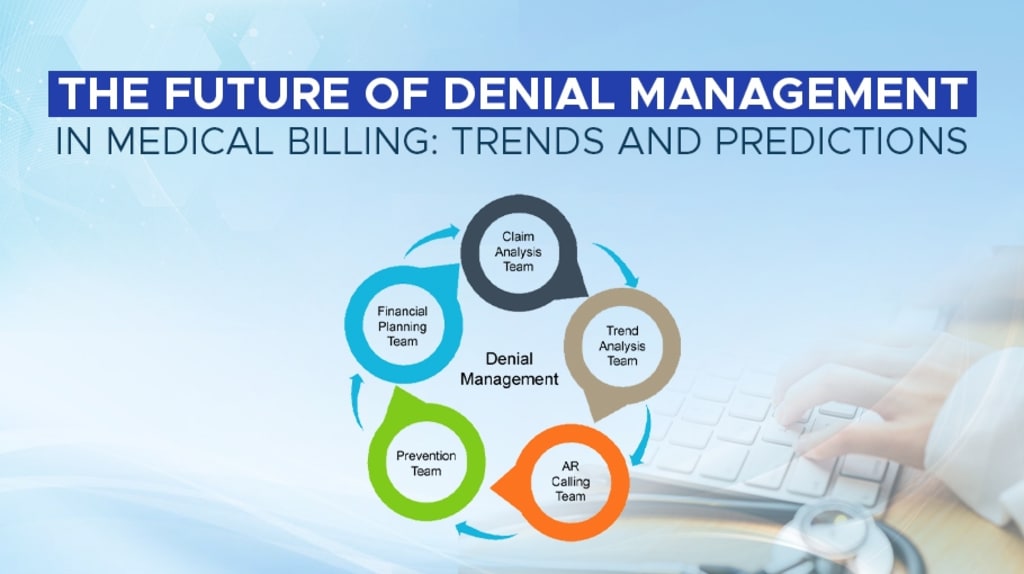
Denial management in medical billing is crucial to ensuring that healthcare providers receive timely reimbursements. With the rising complexities of healthcare billing, evolving payer requirements, and an ever-increasing focus on cost containment, the future of denial management relies on adopting new technologies and strategies to reduce denial rates and optimize revenue cycle performance. This blog post explores the emerging trends and predictions shaping the future of denial management in medical billing.
Enhanced Automation and Artificial Intelligence (AI)
Automation and AI are revolutionizing denial management by enabling healthcare providers to efficiently identify and rectify errors in medical claims. AI-powered systems can detect patterns, predict potential denials, and suggest corrective measures, significantly reducing manual workload and improving the accuracy of claims submissions in medical billing company. With AI advancements, providers can expect enhanced denial prediction capabilities, enabling them to address denials proactively and optimize their revenue cycles.
Real-Time Claim Monitoring
Real-time claim monitoring is becoming a standard feature in modern denial management systems. Providers can track the progress of claims and address any issues immediately, minimizing delays and reducing denial rates. In the future, real-time monitoring will increasingly be integrated with AI-powered analytics, providing healthcare providers with predictive insights to manage potential denials more effectively.
Data-Driven Decision-Making
Advanced data analytics is playing a critical role in shaping the future of denial management. By analyzing historical data and identifying patterns, healthcare providers can develop targeted strategies to address common denial reasons and improve overall denial rates. Data-driven insights will also contribute to optimizing the revenue cycle and enhancing patient satisfaction by streamlining claims processes and reducing the frequency of billing errors.
Prioritization of Denied Claims
Healthcare providers are increasingly prioritizing denied claims based on factors such as claim value, denial reason, and payer. This approach allows providers to allocate resources to high-value and high-impact claims, improving denial overturn rates and financial outcomes. As denial management becomes more sophisticated, providers will continue refining their prioritization strategies, leading to more efficient use of resources and better financial outcomes.
Payer Collaboration
Collaborating with payers is essential for effective denial management. Regular communication and sharing of best practices can help both parties understand each other's processes and requirements, leading to fewer denials and improved claim processing efficiency. In the future, we can expect more transparent and seamless communication between providers and payers, resulting in more streamlined denial management processes.
Enhanced Staff Training and Education
As denial management becomes more complex, investing in staff training and education is paramount. Healthcare providers are increasingly providing regular training sessions to ensure that their billing staff is well-equipped to handle evolving denial management challenges. Continued emphasis on training and education will be crucial to staying ahead of industry changes and maintaining optimal denial rates.
Focus on Patient Engagement
Patient engagement is a vital aspect of denial management. Providers are increasingly focusing on improving patient education regarding insurance coverage, co-pays, deductibles, and out-of-pocket expenses. As patients become more informed about their financial responsibilities, claim denials related to patient eligibility or coverage issues are expected to decline. In the future, innovative patient engagement strategies and technologies will play a crucial role in minimizing claim denials.
Outsourcing Denial Management
Many healthcare providers are choosing to outsource their denial management processes to specialized vendors. Outsourcing offers providers access to expert resources, reduced operational costs, and improved denial rates. As denial management becomes more complex and specialized, outsourcing will likely become an increasingly attractive option for healthcare providers looking to optimize their revenue cycles.
Conclusion
The future of denial management in medical billing is marked by technological advancements, data-driven strategies, and a focus on collaboration and patient engagement. As healthcare providers adapt to these trends, they will be better equipped to navigate the complexities of denial management, optimize revenue cycle performance, and improve patient satisfaction. By embracing these trends and predictions, healthcare providers can ensure that they stay ahead of the curve and maintain financial stability in an ever-evolving healthcare landscape. It will be crucial for healthcare providers to continue investing in technologies, staff training, and collaboration efforts to maximize the benefits of these emerging trends and secure a more efficient, patient-centered future for denial management in medical billing.
About the Creator
Criss John
I am Criss John, a highly accomplished medical billing professional with over a decade of experience in the healthcare industry. Currently, I am working at BellMedex, a renowned US-based medical billing company.
Enjoyed the story? Support the Creator.
Subscribe for free to receive all their stories in your feed.
Comments
There are no comments for this story
Be the first to respond and start the conversation.