
The Future of Construction Is Reaching New Heights
Tower cranes are playing a crucial role in the world's biggest infrastructure and development projects.

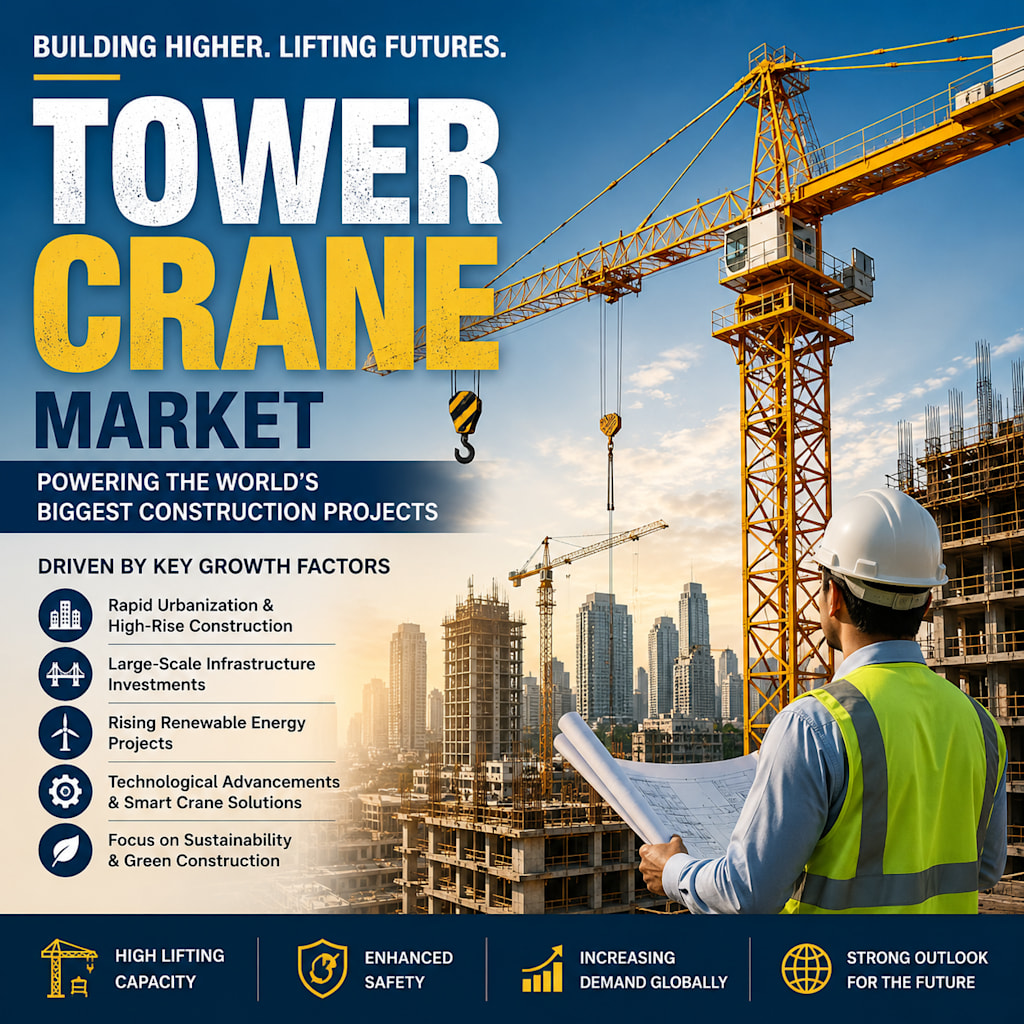
Almost any bustling cityscape you see nowadays, you'll probably find them:
Tower cranes.
These massive pieces of machinery, some hundred feet above the earth, have become the emblem of progress-helping construct every kind of building, from high-end high-rises to transportation systems to renewable power facilities and smart urban centers.
While most of us might rarely notice them, tower cranes are quietly leading the way in shaping the way cities are built. With the world's governments investing millions in their infrastructure, cities are ever expanding skyward; consequently, the global demand for sophisticated lifting gear is on the rise.
The result? The tower crane industry, an expanding market driven by innovation.
The Tower Crane Market: A Reflection of Global Growth
With an estimated value of about USD 8 billion in 2025, the global tower crane market size is projected to expand to a value close to USD 11.7 billion by 2034.
Such a steady increase in growth reflects a worldwide trend:cities are growing, their populations are swelling, and infrastructure projects are more ambitious than ever.
Whether it is residential high-rises, mixed-use structures, airports, bridges, or renewable energy plants, modern construction projects depend greatly on advanced lifting technology to safely manage and maneuver immense loads.
Tower cranes are central to this transition.
Why Are We Building Upwards, Not Outwards?
The surge in urbanization has been and remains one of the primary catalysts for tower crane demand.
As more and more people flock to cities, available land is becoming an increasingly rare commodity. Developers have responded by building vertically, erect ing tall residential buildings, mixed-use skyscrapers, and modern business towers.
The construction of these types of buildings necessitates the use of lifting equipment that is strong and capable enough to hoist heavy materials dozens, even hundreds of feet into the air, while ensuring safety and precision in their placement.
It is at this juncture that tower cranes prove themselves invaluable. Unlike mobile cranes, which are transportable and easily moved around the building site, a tower crane is an immovable entity. It remains fixed on site for the duration of the construction project-often for several months, sometimes even for a year or more-providing continuous reach and immense lifting capacity for the most intricate urban building endeavors.
As cities continue to become denser, their importance only continues to escalate.
Global Infrastructure Investment: Driving the Crane Industry Forward
Across the world, governments are spending a great deal on modernization efforts of their infrastructure.
New highways, railways, airports, bridges, power stations and hospitals are being developed, aiming to serve a growing population and strengthen economic development.
These projects often consist of gigantic steel structures and pre-fabricated concrete components, not to mention heavy machinery. Maneuvering these elements on site effectively can only be achieved with robust, high-capacity lifting devices.
Tower cranes are vital for fast and safe construction projects of this nature. In many countries, public infrastructure investment is now a critical, long-term contributor to crane demand.
The Rise of Renewable Energy: New Generation of Cranes Required
Perhaps one of the most fascinating new demands on the tower crane market is from the renewable energy sector.
Wind turbines, for instance, are getting larger and larger.
Modern wind farms use turbines with very tall towers and exceedingly long blades in order to harness the maximum amount of wind power. The installation of such gargantuan structures mandates the use of specialized cranes capable of reaching exceptional heights with incredible precision.
To meet the demand for these high-capacity projects, manufacturers are currently developing and designing turbines with extended boom lengths and greater lifting capacities.
As renewable energy investments and production grow in line with the push toward cleaner sources of power, so will the demand for large, high-capacity lifting machines like tower cranes.
Smart Technology is Revolutionizing Construction Sites
Today's tower cranes are far more technologically advanced than any ever built before. Many modern tower cranes are integrated with smart technologies designed to enhance efficiency, increase safety and further productivity at the construction site. Some examples include:
* Real-time operational monitoring systems
* Remote diagnostic capabilities
* Sophisticated load management systems
* AI assisted crane operation systems
* Predictive maintenance technologies
* GPS positioning tools
The integration of such smart features with these massive lifting machines will ensure quicker work, and potentially allow for more cost-effective constructions of any scale. The ability to save even small amounts on massive, million dollar construction projects translates into potentially huge savings in costs.
Sustainable Construction is on the Rise
A greater focus is now being placed on sustainability across the entire building sector. As developers feel the pressure to reduce emissions and adopt green construction practices, there is a demand for similar environmental efficiency in construction machinery. Tower crane manufacturers are also responding to this growing demand with more environmentally friendly equipment. One popular innovation now available on the market includes electrically powered cranes, while other companies are experimenting with intelligent power management technologies that enable high lifting power while reducing energy consumption and overall environmental impact.
What Types of Projects Use Tower Cranes the Most?
While tower cranes are essential components in many different construction sites, a few sectors rely more on these magnificent machines than others:
High-Rise Residential Structures
Increasing urbanization has led to a greater demand for apartments and residential buildings in major cities, fueling the construction sector.
Commercial Construction
Office towers, retail centers, hotels, and mixed-use facilities make up a significant segment of the commercial construction market, demanding tower cranes for their construction.
Transportation Projects
Large-scale transportation ventures such as railway lines, highway construction, and airport expansions require powerful lifting machines capable of lifting very heavy items.
Industrial Buildings
The industrial sector makes extensive use of tower cranes for the installation of heavy machinery and the structural assembly of factories, logistics hubs, and power plants.
Renewable Energy Facilities
Wind turbines, some reaching over 150 meters in height, are rapidly becoming one of the largest and most in-demand applications for tower cranes, especially given their enormous scale and the remote locations in which they are often erected.
Asia-Pacific Continues to Lead the Global Industry
Currently, the Asia-Pacific region dominates the tower crane market. This trend is being driven by a variety of factors including rapid growth in urban areas, continued expansion of industry, and massive government infrastructure programs implemented across the region. As China and India in particular invest heavily in infrastructure projects that include smart cities, industrial parks, railways and highways, there has been a significant increase in demand for state-of-the-art tower cranes. This growth is expected to continue as development in the Asia-Pacific region proceeds.
Construction's Skyward Trajectory
Above all, what can be ascertained is the ever-increasing size of construction projects.
Tall residential buildings are dominating city skylines. Government backed infrastructure projects are bigger than ever. Renewable energy installations and even industrial facilities require taller structures, and more complicated machinery to install them.
All these developments require ever more sophisticated lifting equipment, as they involve cranes that have to lift more weight, to higher elevations, and with far greater precision than ever before.
In response to these developments, tower cranes are evolving beyond simple construction machinery into complex, sophisticated engineering marvels, all capable of supporting even the most ambitious building endeavors.
The Future's High Rise
Despite not garnering as much attention as innovative architectural designs or advanced building materials, tower cranes play one of the most crucial roles in contemporary construction. Many of today's massive constructions would be utterly impossible without them. With continuing global growth in urbanization and infrastructure projects of incredible scale, tower cranes will remain vital tools for constructing the cities, industries, and power infrastructures of tomorrow. By 2034, the global tower crane market is projected to exceed USD 12 billion, a testament to the transformative nature of construction and the essential role that cranes play in shaping our modern world. The next time you're marveling at a skyline dominated by tower cranes, remember that you're not just looking at cranes; you're witnessing the future being built.
About the Creator
Robert
Senior Market Researcher at IMARC Group, specializing in global market analysis, industry trends, and data-driven insights across diverse sectors.
Enjoyed the story? Support the Creator.
Subscribe for free to receive all their stories in your feed.
Comments
There are no comments for this story
Be the first to respond and start the conversation.