
The Four Days That Ended Jensen Huang’s 33-Year Run at NVIDIA
A personal scandal cost him the CEO job. It also exposed how much of the company’s governance had been built around one man.
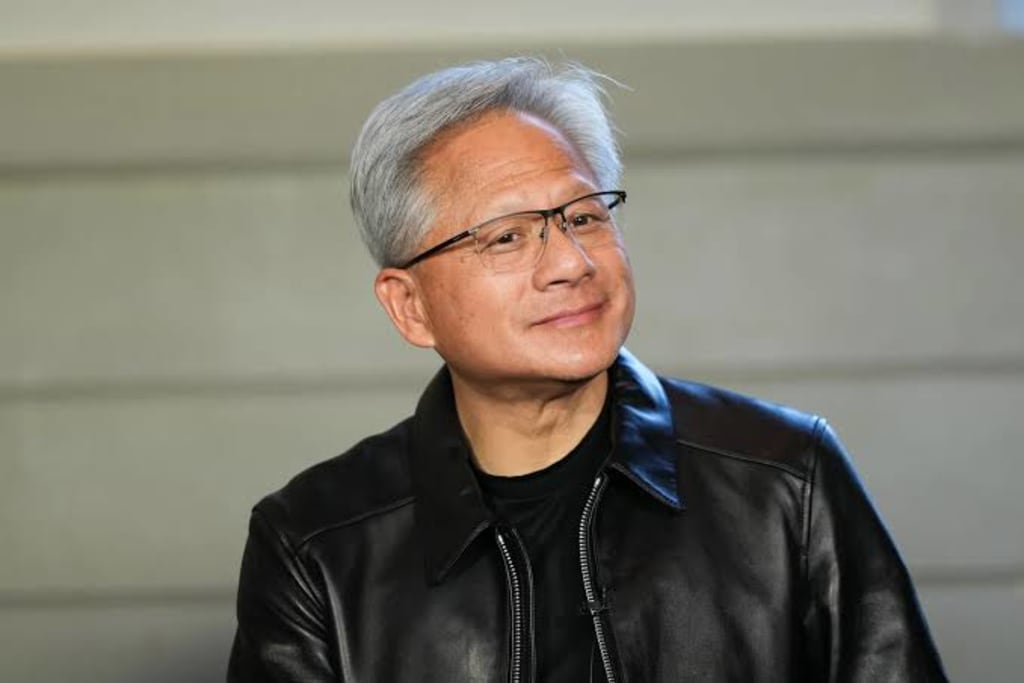
On November 12, 2026, NVIDIA’s board ended Jensen Huang’s 33-year run with an announcement marked “effective immediately.” No transition period. No board seat. A company once valued above $5 trillion cut ties with its founder in four days.
If you look only at the business story, the ending is hard to understand. A few months earlier, Huang was still one of the most visible figures in AI. NVIDIA held more than 95% of the data-center GPU market, and CUDA made it hard for rivals to catch up.
The scandal was the fuse. It detonated because NVIDIA’s governance had stored up problems for years. Huang’s personal history explains how those problems formed and why they looked normal for so long.
Four Days
On November 8, NVIDIA published Huang’s message to employees. He wrote: “I was unfaithful to my wife. My behavior hurt her and our children. There is no excuse for what I did.”
The board announced an independent investigation the same day. Media reports had linked Huang’s extramarital partner to foreign intelligence activity. Independent directors formed a committee and hired outside counsel. The board said it had no reason to believe national security or NVIDIA’s confidential information had been compromised. The board opened an investigation and expressed confidence at the same time. That combination told its own story.
Events moved fast.
On November 11, Huang submitted his resignation. On November 12, the board accepted it. Chief Financial Officer Colette Kress became interim CEO. Senior director Harvey Jones became the first board chair in NVIDIA’s history. The board started a formal CEO search and said it would consider internal and external candidates.
Before the news fully spread, NVIDIA had lost about $430 billion in market value over two trading days. On the announcement day, the stock opened down as much as 14.3%, and the market value fell below $4 trillion for the first time since July 2025. Analyst Dan Ives warned that removing Huang as CEO could cut NVIDIA’s enterprise value and share price by 25% to 30%.
Inside the company, another reaction was building. A sign-on letter to the board gathered more than 110,000 signatures in days. About 6,000 current employees and more than 70,000 shareholders signed. Elon Musk said publicly that he had signed. The letter asked the board to restore Huang as CEO until the investigation was complete and clear evidence showed that removal served the company. It said: “Thirty-three years of leadership does not mean exemption from accountability, but accountability requires evidence, a fair opportunity to respond, and a reasoned decision.”
Market panic and employee loyalty appeared together. Both pointed to the same fact. NVIDIA and Huang had built a bond that went far beyond the usual CEO and company relationship.
Three Outstanding Debts
Calling this a personal scandal misses the part that matters. Three governance debts turned a personal problem into a company problem.
The first debt was the long absence of board checks. In 27 years as a public company, NVIDIA never had a board chair. Huang served as president, CEO, and director at the same time. The title “first board chair” appeared only on the day he left. NVIDIA used to say that no chair would give all directors an equal voice. With a founder who held operating control and huge public standing, that arrangement left checks suspended. The board’s average tenure was 18 years, more than twice the S&P 500 average.
The second debt was a decision center with no backup. NVIDIA kept a flat structure. As many as 60 to 70 executives reported directly to Huang. The company had no clear number two and no executive widely seen as a successor. In growth periods, the structure worked. Decisions moved fast. Products iterated fast. Strategy ran from the top through the whole company. In a crisis, the same structure became a single point of failure. When the single point came under pressure, the company had no automatic replacement. NVIDIA had flagged the risk in filings. Failure to plan for succession and manage a smooth transition could hurt long-term business. The risk was in the documents. It was not in the institutions.
The third debt sat in the ownership structure. Huang held about 3% to 3.6% of NVIDIA. He was the largest individual shareholder, with a stake worth more than $150 billion. He did not have special voting rights that could control board votes. On paper, the board could act without him. In practice, 33 years of prestige and habit hollowed out that power. Huang was the most authoritative voice on technology, the main face of external relations, and the effective end point of internal decisions. In that setting, shareholding ratios do not create checks in a crisis. A Bernstein analyst said: “Jensen Huang is almost equivalent to NVIDIA.” A board can complete a formal split in four days. It cannot avoid the cost in trust and organizational psychology.
How the Single Point Grew
Huang’s governance problem and his personal history are connected.
He was born in Taiwan in 1963. His family moved to Thailand when he was young. At about nine, he and his older brother were sent to the United States before their parents. They ended up at a religious school in Kentucky for troubled youth. He was small and Chinese in a place that made him a target. Every day he crossed a wooden suspension bridge with missing planks. Local children shook the bridge to make him lose balance. He later described the experience without self-pity. There was little outside support. Many things could only be handled by adapting. After he started a company at 30, that habit became a way of making decisions.
In 1993, Huang and two engineers discussed founding NVIDIA at a Denny’s. He was not the most technical of the three. He became CEO. Over the next 33 years, he made several choices that defined the company. Each had the same shape. Before the market could validate the choice, one person carried the judgment.
In 1995, the first product, NV1, failed because its technology conflicted with Microsoft’s triangle standard. The company laid off more than half its staff. Huang put the remaining resources behind an unproven product, RIVA 128. Cash covered about one month of payroll. RIVA 128 sold about one million units in its first four months. In 2006, when GPUs were still mainly gaming hardware, he pushed CUDA. The market ignored it for years. The stock fell. He kept spending. After AlexNet showed GPU-accelerated deep learning in the 2012 ImageNet contest, he moved the company toward AI. AI had little commercial agreement then. In 2016, NVIDIA delivered the DGX-1 AI supercomputer to OpenAI. The company stopped selling only graphics chips. It sold complete AI training systems.
Those decisions could not be proved correct by short-term market signals. One person made them on belief in a technical direction. Time validated them. NVIDIA’s success made the model look right. Founder judgment, organizational execution, and market validation formed a loop. The loop worked so well that board checks looked unnecessary and even hostile to speed.
The same structure that helped NVIDIA attack made it fragile on defense. A flat organization with 60 direct reports let Huang enter technical details and move resources fast. It also kept the company from growing a second person who could run the whole. A board without a chair looked like trust while the founder kept being right. In a crisis, that trust looked like a missing institutional backup.
After the Exit
Interim CEO Colette Kress has more than 30 years of finance experience at Microsoft, Cisco, and other companies. She joined NVIDIA in 2013 and long co-hosted earnings calls with Huang. Analysts expect her to steady investors. A permanent CEO may need a stronger technical background because NVIDIA’s advantage is technical. Possible internal candidates include co-founder Chris Malachowsky and Ian Buck, who leads high-performance computing and helped push GPUs beyond gaming. External names include Apple’s Tim Cook and Arm’s Rene Haas. Every option faces the same question. Can one person carry the technical judgment, strategic vision, and global relationships that Huang carried?
The competitive field is also changing. Around the resignation, a JPMorgan report gave a useful number. In computing infrastructure already committed by frontier labs such as OpenAI and Anthropic, NVIDIA GPUs account for about 39%. From 2023 to 2025, NVIDIA’s share of overall AI chip revenue was as high as 83%. Broadcom was second at 24%. Google TPU was at 16%. AMD was at 15%. CUDA’s lock is also loosening. A year ago, moving a large model to AMD GPUs took six to 12 months. Today it can take as little as three days.
NVIDIA’s lead will not vanish overnight. Its more than 95% share of data-center GPUs, margins, and cash flow remain hard to shake in the short term. The numbers still show a shift. Customers are spreading suppliers. Competing products are getting closer. Software switching costs are falling. A company cannot rely forever on one person making the right call. It needs organization, memory, and a way to generate strategy that does not depend on a single individual.
Huang’s 33 years are a story of technical conviction, long bets, and hard execution. He went from a boy on a shaken bridge in Kentucky to one of the most influential strategists in computing. His judgment and resilience should not be erased by one exit.
Business achievement does not cancel personal conduct. A founder’s irreplaceability does not replace the board’s duty. NVIDIA completed a formal split in four days. It left a longer question. A company long defined by one founder in technology, culture, and external trust must now turn his judgments into institutional judgments. Can it?
The first board chair, the interim CEO, and the succession search are late repairs. The goal is not to clone Jensen Huang. That is impossible and should not be the aim. The goal is to make sure NVIDIA’s next key decision does not wait for an indispensable person. That is the lesson from November 2026 for NVIDIA and for any tech company that puts too much trust in one founder.
About the Creator
Jin
Writer of reamstories
https://reamstories.com/jin
Enjoyed the story? Support the Creator.
Subscribe for free to receive all their stories in your feed. You could also become a paid subscriber, letting them know you appreciate their work.
Comments
There are no comments for this story
Be the first to respond and start the conversation.