
The Explosive Rise of the eHealth Market: What’s Driving This Digital Revolution?
A deep look at how technology, chronic disease trends, and remote care are accelerating global healthcare transformation

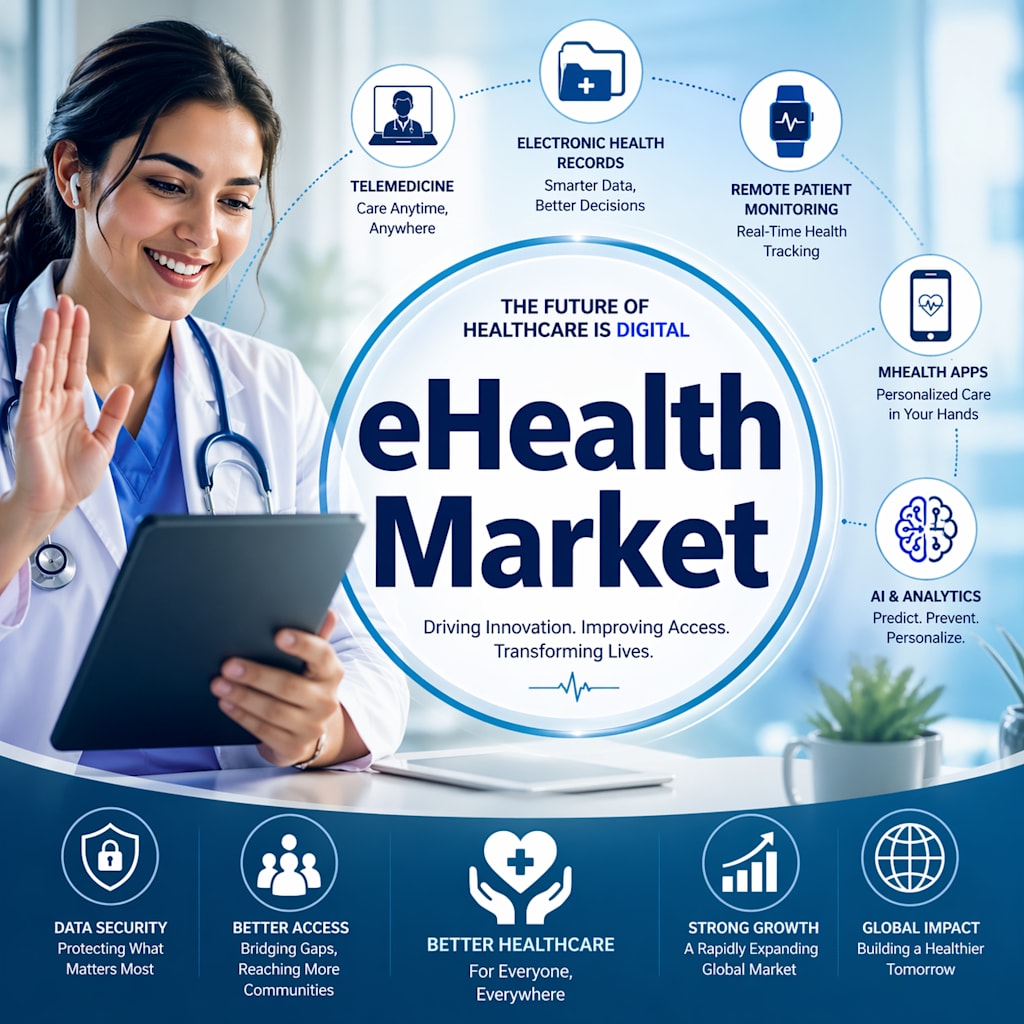
Healthcare extends beyond the confines of hospitals‚ clinics‚ and doctors' offices‚ and in the Internet age‚ health care is rapidly moving to mobile devices‚ wearable sensors‚ and other Internet-based solutions․
One of the driving forces of the change is the field of eHealth․
Telemedicine‚ electronic health records‚ mobile health applications and artificial intelligence diagnostics have transformed the way healthcare is accessed‚ experienced‚ and administered with much of the delivery being handled remotely‚ in less time‚ and more efficiently than previously possible․
The figures reflect this quite clearly․
A Market Growing at Extraordinary Speed
The eHealth market size was valued at USD 163․6 billion in 2025‚ with a projected USD 587․5 billion valuation by 2034․
This represents a compound annual growth rate (CAGR) of 15․3% between 2026 and 2034․
This rapid growth has led to a more digital‚ data-driven‚ and patient-centric approach to healthcare․
By contrast‚ eHealth solutions are scalable‚ dynamic systems that can adapt to the needs of contemporary society․
Why eHealth Is Expanding So Quickly
The demand for convenient and accessible healthcare has been one of the main drivers of this growth․
Patients today expect faster access‚ remote monitoring‚ and personalized care while still remaining at home․ Today‚ telehealth has been adopted quickly and extensively in response to such disruptions as the pandemic․
Coincidingly‚ the rising prevalence of chronic diseases such as diabetes‚ cardiovascular disease‚ and respiratory disease led to a requirement for continuing monitoring․
eHealth platforms help address these issues through real-time monitoring‚ timely diagnosis‚ and preventive treatment․
Technology Is Redefining Patient Care
Modern healthcare is becoming more technologically integrated․
Today‚ artificial intelligence and big data analytics are being used to:
- Predict disease risks
- Improve diagnostic accuracy
- Personalize treatment plans
- Improve clinical decision-making
Wearable devices and applications are also a growing trend‚ providing patients with data regarding physiologic metrics such as heart rate‚ physical activity‚ sleep‚ and blood glucose levels in real-time․
This continuous stream of data allows healthcare providers to provide more precise and timely care․
Telehealth Is Here to Stay
One of the largest trends in eHealth has been the development of telehealth services․
What started as a way to support patients in times of pandemic became a way to provide patients healthcare without the need to travel to a hospital or clinic․
Telehealth is especially useful in:
- Rural and underserved populations
- Older patients with mobility problems
- Individuals managing chronic conditions
- Mental health support services
With improved infrastructure and continuing policy support‚ telehealth is expected to continue to play an important role in future healthcare delivery․
The Rise of Electronic Health Records (EHR)
A main part of the eHealth ecosystem is the common adoption of Electronic Health Records (EHR)․
EHR systems allow healthcare providers to more efficiently store‚ find‚ and share patient information‚ which can reduce medical errors‚ improve provider coordination‚ and improve overall quality of care․
Healthcare professionals now have access to complete‚ real-time information that helps them make better decisions in a more timely manner․
Mobile health apps are changing patient behavior․
Mobile health or mHealth is one of the fastest-growing segments of eHealth․
Patients also started using smartphones to ask questions through apps․
- Monitor chronic conditions
- Track fitness and wellness goals
- Receive medication reminders
- Consult doctors remotely
Such applications imply a shift from a reactive to a preventative healthcare model‚ where users monitor their health and well-being rather than waiting for problems․
Regional Growth: Where eHealth Is Thriving
While there are regional variations in eHealth adoption‚ certain patterns are forming․
North America is the largest regional market‚ attributed to strong healthcare infrastructure‚ high digital adoption‚ and a strong regulatory framework for telehealth and mHealth solutions․
The United States is a major exception‚ as rapid adoption of telehealth‚ strong digital infrastructure‚ and favorable policy have made the country a leader in eHealth innovations․
The Asia-Pacific region is seeing rapid growth driven by the rapid adoption of smartphones‚ increasing internet penetration and investment in the healthcare sector․
Other markets such as Europe‚ Latin America and the Middle East & Africa also embrace digital healthcare to improve access to healthcare in remote and underserved areas․
A Competitive and Innovation-Driven Market
The eHealth market is very dynamic‚ and companies are coming up with new ideas․
Key players are focusing on:
- AI for diagnostics and predictive analytics
- Integration with wearable devices and health platforms
- Secure data sharing using advanced technologies
- Development of user-friendly mobile health applications
Collaborations between technology companies and health care providers are fueling the creation of integrated digital health ecosystems․
Challenges That Still Exist
Despite its rapid growth‚ the eHealth industry encounters difficulties․
Data privacy and cybersecurity are other concerns‚ particularly with sensitive healthcare data․ Data security measures and regulatory compliance for storage are musts for sensitive data․
There are additional issues of interoperability‚ as healthcare systems need to communicate in order to provide adequate care․
Other issues that may limit adoption include lack of digital literacy and access to technology․
Increasing innovation and more encouraging policies are helping to overcome these barriers․
The Future of eHealth
Looking ahead‚ the eHealth market might be more integrated‚ smarter and more personalized․
Future developments may include:
- AI-powered virtual health assistants
- Advanced remote monitoring systems
- Fully integrated digital health ecosystems
- Personalized treatment powered by real-time data
The future of healthcare is expected to become more preventive‚ data-driven‚ and patient-centered․
Final Thoughts
Some experts have suggested that eHealth is not merely an emerging technology‚ but a fundamental model shift in healthcare․
Digital solutions are increasingly helping address the limitations of existing healthcare services through access‚ workflow‚ and personalisation․
Due to increased growth until 2034 and disruption due to innovation‚ it is likely that eHealth will play an important role in the future of global healthcare․
About the Creator
Robert
Senior Market Researcher at IMARC Group, specializing in global market analysis, industry trends, and data-driven insights across diverse sectors.
Enjoyed the story? Support the Creator.
Subscribe for free to receive all their stories in your feed.
Comments
There are no comments for this story
Be the first to respond and start the conversation.