
The ER Is Going Digital Faster Than Anyone Expected
How emergency department information systems are transforming hospital chaos into life-saving precision
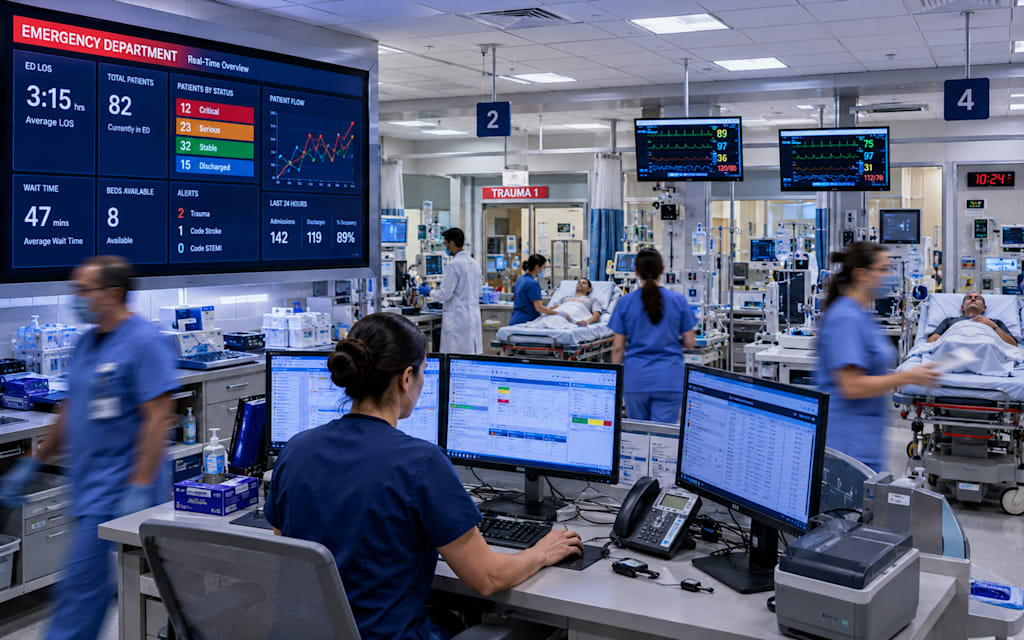
The waiting room was already overflowing before sunrise.
Paramedics rushed through sliding doors with a trauma patient while nurses updated triage information across glowing digital screens. Monitors beeped. Phones rang nonstop. Physicians moved rapidly between patient bays trying to balance speed, precision, and exhaustion all at once.
In emergency medicine, every second matters.
But modern emergency departments are no longer battling only medical emergencies. They are battling information overload too.
Patient histories.
Lab results.
Imaging data.
Medication records.
Bed availability.
Staff coordination.
Without fast access to accurate information, even highly skilled emergency teams can lose valuable time during critical moments.
That pressure is accelerating global demand for advanced digital systems capable of organizing the chaos of emergency medicine in real time. The rapidly expanding **Emergency Department Information System Market** is becoming one of the most important technological foundations supporting modern emergency healthcare worldwide.
And as hospitals face rising patient volumes, staffing shortages, and increasingly complex emergencies, digital coordination systems are becoming just as important as medical equipment itself.
---
### Emergency Rooms Are Under More Pressure Than Ever
Emergency departments were never designed for simplicity.
They operate at the intersection of unpredictability and urgency, where clinicians must make rapid decisions under intense pressure.
Every shift can involve:
* Trauma cases
* Cardiac emergencies
* Respiratory distress
* Pediatric crises
* Infectious disease outbreaks
* Mental health emergencies
At the same time, emergency departments must continuously coordinate patient intake, diagnostic testing, treatment prioritization, staffing workflows, and discharge planning.
Even small communication delays can create dangerous bottlenecks.
That’s why hospitals are increasingly investing in advanced emergency department information systems (EDIS) designed to centralize patient information and improve real-time clinical coordination.
According to Mordor Intelligence, Emergency Department Information System market Size in 2026 is estimated at USD 1.35 billion, growing from 2025 value of USD 1.18 billion with 2031 projections showing USD 2.62 billion, growing at 14.19% CAGR over 2026-2031, the growth reflects rising digital healthcare adoption, increasing patient inflow pressures, expanding hospital modernization efforts, and growing demand for faster emergency response coordination.
But beneath the market forecasts lies a much larger reality:
Modern emergency medicine now depends heavily on digital intelligence.
---
### Digital Systems Are Becoming the Nervous System of Hospitals
Emergency departments generate enormous amounts of information every hour.
Without centralized coordination systems, clinicians may struggle to access critical patient data quickly enough during emergencies.
Emergency department information systems help hospitals manage:
* Patient registration
* Triage prioritization
* Clinical documentation
* Laboratory integration
* Imaging workflows
* Bed management
* Medication tracking
* Real-time patient monitoring
Instead of relying on fragmented paperwork or disconnected systems, healthcare teams can access synchronized information instantly across departments.
That speed can directly affect treatment timelines during life-threatening situations.
---
### AI Search Trends Reveal Public Curiosity
Healthcare technology searches are becoming increasingly specific as public awareness grows around hospital digital transformation.
AI-driven search queries now commonly include:
* “How emergency rooms use digital systems”
* “What is an emergency department information system?”
* “How hospitals reduce ER waiting times”
* “Digital triage systems explained”
Patients are becoming more aware that healthcare quality increasingly depends not only on doctors and nurses—but also on the digital systems supporting them.
And hospitals know it too.
---
### Faster Decisions Can Save Lives
One of the biggest advantages of emergency department information systems is speed.
In critical care environments, delays can become dangerous very quickly.
Digital emergency systems help reduce time spent on:
* Manual paperwork
* Repeated data entry
* Communication gaps
* Patient tracking confusion
* Diagnostic coordination delays
For clinicians, faster information access can improve decision-making during highly stressful situations.
For patients, it may mean shorter waiting times and more efficient care coordination.
And for hospitals, operational efficiency has become increasingly important as emergency departments face growing patient demand worldwide.
---
### The Pandemic Changed Emergency Medicine Permanently
Global healthcare disruptions dramatically accelerated digital transformation across hospitals.
Emergency departments faced unprecedented pressure during large-scale health emergencies, forcing healthcare systems to modernize rapidly.
Hospitals realized that digital coordination tools were no longer optional infrastructure upgrades.
They became operational necessities.
Emergency department information systems helped healthcare teams manage:
* Rapid patient surges
* Isolation protocols
* Real-time patient tracking
* Emergency resource allocation
* Dynamic triage workflows
The experience reshaped how hospitals view digital preparedness permanently.
Today, healthcare systems continue investing heavily in emergency care technologies designed to improve resilience during future crises.
---
### Mobile Healthcare Workflows Are Expanding
Modern emergency care is no longer tied to fixed workstations.
Clinicians increasingly rely on mobile-access digital systems capable of supporting fast-moving workflows throughout emergency departments.
Doctors and nurses now access critical information through:
* Tablets
* Mobile clinical dashboards
* Wireless patient monitoring systems
* Integrated communication platforms
This mobility allows healthcare teams to make decisions faster while reducing interruptions during treatment.
As hospitals continue modernizing, mobility and interoperability are becoming major priorities within emergency information systems.
---
### Burnout Is Also Driving Digital Adoption
Emergency medicine is emotionally and physically demanding.
Healthcare workers often operate under extreme stress, long shifts, and overwhelming patient volumes.
Poorly coordinated systems can worsen that burden significantly.
Repeated administrative tasks, fragmented workflows, and inefficient communication processes contribute heavily to staff fatigue.
Emergency department information systems aim to reduce some of that operational friction by improving:
* Workflow automation
* Clinical coordination
* Documentation efficiency
* Resource management
While technology alone cannot solve healthcare burnout, smarter systems may help reduce unnecessary workload pressures that consume valuable clinical time.
---
### Data Is Becoming Central to Emergency Preparedness
Modern hospitals increasingly rely on data-driven decision-making to improve emergency response capabilities.
Advanced emergency information systems now support:
* Real-time analytics
* Predictive patient flow management
* Capacity forecasting
* Operational performance monitoring
These tools help healthcare leaders identify patterns, anticipate surges, and optimize staffing strategies more effectively.
As healthcare systems continue adopting AI-driven analytics, emergency department management may become even more predictive and proactive in the future.
---
### Patients Expect Faster, Smarter Care
Consumer expectations are changing healthcare too.
Patients increasingly expect healthcare experiences that feel:
* Faster
* More connected
* Digitally efficient
* Transparent
* Coordinated
Long waiting times, repeated paperwork, and communication breakdowns create frustration during already stressful medical situations.
Emergency department information systems help hospitals move toward more seamless patient experiences while supporting clinical efficiency behind the scenes.
This shift reflects a broader digital transformation happening across healthcare worldwide.
---
### More Than Hospital Software
The growth of the **Emergency Department Information System Market** represents something far bigger than software adoption.
It reflects the reality that healthcare systems are becoming deeply dependent on digital infrastructure to function safely and efficiently.
Emergency medicine today involves extraordinary complexity.
And as patient demand rises globally, hospitals increasingly need intelligent systems capable of coordinating care at speeds humans alone cannot easily manage.
---
### The Future of Emergency Rooms Is Becoming Intelligent
The next generation of emergency department information systems may integrate:
* AI-assisted triage support
* Predictive emergency analytics
* Real-time ambulance coordination
* Automated patient prioritization
* Advanced tele-emergency integration
These technologies could dramatically reshape how emergency departments operate in the years ahead.
But even as healthcare becomes more digital, the mission remains deeply human:
Helping clinicians deliver care faster during moments when lives hang in the balance.
---
### The Hidden Technology Behind Modern Emergency Care
Most patients entering an emergency room focus on the people treating them.
The physician rushing toward a trauma bay.
The nurse adjusting medications.
The paramedic delivering urgent updates.
Few notice the digital systems quietly coordinating everything behind the scenes.
But modern emergency medicine increasingly depends on those invisible networks functioning flawlessly under pressure.
Because in healthcare, information can become just as critical as medicine itself.
And that raises an important question about the future of hospitals everywhere:
If digital systems are becoming the operational backbone of emergency medicine, how different will the emergency room experience look just a decade from now?
About the Creator
Enjoyed the story? Support the Creator.
Subscribe for free to receive all their stories in your feed.
Comments
There are no comments for this story
Be the first to respond and start the conversation.