
The Enduring Appeal of Jack Benny: Daughter Joan Reveals Why Her Father’s "Miser" Persona Captivated America
Joan Benny reflects on how her father’s relatable flaws, genuine kindness, and seamless transition from radio to television created a legacy of laughter that spanned decades.

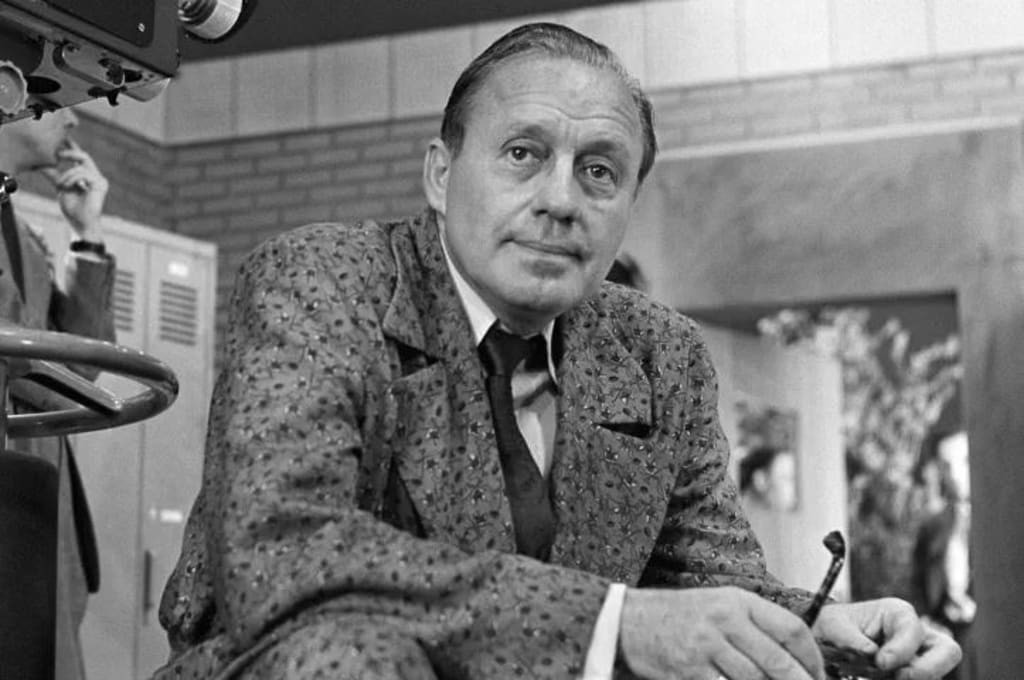
Decades after the final broadcast of The Jack Benny Program, the show’s unique brand of humor remains a touchstone for classic American comedy. At the heart of that success was Jack Benny himself, a performer who mastered the art of playing the "straight man" to his own eccentricities. According to his daughter, Joan Benny, the secret to his enduring popularity wasn’t just his impeccable timing or his legendary cast, but his profound relatability. In an era where celebrities were often placed on untouchable pedestals, Jack Benny invited audiences to laugh with him at his own manufactured insecurities, creating a bond that transcended generations.
Jack Benny, who hosted his eponymous program from 1932 to 1955 on radio and from 1950 to 1965 on television, crafted an iconic on-screen persona that became ingrained in the cultural consciousness: a perpetually 39-year-old miser who played the violin terribly, drove an ancient Maxwell car, and was often the butt of the joke among his friends and colleagues. Yet, as Joan explained in various interviews compiled by Woman’s World, audiences didn’t just laugh at him; they saw themselves in him.
“He said in an interview that he had all the foibles and so many things that normal people have, and they identified with him,” Joan recalled. “The on-screen persona of the miser, the somewhat pompous, somewhat put-upon person all the things that he was on that show he said was a reflection of the population in general.”
This identification was crucial, but it was balanced by the public’s awareness of the man behind the character. Unlike some comedians who relied on cynicism or cruelty, Benny’s humor was gentle. “People identified with that and they also knew, despite his radio and TV character, that he was a nice man,” Joan noted. “He came across as a really nice person.” This duality allowed viewers to enjoy the satire without feeling malice, creating a warm, inclusive comedic environment where the audience felt like part of the family. The "miser" wasn't a villain; he was a neighbor, a friend, or perhaps even a slightly exaggerated version of oneself.
A Master of Mediums: From Radio Waves to Living Rooms
Joan also highlighted her father’s rare ability to adapt his comedy across different platforms, a feat that eluded many of his contemporaries. The transition from radio to television in the 1950s was a perilous one for many stars whose humor relied heavily on voice and imagination. However, Jack Benny’s character translated effortlessly because the core of his comedy was situational and character-driven rather than dependent solely on audio cues.
“He was lucky that the character that he created made the transition very easily from radio to television, unlike other radio shows that couldn’t,” she said. On radio, the silence during his famous "pregnant pauses" allowed listeners to fill in the blanks with their own imaginations. On television, those same pauses were amplified by his expressive facial reactions particularly his signature stare into the camera which became visual punchlines in their own right.
Despite the massive success and visibility of the television version, Joan held a special affection for the radio era, which she considered the purest form of her father’s artistry. “When I think about him, I think about radio,” she admitted. “I love the radio show, and I actually liked it better than the television show. The radio show was so funny.”
For Joan, the radio broadcasts captured a specific magic that television couldn't quite replicate. Revisiting the old broadcasts later in life, she found them just as hilarious as she did in childhood. “I listened to it not long ago when I was asked to do an interview about him. I hadn’t heard them since I was a child, and I was laughing my head off,” she shared. The intimacy of the radio medium, where Benny spoke directly into the listener's home, created a personal connection that remained potent decades later.
A Passion for Performance That Never Waned
Perhaps most impressive was Jack Benny’s longevity and enthusiasm. In an industry where burnout is common and trends shift rapidly, he maintained his energy, relevance, and quality for over three decades across two mediums. Joan attributed this not to obligation, but to a deep-seated love for the craft.
“As far as I know, he stayed with it for so many years between radio and television because that’s what he had a need to do,” she explained. “A lot of people get burned out doing something for so many years, but it seems like he was very happy to do it. And do it well.”
This passion was evident in his meticulous preparation and his willingness to evolve. He didn’t rest on his laurels; he constantly refined his material, collaborated with brilliant writers, and nurtured a repertory company of talent that included Mary Livingstone, Phil Harris, Don Wilson, and Dennis Day. His happiness on set and in the studio was infectious, creating an environment where creativity could flourish. For Jack Benny, entertaining wasn’t just a job; it was a vital part of his identity and his way of connecting with the world.
A Legacy of Kindness and Laughter
Jack Benny passed away in 1974 at the age of 80 due to pancreatic cancer. His daughter, Joan, who kept his legacy alive through her writings, interviews, and advocacy, died in 2021 at the age of 86, also from pancreatic cancer. Together, they left behind a rich cultural heritage that reminds us of the power of gentle humor.
In today’s fast-paced, often divisive media landscape, Jack Benny’s approach offers a timeless lesson: comedy can be sharp without being cruel, and self-deprecation can be a bridge rather than a barrier. By embracing his "foibles" and presenting them with warmth and humility, Jack Benny didn’t just make America laugh; he made them feel understood. As Joan Benny so eloquently put it, he was a "nice man" who understood that at the end of the day, we are all just a little bit pompous, a little bit frugal, and always, forever, 39.
About the Creator
Mark Lim
Hi I am mark an automotive student and a car, tech and food enthusiast ! Im gonna try and post daily & hope you enjoy what I write and do share my page with people you know. I would gladly appreciate it! Cheers
Enjoyed the story? Support the Creator.
Subscribe for free to receive all their stories in your feed.
Comments
There are no comments for this story
Be the first to respond and start the conversation.