
The Eclipse of the Rising Sun: Japan’s Descent to Sixth in the Global Economic Hierarchy
Driven by a chronically weak yen and sluggish domestic growth, Japan is set to be overtaken by India and Britain by 2027, marking a historic and sobering shift in the global balance of economic power.

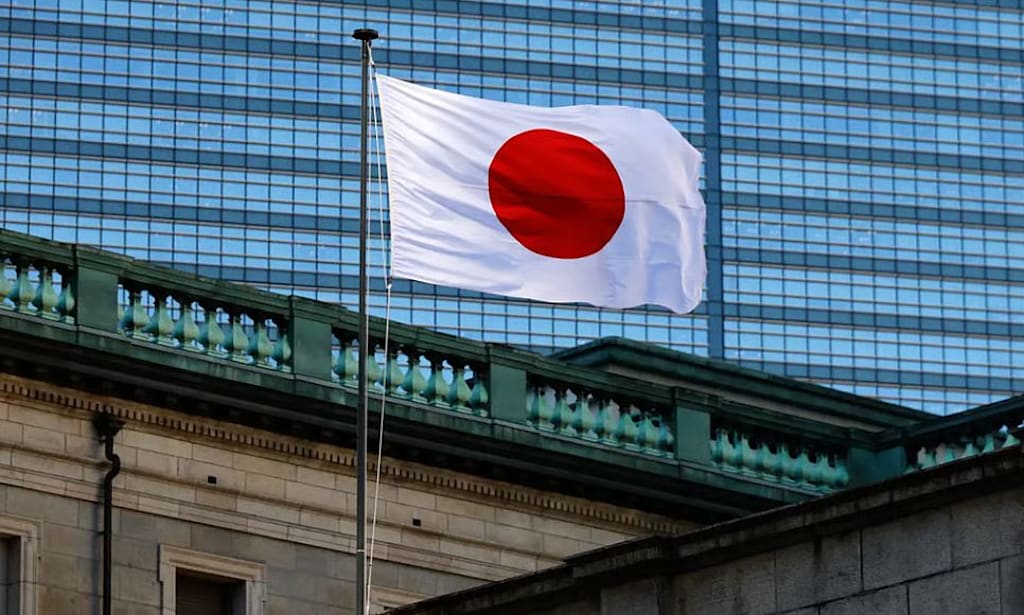
For decades, Japan stood as the undisputed titan of Asian industry and a cornerstone of the global economy. A nation that once seemed poised to overtake the United States as the world’s premier economic superpower, Japan has instead found itself on a long, gradual slide down the global leaderboards. Now, a sobering new forecast from the International Monetary Fund (IMF) projects that Japan’s nominal gross domestic product, when measured in US dollars, will fall from fourth to sixth place globally by 2027. In a stark reshuffling of the international economic order, the world’s third-largest economy is poised to be leapfrogged by both India and the United Kingdom, signaling a profound shift in where global wealth and momentum are concentrated.
The mechanics behind Japan’s impending drop in the rankings are rooted in a dual crisis of currency valuation and domestic stagnation. According to the IMF’s latest World Economic Outlook, Japan’s nominal GDP is projected to reach US$4.3419 trillion in 2026 and US$4.4676 trillion in 2027. While these figures represent a massive accumulation of wealth, they are heavily suppressed when converted into the global reserve currency. The calculations underpinning the IMF’s projections are based on an exchange rate hovering in the range of 158 yen per US dollar. This persistent weakness of the yen severely diminishes Japan’s economic footprint on the global stage, shrinking the dollar-denominated value of its domestic output even if physical production remains relatively stable.
Compounding the currency headwinds is a chronic lack of robust domestic expansion. The IMF projects Japan’s real economic growth to remain anemic 0.7% in both 2026 and 2027. Burdened by a rapidly aging population, a shrinking workforce, and decades of deflationary pressure, Japan’s economy has struggled to generate the organic, high-velocity growth seen in other parts of the world. This sluggish real growth, combined with the punishing exchange rate, creates a perfect storm that leaves the Japanese economy vulnerable to being overtaken by faster-moving nations.
The primary beneficiary of Japan’s stagnation is India, a nation currently experiencing a demographic and economic renaissance. The IMF projects that India’s GDP will surge to US$4.5211 trillion in 2027, allowing the South Asian giant to jump from sixth to fourth place globally. Unlike Japan, India is riding a wave of explosive momentum, with its economy expected to expand by a remarkable 7% on a fiscal-year basis in both 2026 and 2027. The IMF report rightly notes that “India remains among the fastest-growing major economies,” a status fueled by a massive, young workforce, rapid infrastructure development, and digitization. The report specifically highlights that this growth is driven by “resilient domestic demand and robust services activity,” showcasing an economy that is increasingly self-sustaining and less reliant on the volatile export markets that have historically driven Asian growth models.
Simultaneously, the United Kingdom is accelerating its ascent up the economic ladder, capitalizing on Japan’s currency vulnerabilities. In a previous key quarterly report released in April, the IMF had conservatively projected that Britain would not overtake Japan until 2029. However, revised forecasts have dramatically accelerated this timeline, with the UK now expected to surpass Japan in 2027. The IMF is forecasting British GDP to reach US$4.4889 trillion by that year. While Britain’s growth is not as explosive as India’s, it is remarkably stable for a mature, developed economy. The report indicates that Britain’s economy is likely to grow by 1.3% in 2026 and 1.2% in 2027. This steady, reliable expansion, unburdened by the severe currency devaluation plaguing the yen, is enough to push the UK past Japan in the dollar-denominated rankings much earlier than economists initially anticipated.
To fully grasp the gravity of the IMF’s 2027 projections, one must view them through the lens of Japan’s broader economic history. During the economic miracle of the post-war era and the asset bubble of the 1980s, Japan long held the coveted No. 2 spot globally, trailing only the United States. It was an era when Japanese manufacturing prowess seemed invincible, and its corporations were buying up iconic American real estate and brands. However, the bursting of its asset bubble in the early 1990s ushered in the "Lost Decades" of economic stagnation.
The slow erosion of Japan's global standing began in earnest in 2010, when China’s explosive, industrialization-fueled growth allowed it to overtake Japan, pushing the island nation into third place. For over a decade, Japan managed to hold onto that bronze medal position. But in 2023, the combined effects of a strengthening euro and a weakening yen allowed Germany to reclaim its historical position, pushing Japan down to fourth place. Since 2023, Japan has remained ranked fourth, sitting behind the US, China, and Germany. The impending drop to sixth place in 2027 represents the final capitulation of Japan’s status as a top-tier economic heavyweight, relegating it to the middle of the global top ten.
The implications of this shift extend far beyond mere statistical bragging rights. A nation's nominal GDP in US dollars is a critical metric that influences its geopolitical leverage, its weight in international financial institutions like the IMF and World Bank, and its ability to project soft and hard power globally. As India assumes the mantle of the world’s fourth-largest economy, it will undoubtedly demand a louder voice in global governance, climate negotiations, and international trade. Meanwhile, Japan will be forced to confront the uncomfortable reality of its relative decline.
Ultimately, the IMF’s projections serve as a stark reminder that in the modern global economy, historical prestige and past industrial triumphs offer no permanent protection against macroeconomic realities. Japan’s descent to sixth place is not merely a story of two rising nations overtaking a stagnant one; it is a profound narrative about the shifting tectonic plates of the 21st-century global order. As the yen continues to struggle and domestic growth remains elusive, the eclipse of the Rising Sun on the global economic stage appears not just possible, but mathematically inevitable.
About the Creator
Mark Lim
Hi I am mark an automotive student and a car, tech and food enthusiast ! Im gonna try and post daily & hope you enjoy what I write and do share my page with people you know. I would gladly appreciate it! Cheers
Enjoyed the story? Support the Creator.
Subscribe for free to receive all their stories in your feed.
Comments
There are no comments for this story
Be the first to respond and start the conversation.