
The Early Vote Surge: Record Turnout and What It Does and Doesn’t Tell Us
A Fast Start More Votes, But Not Necessarily More Voters Shifting Habits Battlegrounds Beyond the Usual The Election Day Question

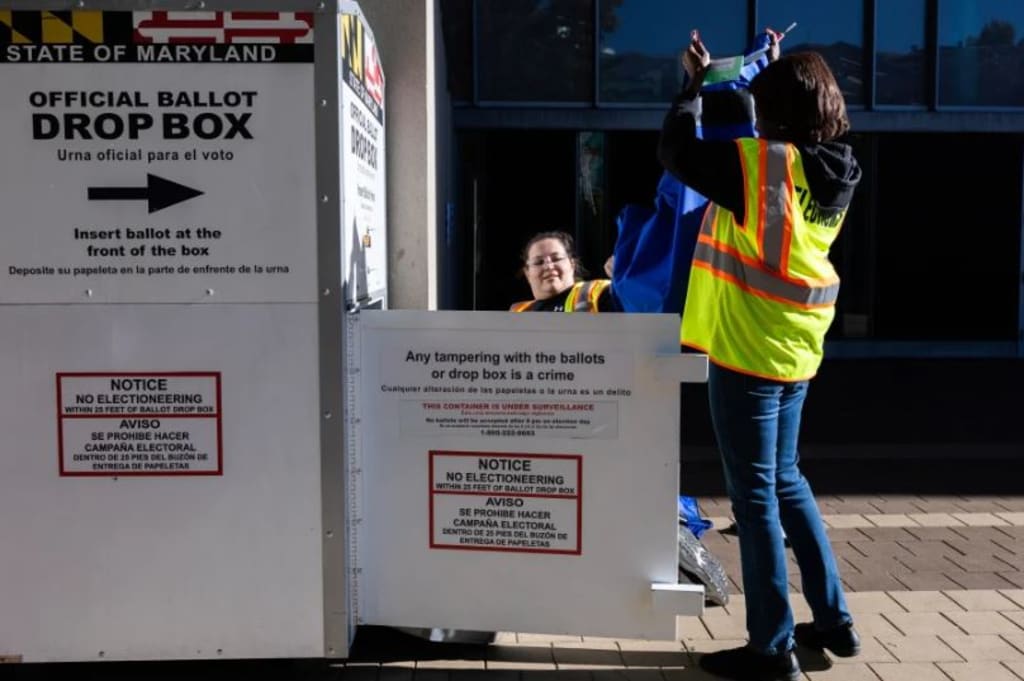
Nearly 21 million Americans have already cast their ballots as of late October, according to the University of Florida’s Election Lab, a milestone that has drawn immediate attention as a possible sign of record‑breaking turnout in the making. The numbers are impressive: participation is running ahead of both the 2022 and 2018 midterm cycles at the same stage, with gains visible across red, blue, and purple states alike. Yet as voting continues, leading experts warn that the surge tells only part of the story and that what happens on Election Day itself will decide who holds power in Washington.
A Historic Pace of Participation
The scale of early voting is without precedent for a midterm this far out from Election Day:
The total has climbed by roughly 2 million ballots in a single 24‑hour period, reflecting sustained momentum across dozens of states.
In Texas, early turnout is roughly 50% higher than at the equivalent point in 2022, translating to more than half a million additional votes already cast.
Demographically, participation is broadening: African American turnout is up, Hispanic early voting has more than doubled compared with four years ago, and independent and unaffiliated voters are turning out at levels not seen in recent cycles.
States with traditionally high turnout, such as Florida, are on track to match or exceed 2018’s record‑setting pace, while states with shorter early‑voting windows are also reporting sharp increases.
These figures have naturally raised hopes and fears of an exceptionally high‑turnout election. But MIT political science professor Charles Stewart, a leading authority on election data, offers a crucial reality check.
Moving the Calendar, Not Just the Electorate
“The first thing people need to understand,” Stewart told NPR’s Morning Edition, “is that a big early vote number doesn’t necessarily mean more people are voting overall. It means more people are voting early.” Many of those casting ballots now would have shown up at their neighbourhood polling place on the first Tuesday in November in previous years. They are shifting when they vote, not necessarily whether they vote, a distinction that changes how the data should be interpreted.
Stewart identifies two drivers behind the shift:
Genuine voter intensity: the stakes of this election, control of Congress, the direction of the economy, health care, and foreign policy, have energised citizens on both sides.
Unprecedented campaign investment: parties and outside groups have poured resources into “retail politics,” knocking on doors, sending volunteers into communities, and systematically encouraging supporters to vote as soon as legally possible.
The result is a larger early number, but not yet proof of a larger total electorate. That will only be known once Election Day ballots are counted.
The Parties’ Evolving Strategies
How people vote is also undergoing a quiet transformation. For years, a clear pattern held: Democrats dominated mail voting; Republicans favoured in‑person voting, especially on Election Day. That gap has narrowed in 2026:
Democrats still lead in voting by mail, but the margin has shrunk noticeably as more Democratic voters opt for early in‑person sites.
Republicans have built a modest advantage in early in‑person voting, a shift from their near‑exclusive focus on Election Day, though analysts say that edge could contract as November 3 approaches.
Concerns about U.S. Postal Service reliability, slower delivery times, and public statements from the Trump administration questioning mail voting have pushed some voters away from absentee options and toward casting their ballots in person sooner.
The convergence means Election Day will matter more than it has in recent cycles, particularly for Republicans who traditionally turn out in larger numbers then. If their supporters stick to that habit, the early lead could vanish quickly.
New Frontiers in Battleground States
Perhaps the most striking development Stewart highlights is the spread of intense activity beyond the usual swing states. Maine and Iowa neither of which has been a top‑tier battleground in recent elections are seeing exceptionally robust early voting. In Maine, competitive House races and a spirited Senate contest have drawn voters; in Iowa, debates over trade, agriculture, and federal policy have galvanised rural and suburban communities alike.
This broadening of the map suggests campaigns are no longer focusing only on a handful of familiar states. “It tells me that both parties feel they have opportunities in places that haven’t seen this level of attention in a while,” Stewart observes. For voters, it means their participation is being sought in ways that may feel more personal and visible than in past years.
Mail Voting Under Pressure
Changes to the system itself add another layer of uncertainty. New rules in some states shorten the window for requesting and returning absentee ballots. USPS has faced criticism over slower service and concerns that ballots postmarked close to Election Day may not arrive in time to be counted. These pressures have altered decision‑making: voters who might have waited until the final week to request a ballot are acting earlier, while others are choosing in‑person voting to avoid postal delays entirely.
The Big Unknown: Election Day
For all the attention early voting receives, it remains a partial snapshot. It does not tell us the direction of votes; it does not reflect those who will only decide in the final days; and it does not account for the millions who still plan to vote on November 3. Stewart puts it plainly: “Polls and early voting data give us a sense of the landscape, but they can’t predict exactly what will happen. The only thing that matters is who shows up and we still have one major day left.”
As the clock ticks down, the question is not whether turnout has been high it already has, but whether the surge carries through to the finish line, and which party’s supporters show up strongest when it counts most.
About the Creator
Mark Lim
Hi I am mark an automotive student and a car, tech and food enthusiast ! Im gonna try and post daily & hope you enjoy what I write and do share my page with people you know. I would gladly appreciate it! Cheers
Enjoyed the story? Support the Creator.
Subscribe for free to receive all their stories in your feed.
Comments
There are no comments for this story
Be the first to respond and start the conversation.