
The Digital Graveyard: What Happens to the Thousands of Personal Blogs That Disappear Every Day
The internet is not forever and millions of personal stories prove it

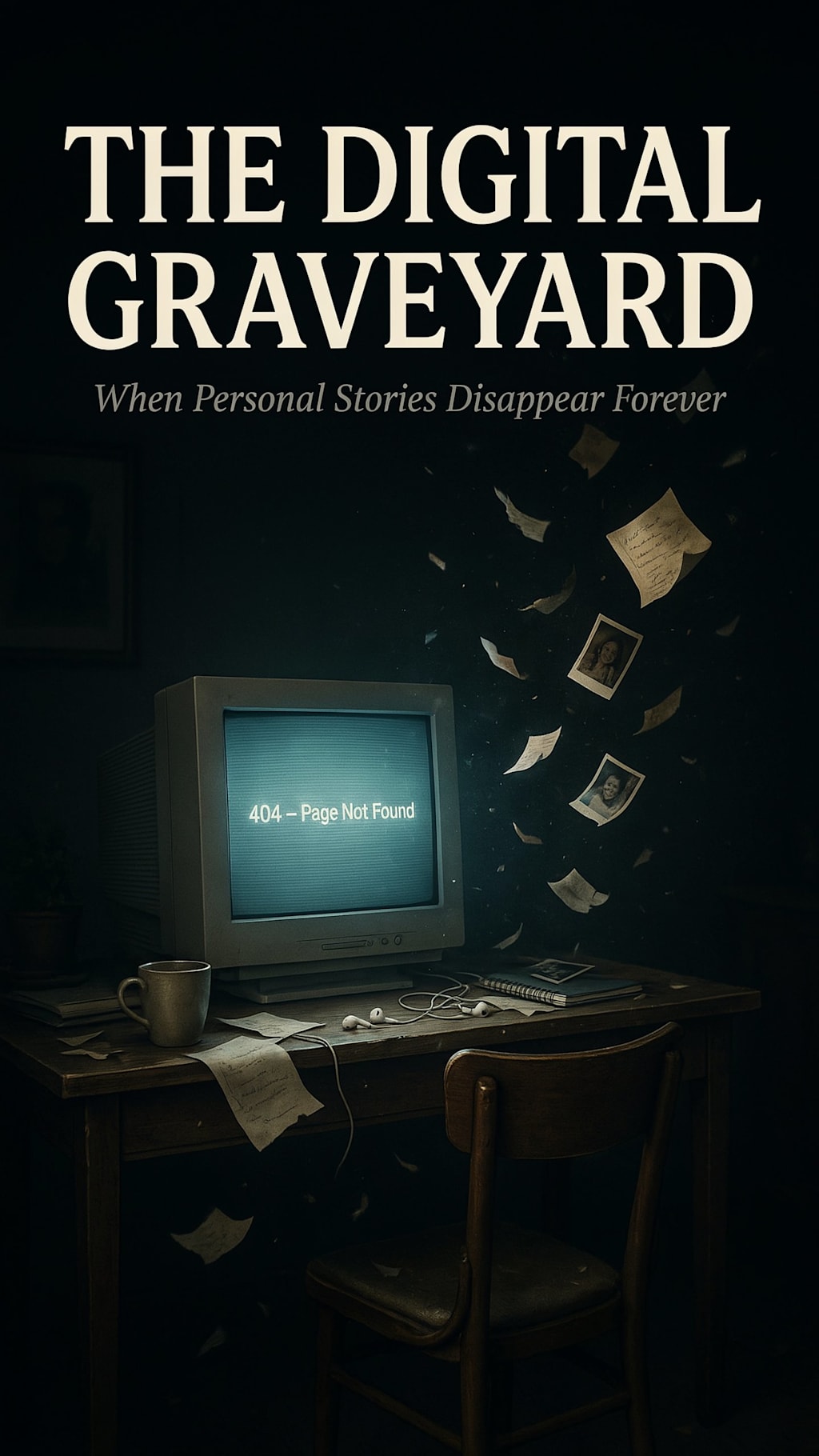
There is a blog somewhere on the internet right now that nobody will ever read again.
It belonged to a young woman in Lahore who wrote about her anxiety in 2012 when mental health was barely a conversation in Pakistan. She built a small, loyal audience. People commented saying "I thought I was the only one." Then life moved fast. She got married, changed cities, changed phones. The domain expired quietly. One morning the blog simply was not there.
No announcement. No goodbye. Just gone.
This is happening constantly to millions of blogs, across every country, every language, every topic imaginable. And almost nobody is paying attention.
Before Instagram decided what you could discover, there was the blog.
Between 1999 and 2012, ordinary people could publish their thoughts globally for free. No editor, no approval, no follower count required. Platforms like Blogger, WordPress, and LiveJournal gave a microphone to anyone willing to use one.
At its peak, an estimated 200 million blogs existed worldwide.
A retired teacher in Karachi translating Urdu poetry line by line for strangers. A father in Ohio documenting seven years of rebuilding a vintage truck every Saturday. A teenager in rural Canada quietly figuring herself out through words alone. These were not influencers chasing brand deals. They were just people writing because writing helped them survive the week.
Most of that writing is now gone forever.
Blogs rarely die dramatically. They fade.
A blogger publishes three times a week, then once a month, then posts "Back Soon Crazy Busy!" in October and disappears permanently. The hosting bill auto-charges until the credit card expires. The warning email goes to an inbox nobody checks. After thirty days the server deletes everything. A squatter bot buys the expired domain within hours and replaces eleven years of someone's inner life with an advertisement for cheap sunglasses.
Platform failures are faster and crueler. In 2019, MySpace admitted a server migration had permanently destroyed 50 million songs and twelve years of uploaded content. Their official explanation was a single corporate sentence. One sentence for twelve years of human creative work.
In Pakistan and across South Asia, bloggers faced extra risks that Western writers rarely encountered. PayPal was unavailable in Pakistan for years, meaning a missed bank transfer could erase an entire archive. A blogger in London could set automatic renewal and forget about it for five years. A blogger in Peshawar could lose everything because an international payment failed twice.
Infrastructure decided whose words survived. Not talent. Not effort. Infrastructure.
Some deletions are intentional. A woman who blogged about her abusive marriage deleted everything the day her divorce finalized. A young man removed his teenage political writing at twenty-six because his thinking had genuinely changed. Both had every right to do exactly that.
But intentional deletion still erases things that mattered to other people. The Lahore blogger writing about anxiety was not just writing for herself. She was writing for every reader who needed to know they were not alone. When she deleted the blog, she deleted their lifeline too.
There is no clean answer to that tension. It is simply a real and quiet loss.
The Internet Archive has captured over 800 billion web pages since 1996. It is extraordinary work. It is also deeply incomplete. Personal blogs with small audiences were often never crawled at all. Comment sections where real communities formed were rarely preserved. Some bloggers unknowingly blocked archiving entirely through technical settings they did not fully understand.
The result is a patchwork. Valuable beyond measure and still full of irreplaceable holes.
Future historians will know what we purchased, where we traveled, what we searched at 2 a.m. What they may not find is how ordinary people actually felt living through the 2008 financial crisis, the pandemic, the private daily disasters that never made headlines.
Personal blogs held that record. Unfiltered, unperformed, honest.
Most of it is gone.
If you have a blog, export your content today. Most platforms allow it in settings. Store it somewhere you personally control.
If you love a blog someone writes, tell them specifically why. People stop writing because they cannot feel the impact. Make the impact visible.
And if you are thinking about starting start. Write anyway. The alternative is leaving no record of what it was like to be you, right here, right now.
The internet was supposed to never forget.
It forgets every single day.
If your personal blog, journal, or social media account disappeared tomorrow, what part of your story would the world lose forever?
About the Creator
Syed Umar
"Author | Creative Writer
I craft heartfelt stories and thought-provoking articles from emotional romance and real-life reflections to fiction that lingers in the soul. Writing isn’t just my passion it’s how I connect, heal, and inspire.
Enjoyed the story? Support the Creator.
Subscribe for free to receive all their stories in your feed.
Comments
There are no comments for this story
Be the first to respond and start the conversation.