
The Delhi Bypass: Navigating the Complexities of the US-India Trade Impasse
As Secretary of State Marco Rubio focuses his itinerary on Mumbai and Jamnagar, the elusive bilateral trade agreement remains stalled by tariff uncertainties, agricultural sensitivities, and fierce regional competition.

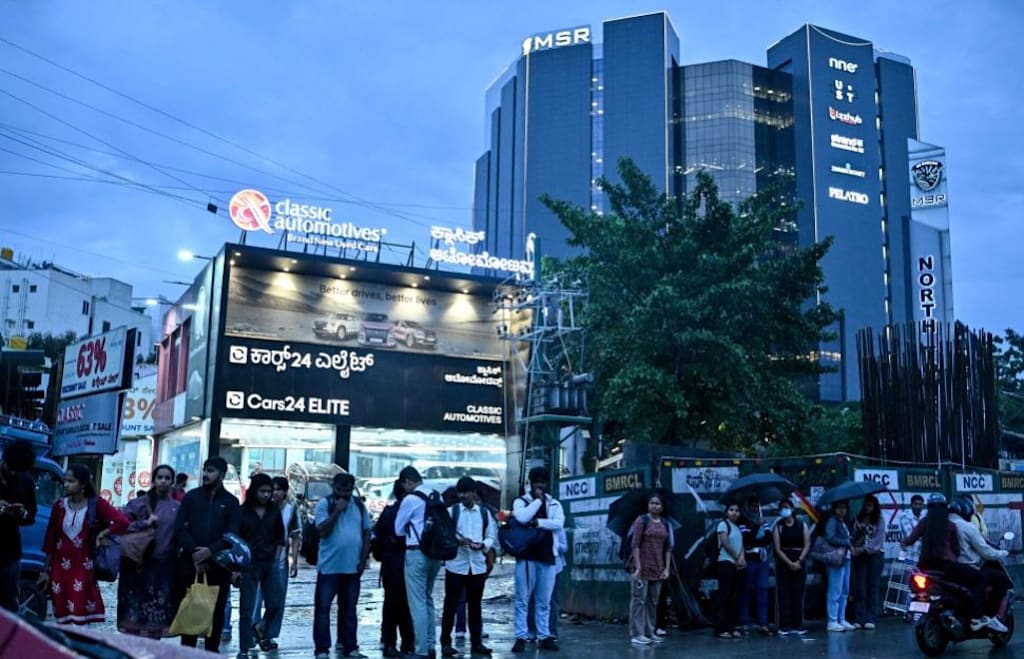
US Secretary of State Marco Rubio is set to embark on a highly anticipated, yet strategically unconventional, visit to India, marking his second trip to the South Asian nation this year. In a deliberate departure from traditional diplomatic protocol, Rubio will bypass the political epicenter of New Delhi. Instead, his itinerary will zero in on the financial powerhouse of Mumbai and the sprawling energy infrastructure of Jamnagar, home to billionaire Mukesh Ambani’s refining complex the largest in the world. This geographic pivot is highly symbolic: it underscores Washington’s intent to anchor the US-India strategic partnership in the tangible realms of investment, energy, and commerce, even as high-level political negotiations over a landmark trade deal remain firmly deadlocked.
The elephant in the room during this six-day overseas trip, which begins in Uzbekistan before moving to India, is the conspicuous absence of a finalized bilateral trade agreement. For months, both governments have projected optimism, with US Ambassador to India Sergio Gor noting in June that negotiators were working on the “last one per cent” of the pact. However, the diplomatic rhetoric has recently shifted to a markedly cautious tone. India’s Finance Minister Nirmala Sitharaman recently declared that talks had hit a “plateau,” with little room for further concessions, while US Trade Representative Jamieson Greer conceded that an announcement is not “imminent.”
The roots of this delay are multifaceted, stemming from a collision of domestic legal hurdles, entrenched economic protections, and shifting geopolitical calculations. The foundational framework for an interim deal was agreed upon in February, under which Washington pledged to lower reciprocal tariffs from 25 percent to 18 percent, in exchange for India reducing duties on a range of US industrial and agricultural goods. However, the legal scaffolding of this agreement has since unraveled. Court challenges in the United States have successfully undermined the reciprocal tariff regime that formed the basis of the US offer. As trade expert Ajay Srivastava noted, once that tariff regime was struck down, the fundamental value and leverage of the US concession became legally ambiguous, leaving Indian negotiators hesitant to commit to concessions based on a potentially voided premise.
Beyond legal technicalities, substantive economic sticking points continue to divide the two nations. Agriculture remains a political third rail in India. New Delhi is deeply reluctant to expose its vast, politically sensitive farming sector to greater foreign competition, viewing food security and rural livelihoods as non-negotiable priorities. Conversely, Washington is aggressively pushing for India to absorb more US energy supplies, a demand that clashes with India’s established, cost-effective procurement strategies.
Compounding this friction is India’s acute awareness of its position within the broader Asian supply chain. New Delhi has firmly insisted that any final tariff rate it accepts must grant it a competitive edge over regional manufacturing rivals, most notably Vietnam, which has been a major beneficiary of supply chain diversification. Indian Trade Minister Piyush Goyal recently emphasized that while the first tranche of the deal is in its final stages of legal drafting, it will not be operationalized until India secures this crucial "competitive advantage over our peer countries."
Adding another layer of complexity is the shadow of US secondary sanctions. India has been rightfully wary of new trade measures emerging from Washington, including investigations into alleged unfair trade practices and a proposed law that threatened to impose up to 100 percent tariffs on nations purchasing Russian oil. Given India’s heavy reliance on discounted Russian energy to cushion its economy against global price shocks, this threat was a major point of contention. However, in a move to ease tensions, President Donald Trump signed an executive order on Friday waiving these threatened sanctions, a tactical concession aimed at clearing the diplomatic air ahead of Rubio’s visit.
Despite the high-level friction, the underlying economic relationship between the two democracies remains robust, highlighting the mutual benefits of their partnership. Goods exports from India to the United States surged by 21 percent in August, reaching $8.3 billion compared to the same month a year earlier. This export boom has been a critical bright spot for the Indian economy, which has been otherwise roiled by high energy prices driven by the ongoing war in the Middle East.
However, this trade momentum is fragile. Economists warn that if the negotiations collapse and higher US tariffs were to return, it would cast a long, dark shadow over India’s growth outlook. A sudden tariff shock would not only hurt market sentiment and disrupt export-driven industries but also heap severe pressure on an already weak Indian rupee. For New Delhi, securing a favorable trade framework is not merely about expanding market access; it is a vital macroeconomic imperative to maintain stability in the face of global energy volatility.
Secretary Rubio’s focus on Mumbai and Jamnagar is a pragmatic acknowledgment of this reality. By engaging directly with India’s financial and energy sectors, the US is signaling that its commitment to the bilateral relationship extends beyond the confines of a single, stalled trade document. The visit is designed to reinforce the strategic alignment between Washington and New Delhi, emphasizing shared interests in securing supply chains, expanding energy cooperation, and counterbalancing regional geopolitical shifts, including Washington’s simultaneously warming ties with India’s arch-rival, Pakistan.
Ultimately, the Rubio visit serves as a stress test for the modern US-India partnership. It highlights the inherent tension between the desire for deep strategic alignment and the realities of economic nationalism. While the trade deal remains trapped in a quagmire of legal uncertainties, agricultural protections, and fierce regional competition, both nations recognize the high cost of a complete breakdown. As Rubio walks the floors of Mumbai’s financial district and Jamnagar’s refining behemoths, the message will be clear: the US-India relationship is too vital to be held hostage by a single agreement, even as both sides continue to cautiously navigate the difficult path toward a mutually beneficial trade resolution.
About the Creator
Mark Lim
Hi I am mark an automotive student and a car, tech and food enthusiast ! Im gonna try and post daily & hope you enjoy what I write and do share my page with people you know. I would gladly appreciate it! Cheers
Enjoyed the story? Support the Creator.
Subscribe for free to receive all their stories in your feed.
Comments
There are no comments for this story
Be the first to respond and start the conversation.