
The Death of the Consumer Boycott: How Media Consolidation Made Disney and Everyone Else Inescapable
As mega-mergers swallow independent streamers and consolidate content libraries, the average viewer is left with no viable way to vote with their wallet, turning corporate accountability into a logistical impossibility.

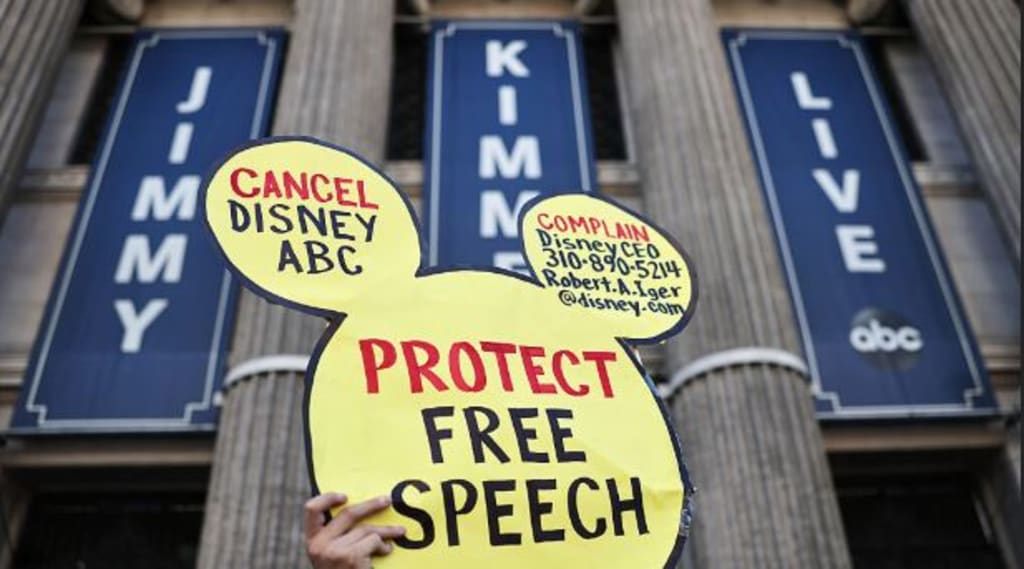
There was a time when protesting a television network’s editorial decisions was a straightforward affair: you simply changed the channel. Today, however, the modern media landscape has rendered the traditional consumer boycott virtually obsolete. This reality became painfully clear last fall when ABC pulled Jimmy Kimmel Live! from the air following the host’s comments regarding responses to Charlie Kirk’s murder. The decision sent free speech proponents into a frenzy, prompting calls for a widespread boycott of the Walt Disney Company, ABC’s parent corporation.
For advocates of free expression, including journalists with a vested interest in protecting that right, halting financial support for a company acting wrongfully is a matter of principle. Yet, as many quickly discovered, truly boycotting Disney is a logistical nightmare. Canceling a Disney+ subscription is a simple click, but it throws a massive wrench into the daily routines of millions. Disney is no longer just a purveyor of princesses, children’s animation, and Marvel superheroes. Through years of aggressive mergers and acquisitions, it has become an inescapable monolith.
A complete Disney boycott means severing ties with Hulu, the exclusive streaming home for beloved comfort shows like American Dad, Futurama, Living Single, Fresh Off the Boat, and It’s Always Sunny in Philadelphia. It means avoiding broadcast channels like ABC and FX. Until recently, it even meant boycotting A&E, History, and Lifetime, all of which were partially owned by Disney. Furthermore, it requires abstaining from live sports, as Disney controls the entire ESPN ecosystem, and avoiding major cinematic franchises like Avatar, Alien, Predator, and Die Hard. Even a desire to spend time outdoors is thwarted, as Disney dominates the global theme park industry. The sheer ubiquity of the corporation means that a targeted protest against one network’s decision morphs into a total lifestyle embargo, a demand that is practically impossible for the average consumer to sustain.
While reports suggest that the financial pressure of the boycott did force the company to eventually reinstate Kimmel, the underlying structural problem remains unaddressed. Media conglomeration is intensifying in the streaming age, consolidating power under fewer corporate umbrellas. As history has shown, when there are fewer owners, it becomes exponentially harder for consumers to end their business with a provider they no longer support, and increasingly difficult for smaller voices to challenge corporate overreach.
The sports-centric streaming service Fubo provides a stark, cautionary tale of how a media giant can summarily silence dissent. In February 2024, Fubo sued Disney, Fox Corporation, and Warner Bros. Discovery (WBD) over their plans to launch a joint sports streaming application. Fubo accused the conglomerates of antitrust behavior, alleging that Disney used its monopoly power in the sports programming market to force Fubo to spend millions annually on unwanted, non-sports content just to access the athletic programming it actually needed. Fubo’s CEO, David Gandler, argued at the time that this collusion created higher pricing for subscribers and cheated consumers out of deserved choice.
Rather than fight the lawsuit in court, Disney effectively made the antitrust suit vanish in January 2025 by acquiring Fubo outright. When questioned about the surprising settlement, Fubo issued a statement arguing that the merger would bring customers "more choice" by enabling the creation of new genre-based content packages. The irony was palpable: a smaller company that had bravely reared up to fight consolidation in sports streaming was absorbed by the very entity it accused of stifling competition.
This consolidation has had direct, negative consequences for the consumer wallet. In July, following a contract dispute with NBCUniversal, Fubo increased its monthly subscription prices by $15. While the service restored some channels it had lost, including NBC affiliates and regional sports networks, it ended up charging more for a package that included fewer NBCUniversal channels than before. The higher prices were also used to offset the cost of restoring non-sports channels like Brazo, Cozi, and True CRMZ. Fubo justified the hike by citing the "rising cost of bringing you the programming you enjoy," a direct result of the very consolidation that eliminated its competitive independence.
Experts have consistently predicted that this merger-heavy trajectory is the future of streaming. After launching at unsustainably low prices to capture market share, streaming companies now face intense pressure to reach profitability. Mergers are the easiest path to manage content costs and build massive libraries that attract advertisers. However, this suffocating consolidation threatens to erase consumer choice entirely.
Looming on the horizon is a controversial planned union between WBD and Skydance Paramount, which would place HBO Max, Discovery+, CNN, Paramount+, and the free streaming service Pluto TV under a single owner. A true boycott of this merged entity would mean avoiding the next Batman film, the latest seasons of The Challenge, CNN’s political analysis, and CBS local news. Similarly, Fox’s plans to acquire Roku threaten to merge two major free ad-supported streaming television (FAST) services, Tubi and The Roku Channel. Such a move could drastically reduce FAST options and allow potentially unfavorable strategies regarding ad loads or conservative programming to bleed into platforms that were previously more neutral.
There are alternative paths for streaming companies facing economic challenges that do not involve swallowing their competitors. Licensing content to rival platforms more frequently could generate additional revenue while alleviating the frustrating content fragmentation that forces consumers to juggle multiple subscriptions. Furthermore, companies could offer more innovative, cross-category bundles. As a recent Deloitte report noted, younger subscribers are looking toward broader ecosystems that bundle streaming with home internet, mobile service, gaming, or food delivery, rather than the stale, traditional media bundles currently on offer.
Additionally, streaming services must drastically improve content discovery. A 2025 Gracenote survey of 3, is willing to cancel a service based on the difficulty of finding something to watch. Leveraging generative AI chatbots and smarter recommendation algorithms could help users navigate massive libraries, driving retention without the need for anti-competitive mergers.
Ultimately, as streaming mergers steam ahead, customers are being placed at severe risk. They face higher prices, less diversity in programming, and a homogenized media landscape controlled by a handful of corporate behemoths. Today, fully boycotting Disney means boycotting numerous streaming services, broadcast networks, video games, and theme parks. Tomorrow, as more services unite, it will become entirely impossible to protest or avoid companies that make disagreeable decisions. The consumer boycott, once a powerful tool for democratic accountability in the free market, is being quietly legislated out of existence by the sheer, inescapable weight of corporate consolidation.
About the Creator
Mark Lim
Hi I am mark an automotive student and a car, tech and food enthusiast ! Im gonna try and post daily & hope you enjoy what I write and do share my page with people you know. I would gladly appreciate it! Cheers
Enjoyed the story? Support the Creator.
Subscribe for free to receive all their stories in your feed.
Comments
There are no comments for this story
Be the first to respond and start the conversation.