
The Credentialing Mistake That Can Delay a Healthcare Career Before It Even Starts
Why overlooked enrollment errors can delay insurance approvals, reimbursements, and practice growth for new healthcare providers.
# The Credentialing Mistake That Can Delay a Healthcare Career Before It Even Starts
Imagine spending years earning a degree, completing clinical training, passing board exams, obtaining a license, and finally opening the doors to your practice—only to discover you can't get paid by insurance companies.
It happens more often than many healthcare providers realize.
For physicians, nurse practitioners, therapists, psychologists, and other healthcare professionals, credentialing is one of the most important yet misunderstood steps in launching a successful practice. While most providers focus on patient care, staffing, office space, and technology, many underestimate the complexity of insurance enrollment.
The result? Delayed approvals, reimbursement problems, and months of unnecessary frustration.
## The Problem Nobody Talks About
When providers graduate or transition into private practice, they often assume they can start seeing patients immediately. Technically, they can—but getting reimbursed by insurance carriers is another story.
Before most insurance companies will pay for services, providers must complete a credentialing process that verifies their qualifications, education, licenses, certifications, work history, and professional standing.
This process can take several months.
Unfortunately, mistakes made during enrollment can extend those timelines even further.
## A Small Error With Big Consequences
One behavioral health provider spent nearly three months waiting for approval from a major insurance carrier.
The reason?
A simple address discrepancy between their application and another enrollment record.
The provider continued seeing patients while assuming approval was around the corner. By the time the issue was identified, thousands of dollars in potential revenue had been delayed.
The provider wasn't incompetent.
The paperwork wasn't intentionally wrong.
The mistake was simply overlooked.
And that's exactly why credentialing can be so challenging.
## Why Credentialing Is More Complicated Than It Seems
Credentialing isn't just filling out forms.
Insurance companies verify:
* State licenses
* Professional certifications
* Education history
* Work experience
* Malpractice coverage
* National Provider Identifier (NPI) information
* Sanctions and exclusions
Each payer may have different requirements, timelines, and documentation standards.
What works for one insurance company may not satisfy another.
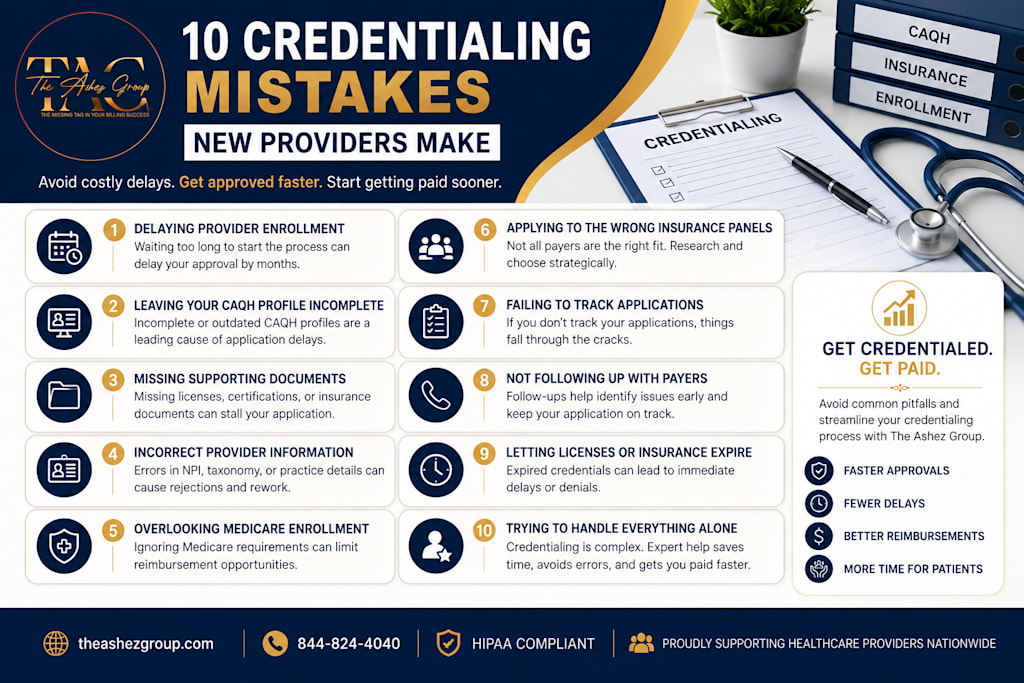
## The Most Common Mistakes New Providers Make
Many delays stem from a handful of recurring issues.
Some providers submit incomplete applications.
Others forget to update their CAQH profiles.
Some fail to monitor expiration dates for licenses or malpractice insurance.
Many simply assume that once paperwork is submitted, the process will move forward automatically.
In reality, credentialing often requires ongoing follow-up and communication.
Without it, applications can sit untouched for weeks.
## The Hidden Financial Cost
Most people think credentialing delays are merely administrative inconveniences.
They're not.
Every week of delayed enrollment can impact:
* Cash flow
* Patient access
* Practice growth
* Staff productivity
* Long-term revenue
For new practices, these delays can be particularly damaging because startup expenses continue whether insurance approvals arrive or not.
Rent is still due.
Employees still need to be paid.
Technology subscriptions still renew.
But reimbursement may not be coming in yet.
## Why Prevention Matters More Than Correction
Many providers focus on fixing problems after they occur.
The better strategy is preventing them altogether.
Successful organizations typically:
* Start enrollment early
* Maintain updated records
* Monitor application status
* Respond quickly to payer requests
* Track deadlines carefully
These simple habits often reduce approval times and prevent unnecessary delays.
## Looking Ahead
Healthcare is becoming increasingly complex. Insurance requirements continue evolving, and providers face growing administrative responsibilities alongside patient care.
Credentialing may never be the most exciting part of healthcare, but it remains one of the most important.
A provider's clinical expertise can change lives.
But without proper enrollment and approval, even the best care can struggle to reach patients effectively.
Sometimes the biggest obstacle isn't delivering quality care.
It's navigating the paperwork required to get paid for it.
And that journey often begins with avoiding the mistakes that so many providers don't realize they're making.
As someone working closely with healthcare providers, I've seen firsthand how enrollment delays, insurance paneling challenges, and documentation issues can impact practice growth. Through my work with The Ashez Group, a medical billing and revenue cycle management company, I've observed that many credentialing setbacks are preventable when providers have the right systems and support in place.
About the Creator
Enjoyed the story? Support the Creator.
Subscribe for free to receive all their stories in your feed.
Comments
There are no comments for this story
Be the first to respond and start the conversation.