
The Check Voters Want: 2026 Midterms and the Shift in American Confidence
A Pre‑Election Tilt Trump’s Standing Erodes The Issues: Trust Shifts to Democrats Midterms as a Referendum Regret and Re‑evaluation What Voters Are Saying

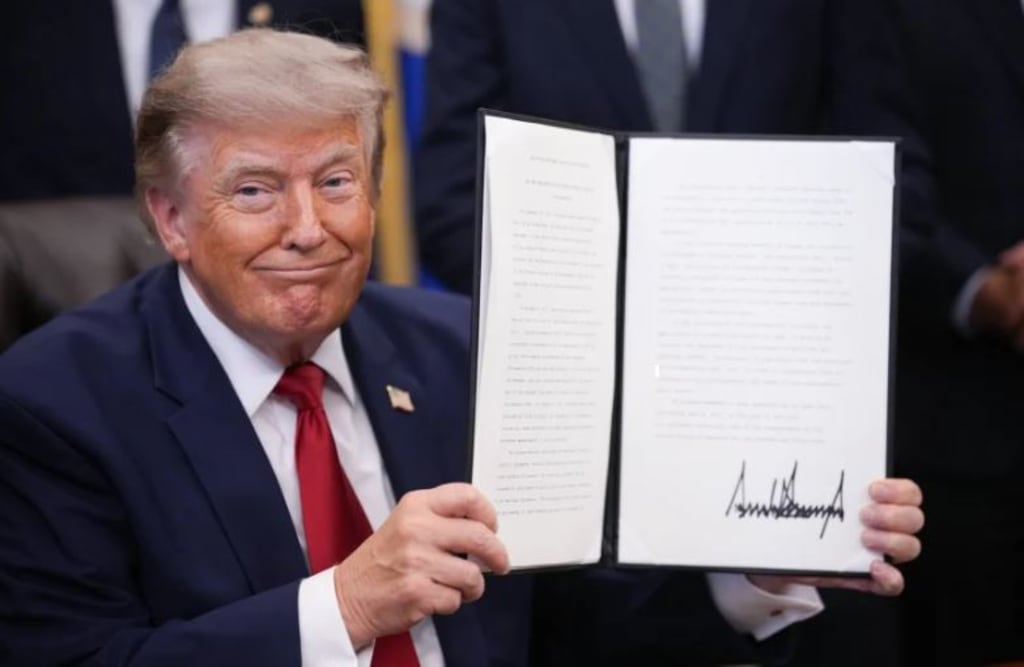
With less than two weeks remaining before voters head to the polls, the Strength In Numbers/Verasight poll, conducted October 13–19 and shared exclusively with NPR, reveals a political landscape transformed. The survey of 2,028 adults with a margin of sampling error of ±2.2 percentage points captures a decisive shift in public sentiment that has reshaped the outlook for the 2026 midterm elections and redefined the relationship between the electorate and its leadership.
A Clear Pre‑Election Advantage
The preference for change is unmistakable. Among registered voters nationwide, Democrats hold a double‑digit lead on the generic congressional ballot: 52% favour a Democratic candidate compared to just 41% who lean Republican. Among likely voters, those most critical to determining outcomes, the gap widens further, with Democrats ahead 54% to 42%. This margin has not emerged in isolation; it has grown steadily over months of tracking and now extends deep into territory traditionally considered reliably conservative. As a result, both parties are redirecting resources toward districts and Senate seats that would not have been competitive in recent cycles, stretching campaign budgets and forcing incumbents to defend ground once thought secure.
Presidential Approval at Historic Lows
President Trump’s standing has declined to levels rarely seen during a second term. Just 34% of all adults approve of his performance in office, while 62% disapprove, and remarkably, 50% of all respondents say they strongly disapprove. G. Elliott Morris, whose team designed and analysed the survey, notes that the president now ranks “underwater on every issue we ask about,” having hit new lows on seven of the ten policy areas tracked since May 2025. No major concern from jobs to trade, immigration to border security finds majority approval, a breadth of decline that distinguishes this moment from earlier slumps. This is not disapproval driven by a single event or controversy; it is broad‑based, sustained, and deeply felt.
From Trusted to Trailing: The Issue Landscape
The shift on specific issues tells an even more dramatic story. Inflation and rising prices dominate all concerns, with 63% of voters listing them among their top three problems and 39% placing them first far outpacing jobs and the economy, health care, elections and democracy, and immigration. Where Republicans once held a 15‑point advantage on immigration and deportations in May 2025, that edge has vanished entirely; Democrats now lead on the issue. More broadly, when asked which party they trust most to handle their personal top concern, Democrats lead 47% to 35%, a nearly ten‑point jump in just 17 months and the strongest lead ever measured in this series. Republicans retain only narrow advantages on crime and public safety, and border security, and even those margins have narrowed significantly. Perhaps most telling: voters are now more likely to believe Democrats care about people like them, a measure that often predicts loyalty through political ups and downs.
Midterms as a Referendum, Not a Choice
Elections are rarely about a single factor, but this one has a defining theme. When asked what they want from the next Congress:
58% say their priority is to elect representatives who will act as a check and balance on the president or roll back his policies.
Only 25% view their vote as a mandate to help advance the administration’s agenda.
Two in five frame their decision primarily as opposition to Trump and his leadership.
Just one in five describe it as an expression of support.
The remaining 20% focus on local candidates and district‑level concerns.
Across nearly every major policy area tariffs and trade, health care, foreign relations, voting access, government spending, and even emerging fields like artificial intelligence clear majorities want Congress to push back, amend, or oversee the administration’s approach. This is not scattered or isolated dissent; it is a consistent, cross‑cutting desire for oversight.
Regret Among 2024 Voters
The numbers are not just statistical; they reflect a tangible shift among those who delivered unified control of government to the Republican Party in 2024. Nearly one in ten voters who cast a ballot in that election now say they regret their choice. That figure rises sharply: almost 15% of people who voted for Trump now express second thoughts, alongside an identical share who backed third‑party candidates. This is not merely buyer’s remorse among marginal supporters; it extends into the coalition that powered victory. The mandate of two years ago, broad and decisive at the time, has eroded under the weight of lived experience with costs, wages, and daily life.
The Agenda Voters Want to Check
What policies are voters most eager to see revisited? The list spans the full scope of governance: trade policies and tariffs reshaping global commerce; the future of health coverage and affordability; immigration enforcement and border management; foreign alliances and international standing; electoral rules and safeguards; fiscal priorities and social investment; and the governance of rapidly advancing technologies. In every instance, the preference is for restraint, revision, or oversight rather than acceleration. Voters are not rejecting the idea of strong leadership; they are rejecting the idea of unchecked leadership. They see divided authority not as gridlock, but as protection.
A Nation Seeking Stability
Beneath the polling figures lies a quieter, deeper mood: a hunger for predictability, fairness, and balance. Voters do not describe themselves as energised by a bold new vision as much as they are exhausted by uncertainty. Prices remain high; confidence in the future has dimmed; and trust that those in power are attentive to everyday struggles has frayed. The desire for a check on presidential power is not born of hostility alone; it is rooted in the belief that democracy functions best when no single branch operates without scrutiny. That principle, once a bipartisan given, has re‑emerged as the central organising sentiment of this election.
Two years after one party won unified control of Washington, the American electorate has signalled it wants to restore the counterweight. The numbers double‑digit leads, record‑low approval, widespread regret, and a five‑to‑one preference for oversight over loyalty all point in the same direction. Whether that preference translates into Democratic control of the House, the Senate, or both will be decided turnout by turnout, district by district. But the message from voters is already clear: they did not come to this view lightly, and they are not asking for revolution; they are asking for restraint, balance, and a reason to trust again.
About the Creator
Mark Lim
Hi I am mark an automotive student and a car, tech and food enthusiast ! Im gonna try and post daily & hope you enjoy what I write and do share my page with people you know. I would gladly appreciate it! Cheers
Enjoyed the story? Support the Creator.
Subscribe for free to receive all their stories in your feed.
Comments
There are no comments for this story
Be the first to respond and start the conversation.