
The Boy Who Closed the Door: Remembering RJ Mitte
He spent five seasons as the last person in Walter White's family to learn the truth. Off screen, he spent his life making sure disabled actors weren't overlooked.
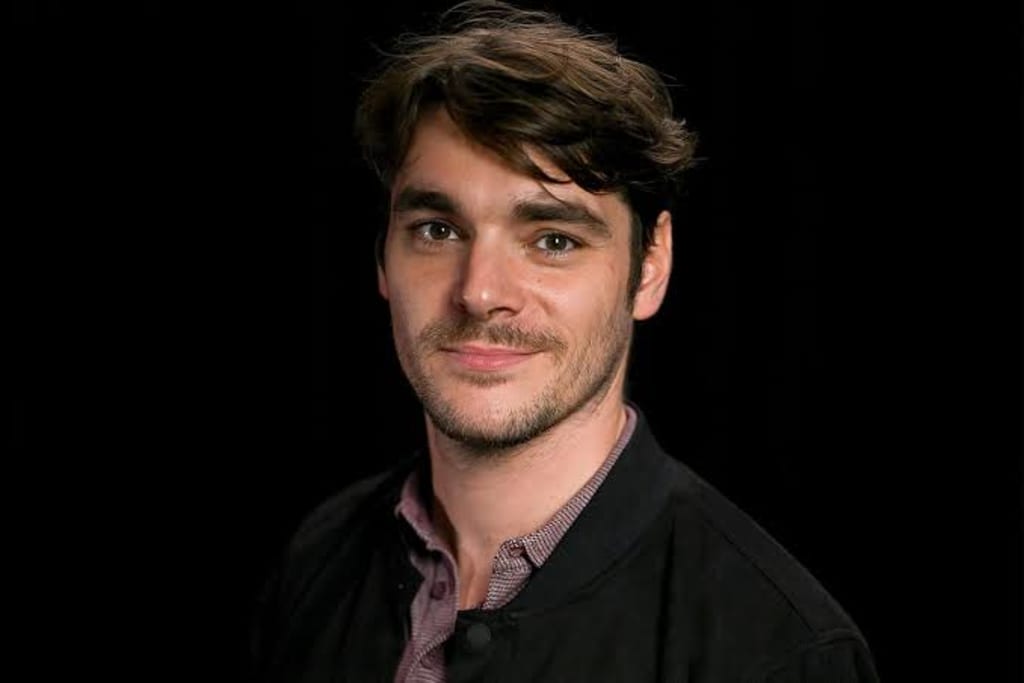
According to TMZ, RJ Mitte, who played Walter White's son Walter White Jr. (Flynn) in Breaking Bad, has died at 34. His agent confirmed the cause of death as suicide. The circumstances are still awaiting official confirmation from police, his family, and his management team.
When the news came, many people's first reaction was the shot from the final episode of Season 5: Walt watches from a distance as his son comes home from school, walks into the house, and closes the door. No dialogue, no goodbye. When that door closes, a father is permanently shut out of the family he claimed to protect. Now the boy who walked into that house has also left in another way.
RJ Mitte appeared in 56 episodes of Breaking Bad between 2008 and 2013. His Flynn was one of the few decent presences in a show full of lies, violence, and alienation. He didn't rely on dramatic highlights. His performance worked through unforced realism. He made the silence of an ordinary boy inside a collapsing family into one of the show's heaviest footnotes.
I. The Last to Know the Truth
The tragedy of Walter Jr. is that he is the last person in the family to know the truth. As his father gradually becomes Heisenberg, Flynn keeps believing in "Walt." He talks excitedly about his father, feels proud of him, and expresses his dependence on the family at the breakfast table the way a teenager would. RJ Mitte captures the irony and pain of this information gap: the more sincerely he talks about his father's "greatness," the more the audience feels how heavy the coming collapse will be.
Walter Jr. never gets the kind of complex arc other characters do. But looked at another way, that is what is cruelest about the role. While everyone else is being distorted by secrets and crime, Flynn is left where he was. His stillness shows the destruction of a family uprooted. RJ's performance makes that helplessness concrete. He is not the engine of the plot, but he is the measure of what the family has lost.
Everyone in Breaking Bad changes: Walt changes, Skyler changes, Jesse changes, even Hank changes. Only Flynn stays stuck at the stage of a boy who worships his father. This stasis makes the audience realize: some people's worlds do not expand with the plot. They are left behind to bear the consequences of other people's choices.
RJ Mitte does not play that bearing with exaggerated breakdown. He uses something closer to life: dullness, confusion, silence. That silence hurts more than shouting.
II. A Kind of Reverse Performance
A detail that gets lost: RJ Mitte himself had mild cerebral palsy. But for the role he had to "perform more severe symptoms." He had to relearn to walk with crutches, deliberately slow his speech, and blur his articulation to get closer to Flynn's more visible physical state.
Call it a reverse performance. His real experience gives the character a soul, making everything about Flynn feel natural and dignified, never a symbol for pity. But he also has to use craft to amplify difficulties he had already overcome. The effortlessness the audience feels is highly controlled performance. He plays a specific boy with a temper, self-respect, awkwardness, and hurt. Disability is only one part of that boy's life.
This balance is hard. One degree more and the character becomes a vehicle for an issue; one degree less and he loses credibility. RJ Mitte found the middle ground: Flynn uses crutches, speaks unclearly, stubbornly eats his own food at the breakfast table, and shows an impatient, helpless expression when his parents argue. He does not make Flynn an "angelic disabled child," nor an object of sympathy. He plays a son, a brother, a boy who in adolescence would already feel awkward and lonely.
III. Two Frozen Moments
His performance career is tied to the beginning and end of Breaking Bad. Two scenes stand out.
The first is the improvised line in the pilot. In Season 1, Episode 1, when his mother Skyler tells him "that's what skateboarders wear," RJ ad-libbed a line with a teenager's awkward defiance: "Do I look like a skateboarder?" This line was not in the script. It was the moment he first found his footing on set, and it strengthened his decision to become an actor. It set the tone for Flynn as an ordinary teenager with a temper, self-respect, not a flat "disabled son." A 14-year-old with no acting experience and cerebral palsy improvised a line on set and got it into the final cut. The show kept it.
The second is "the door" in the finale. In Season 5, Episode 16, "Felina," Walt watches from a distance as Flynn comes home from school, walks into the house, and closes the door. No dialogue, no goodbye. RJ Mitte uses an ordinary, final back to put the most silent and stinging period on the father-son relationship. That closed door is the "family" Walt claimed to protect but is now permanently shut out of. Many viewers remember Walt's face in that moment, but Flynn does not even know his father is nearby. He is just a kid coming home from school, closing the door. That "not knowing" is one of the cruelest endings in the whole show.
IV. The "Sweetheart" and "Superman" on Set
From his co-stars' tributes, we can piece together what he was like on set. Bryan Cranston recalled that he was "green" when he joined at 14 but grew "into a very good actor." Dean Norris said that although Flynn was not his TV son, he "always looked after him like a kid on set," calling him "a sweetheart of a young man." Aaron Paul's tribute is the most heartbreaking: the last time he saw RJ, he kept calling him "Superman," because "you always led with kindness and strength, and that light was so bright."
These tributes do not use the word "genius" much. The words that appear most are "sweetheart," "kindness," "strength." On a set known for darkness and complexity, RJ Mitte was a stabilizer. He was a young man quietly looked after by everyone and quietly looking after others. His workload was lighter than the leads'. Cranston's long post urged others facing the same difficulties to seek help and ended with "There is hope." The sentence is light. At a moment like this, it is also heavy.
V. Beyond the Screen
RJ Mitte did something simple and rare: he let an actor with cerebral palsy appear in a top-tier series in a completely ordinary way. Flynn's disability is part of life. It affects how he moves and speaks, but it is never turned into an "issue" or a "tearjerker." His presence itself was a representation of disabled people that no PSA could match.
He extended that influence into reality. He focused on the social situation of disabled people, pushed the film and television industry to accept and present disabled actors, worked with several charities, and received the Screen Actors Guild's Harold Russell Award for that work. The casting director once said that they insisted on finding an actor who had cerebral palsy to play the role. RJ Mitte's arrival made that decision matter beyond casting.
His personal story is also moving: he had cerebral palsy due to oxygen deprivation at birth, was abandoned after birth, was later adopted by the Mittes, and his adoptive parents divorced when he was very young. He entered acting initially because his sister Lacianne Carriere got an acting job. Before Breaking Bad, he guest-starred on the Disney teen show Hannah Montana. Last October 16, he got engaged to his girlfriend, which was also her birthday. His most recent appearance was to promote his film Talking to Strangers, which is about to launch on Amazon. He had also just appeared on a podcast to talk about his view of the Walter Jr. role.
These fragments make his death harder to accept. He still had a lot to say, many roles to play, and much advocacy work to do. But his body of work is not large, yet Flynn alone is enough for many viewers to remember him.
VI. After the Door
Breaking Bad is a show about change. Walt changes, Jesse changes, and the whole story asks how far a person can go. Flynn does not go far. He is left at home, at the breakfast table, behind that door.
RJ Mitte plays that "left behind" state with restraint. He doesn't steal scenes. He doesn't milk emotion. He doesn't have many lines. He makes the audience believe: there is a child in this family who is bearing everything in his own way.
Now he is gone. The boy who awkwardly asked "Do I look like a skateboarder?" in the pilot, the child who silently closed the door in the finale, the young man his colleagues called "sweetheart" and "Superman" on set: all of them remain in the images. Images do not change, but the people who watch them do. When people rewatch Breaking Bad and see Flynn walk into the house and close the door, many will pause a little longer.
The door is closed. But the boy behind it will be remembered.
If you or someone around you is going through a difficult time, please contact local emergency services or a psychological support hotline promptly. Seeking help is a strength. There is hope.
About the Creator
Jin
Writer of reamstories
https://reamstories.com/jin
Enjoyed the story? Support the Creator.
Subscribe for free to receive all their stories in your feed. You could also become a paid subscriber, letting them know you appreciate their work.
Comments
There are no comments for this story
Be the first to respond and start the conversation.